Qualitative Coding: Turning User Chatter into Actionable Themes
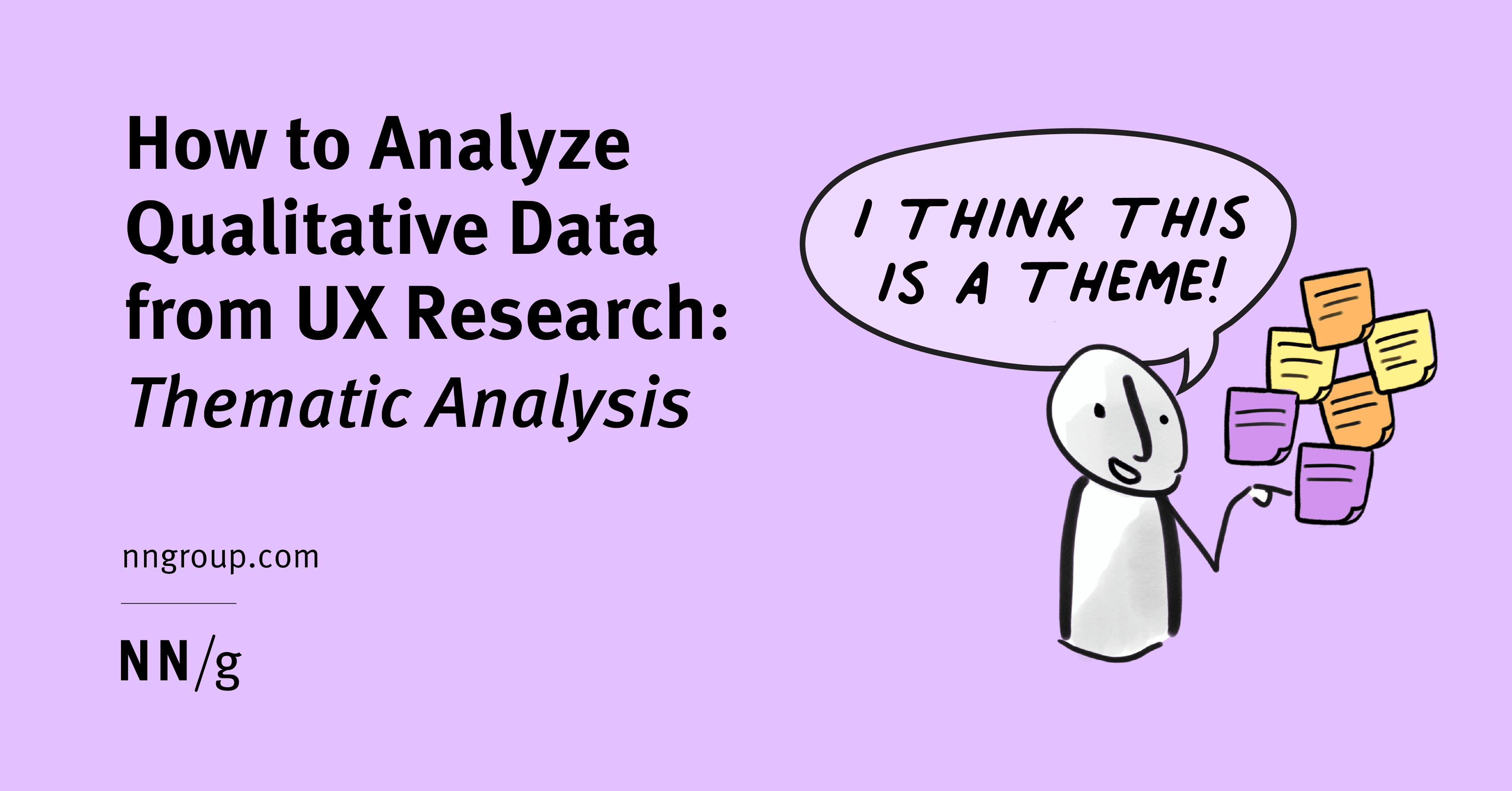
Think of thematic analysis as creating a tag cloud for user interviews. It groups raw feedback into meaningful patterns, turning noise into signal. Used after interviews to make sense of transcripts, the biggest mistake is just describing what users said.
Why it exists
Qualitative research generates huge amounts of rich but unstructured data like interview transcripts and field notes. Without a system, analyzing this data is overwhelming, leading to superficial conclusions, missed patterns, and wasted effort. Thematic analysis provides a structured process to find the signal in the noise.
The mental model
Think of thematic analysis as organizing a messy library. Individual books (quotes, observations) are first given topic labels (codes). Then, you group books with similar labels onto shelves (themes). Instead of a pile of books, you now have a structured collection that reveals what your library is really about. The goal is to synthesize, not just summarize.
How it works
The process is systematic. First, you immerse yourself in the raw data. Then, you break it down by applying "codes"—short labels for individual observations or quotes (e.g., "frustration with login," "wants dark mode"). As you code, you'll notice related codes appearing repeatedly. You then group these related codes together to form higher-level themes, which are the core insights (e.g., a theme of "Account Security Anxiety" might emerge from codes about login, passwords, and 2FA). This can be done with software, spreadsheets, or even physical sticky notes in an affinity diagram.
When to use it
Use thematic analysis during the discovery phase of a project, after conducting exploratory research. It's ideal for making sense of qualitative data from user interviews, focus groups, diary studies, and contextual inquiries. It helps turn a mountain of observations into a focused set of user needs, beliefs, and behaviors.
When not to use it
Thematic analysis is for qualitative data. Don't use it to summarize quantitative results like survey scores or success rates; those have clearer statistical methods. It's also not a quick process. If you only have a handful of very simple, direct observations, a full thematic analysis might be overkill.
One canonical example
A team interviews five users about a new mobile banking app. During coding, they tag one user's quote "I hate having to re-enter my password every time" with the code "login friction." They find similar complaints from three other users. They also code observations about users being confused by security questions. They group these codes into a larger theme: "Users prioritize convenience over stated security features, leading to frustration." This theme, not the individual quotes, becomes an actionable insight.
Interview question
In qualitative coding, what is the correct sequence and relationship between raw data, codes, and themes?
- a.Raw data is summarized into themes, which are then broken down into individual codes.
- b.Raw data is labeled with codes, and then related codes are grouped together to form higher-level themes.Correct
- c.Codes are quantitative metrics derived from raw data, which are then categorized into qualitative themes.
- d.Themes are initial labels for raw data, which are later refined into more specific codes.
Why? this is the answer
The card states that you first apply "codes"—short labels for individual observations or quotes—and then group these related codes together to form higher-level themes. Distractor C is incorrect because codes are applied first, and then themes are formed from those codes, not the other way around.
Just read this? Test yourself on what you have been reading.
Read the original → nngroup.com
- #ux research
- #qualitative data
- #thematic analysis
- #data analysis
You just looked this up. Could you explain it out loud?
That is the part interviews actually test. Tezvyn takes questions like this one and gives you what the interviewer is really checking, the answer that lands, and the mistake that ends the conversation, in the four minutes before your next meeting.
The iPhone app is on the way
We are building it. Until it lands, nothing here is held back from you: every interview card, your saved cards, streaks and the job board all work in Safari, plus hundreds of free practice quizzes of thirty questions each. Sign in and it all carries over to the app the day it arrives.
Want it as an icon? Tap Share at the bottom of Safari, then Add to Home Screen. It opens full screen and the cards you have read stay available offline.
We are hiring for this. Open roles that interview on ux research — each one lists the topics its interview covers.
See open roles