Regression to the Mean: Why Outliers Settle Down
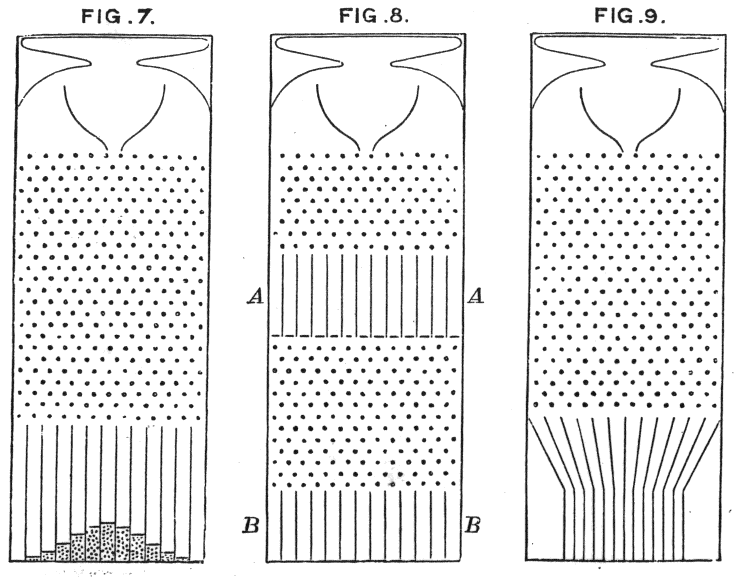
Extreme results are part skill, part luck. Regression to the mean is the principle that luck evens out, so a follow-up measurement will be closer to the average. This impacts A/B tests and performance analysis.
Why it exists
We constantly need to distinguish between a real change in a system and a temporary, random fluctuation. Without understanding regression to the mean, we risk making bad decisions based on outlier data, rewarding luck as if it were skill and punishing misfortune as if it were incompetence.
The mental model
Think of any performance as a simple equation: Performance = True Skill + Random Chance. A record-breaking sales quarter is high True Skill plus a lot of good Random Chance (luck). The next quarter, the True Skill is still there, but the Random Chance is likely to be closer to zero, or even negative. The result will naturally "regress" toward the average performance dictated by True Skill alone.
How it works
When you observe a random variable, an extreme outcome is, by definition, rare. For that extreme outcome to occur again, the same rare circumstances (the "luck") would need to happen twice in a row, which is statistically even less likely. Therefore, the next measurement is more probable to be closer to the mean, which is the most common outcome. This applies to single data points and also to groups selected specifically because of their extreme initial scores.
When to use it
Use this concept to temper your reactions to extreme data. First, when analyzing A/B test results, especially early on; a huge initial win for a variant might settle down to a more modest improvement. Second, in performance management; a star engineer's most productive sprint and a struggling engineer's worst are both unlikely to be repeated immediately. Third, when evaluating any intervention that follows an extreme event, like a new policy after a security breach or a marketing push after a sales slump. The situation was likely to improve anyway.
When not to use it
Do not use it to dismiss all changes. If a result is consistently above or below the previous mean over many measurements, it likely indicates a real, fundamental shift in the underlying system, not just a random fluctuation. Regression to the mean describes the behavior of short-term outliers, not the establishment of a new long-term trend.
One canonical example
In pilot training, instructors observed that praising a pilot for an exceptionally smooth landing was often followed by a worse landing. Conversely, yelling at a pilot for a very rough landing was followed by a better one. They concluded that criticism was effective and praise was not. In reality, they were just observing regression to the mean. The exceptionally good and bad landings were outliers, and subsequent performances were simply regressing back toward the pilots' average skill level.
Interview question
A sales team member achieves a record-breaking quarter. Based on the principle of regression to the mean, what is most likely to happen in the following quarter?
- a.Their sales performance will likely decrease, moving closer to their historical average.Correct
- b.Their sales performance will likely drop significantly below average as a consequence of overexertion.
- c.Their sales performance will likely continue to exceed previous records due to increased confidence.
- d.Their sales performance will likely stabilize at the new record level, indicating a permanent improvement.
Why? this is the answer
Regression to the mean posits that extreme outcomes, which are partly due to random chance, are unlikely to be repeated. Therefore, a record-breaking performance is most likely to be followed by a performance closer to the individual's average. Options B and C incorrectly assume the extreme performance establishes a new baseline or trend, while D overstates the expected regression.
Just read this? Test yourself on what you have been reading.
Read the original → en.wikipedia.org
You just looked this up. Could you explain it out loud?
That is the part interviews actually test. Tezvyn takes questions like this one and gives you what the interviewer is really checking, the answer that lands, and the mistake that ends the conversation, in the four minutes before your next meeting.
The iPhone app is on the way
We are building it. Until it lands, nothing here is held back from you: every interview card, your saved cards, streaks and the job board all work in Safari, plus hundreds of free practice quizzes of thirty questions each. Sign in and it all carries over to the app the day it arrives.
Want it as an icon? Tap Share at the bottom of Safari, then Add to Home Screen. It opens full screen and the cards you have read stay available offline.
We are hiring for this. Open roles that interview on statistics — each one lists the topics its interview covers.
See open roles