Experiment Knowledge Base: Don't Repeat Failed Tests
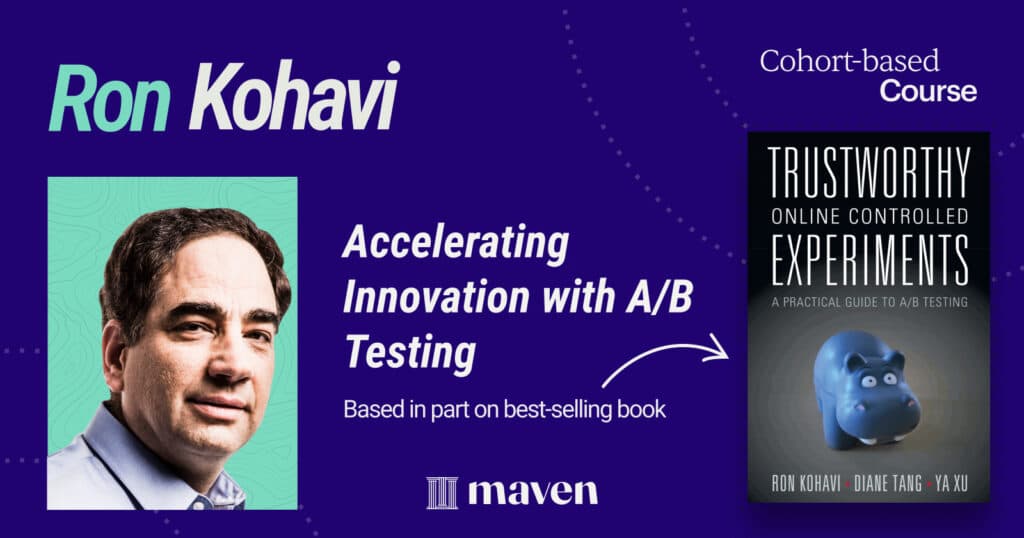
An Experiment Knowledge Base is your company's collective memory for A/B tests, centralizing hypotheses, results, and learnings. It prevents re-running old tests and surfaces past insights.
Why it exists
As an organization scales its A/B testing, institutional knowledge gets fragmented across teams and documents, or lost entirely when people leave. Without a central system, teams waste time and resources re-running experiments or building on flawed assumptions. A knowledge base exists to create a permanent, shared memory of experimental learnings to accelerate innovation.
The mental model
Think of it as a shared lab notebook for your entire company. A single scientist uses a notebook to avoid repeating work and to build on past discoveries. An Experiment Knowledge Base does the same for an organization, ensuring that every test, whether it succeeds or fails, contributes to a collective intelligence.
How it works
It is a structured, searchable repository where every experiment is documented. A typical entry includes the experiment's name, its owner, the core hypothesis, the specific changes made, the target audience, and the success metrics. Crucially, it also includes the statistical results and a human-written summary of the key learnings and decisions made. This allows anyone to find past tests related to a feature or metric and understand the outcome.
When to use it
A knowledge base becomes critical when your organization runs more experiments than a single person can track. Companies that run thousands of tests a year, like Microsoft or Google, rely on these systems to manage complexity. Use it before planning any new experiment to see what has been tried before, what was learned, and why certain product decisions were made.
When not to use it
For a tiny team running only a handful of experiments, the overhead of a formal system may not be worth it; a simple spreadsheet or shared document might suffice. The need for a dedicated knowledge base grows with the volume and complexity of your experimentation program.
One canonical example
A product manager wants to test a new checkout flow. Before designing it, she searches the knowledge base for “checkout” and “conversion.” She finds three past experiments. One failed because it added too much friction. Another showed a small lift but was never shipped due to a technical dependency. A third revealed that customers on mobile responded poorly to a similar change. This context saves her weeks of work and helps her design a much smarter fourth experiment.
Interview question
For an organization scaling its A/B testing efforts, what is the primary strategic advantage of implementing an Experiment Knowledge Base?
- a.It provides a platform for real-time collaboration among experiment designers and data scientists.
- b.It centralizes past experiment data and learnings to prevent re-running failed tests and inform new hypotheses.Correct
- c.It guarantees that all future experiments will yield positive results.
- d.It automates the process of designing and launching new A/B tests.
Why? this is the answer
The card emphasizes that an Experiment Knowledge Base prevents re-running old tests and surfaces past insights, acting as a collective memory to accelerate innovation. While an EKB helps inform better experiments, it cannot guarantee positive results, as experimentation inherently involves uncertainty and learning from both successes and failures.
Just read this? Test yourself on what you have been reading.
Read the original → experimentguide.com
- #ab testing
- #experimentation
- #product management
- #data
Put your scrolling time to good use
Learn one idea, try a quiz and save useful cards for revision. Tezvyn makes it easy to learn and stay current in your tech field, a few minutes at a time.
The iPhone app is on the way
We are building it. Until it lands, nothing here is held back from you: every interview card, your saved cards, streaks and the job board all work in Safari, plus hundreds of free practice quizzes of thirty questions each. Sign in and it all carries over to the app the day it arrives.
Want it as an icon? Tap Share at the bottom of Safari, then Add to Home Screen. It opens full screen and the cards you have read stay available offline.
We are hiring for this. Every open role lists the topics its interview covers, so you can prepare for the real thing rather than guessing.
See open roles