The Pivot: A Structured Change in Strategy, Not Vision
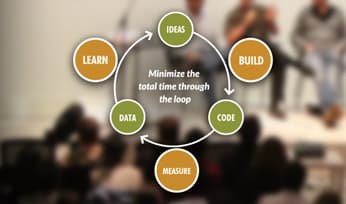
A pivot is a structured course correction, not a restart. You change strategy based on validated learning from your MVP when data shows your initial hypothesis was wrong. The footgun is pivoting on a whim instead of data, or failing to pivot despite it.
Why it exists
Startups operate under extreme uncertainty. The biggest risk isn't building a product wrong, but building the wrong product entirely. A pivot provides a formal mechanism to act on learning and avoid wasting resources on an idea customers don't want, turning failure into a structured course correction.
The mental model
A pivot is a change in strategy, not vision. Imagine driving to a destination (your vision). If you hit a major roadblock (validated learning that your path is wrong), you don't give up on the destination. You consult the map (your data) and choose a new route (your pivot). It's a deliberate turn, not a random guess or a U-turn back home.
How it works
The pivot is a key action within the Build-Measure-Learn feedback loop. You start by building a Minimum Viable Product (MVP) to test a fundamental hypothesis. You then measure how users interact with it, focusing on actionable metrics. This generates validated learning. If the data shows your hypothesis is correct and you're making progress, you persevere. If the data proves your hypothesis is wrong, you pivot. A pivot means making a structural change to test a new hypothesis about the product, strategy, or engine of growth.
When to use it
Pivot when you have clear evidence that a core element of your strategy is failing. This isn't about minor tweaks. It's for when your MVP's metrics are flat, your engine of growth has stalled, or you've learned that customers don't have the problem you thought they did. A pivot is the response to a failed strategic experiment.
When not to use it
Do not pivot based on anecdotes, fear, or a single bad day. A pivot requires validated learning from real data. Also, don't confuse a pivot with simple iteration. If you are making progress, even if it's slow, you should persevere and continue "tuning the engine" with smaller changes. A pivot is for a broken hypothesis, not a slow one.
One canonical example
A company builds an MVP for a complex enterprise software (Hypothesis A: "Companies will pay for this all-in-one suite"). After launch, they learn from sales calls and usage data that customers only value and use one small feature. They pivot. Their new hypothesis (Hypothesis B) is: "Companies will pay for this one specific feature as a standalone tool." They then restructure the product and business model around this new, validated direction.
Interview question
According to the Lean Startup methodology, what is the fundamental trigger for a company to execute a pivot?
- a.Validated learning from an MVP demonstrates that a core strategic hypothesis about the product or customer is incorrect.Correct
- b.Customer support receives a high volume of complaints about a specific feature, indicating a need for immediate change.
- c.The company's initial product launch fails to gain significant traction, leading to a decision to restart development from scratch.
- d.The executive team decides to pursue a more lucrative market segment identified through competitive analysis.
Why? this is the answer
The card explicitly states a pivot is triggered by "validated learning from your MVP when data shows your initial hypothesis was wrong." Option A directly reflects this. Option C is incorrect because a pivot is a structured course correction of strategy, not a "restart" or abandonment of the original vision.
Just read this? Test yourself on what you have been reading.
Read the original → theleanstartup.com
- #lean startup
- #product management
- #experimentation
- #strategy
You just looked this up. Could you explain it out loud?
That is the part interviews actually test. Tezvyn takes questions like this one and gives you what the interviewer is really checking, the answer that lands, and the mistake that ends the conversation, in the four minutes before your next meeting.
The iPhone app is on the way
We are building it. Until it lands, nothing here is held back from you: every interview card, your saved cards, streaks and the job board all work in Safari, plus hundreds of free practice quizzes of thirty questions each. Sign in and it all carries over to the app the day it arrives.
Want it as an icon? Tap Share at the bottom of Safari, then Add to Home Screen. It opens full screen and the cards you have read stay available offline.
We are hiring for this. Every open role lists the topics its interview covers, so you can prepare for the real thing rather than guessing.
See open roles