Self-Service Analytics: Let Teams Answer Their Own Data Questions
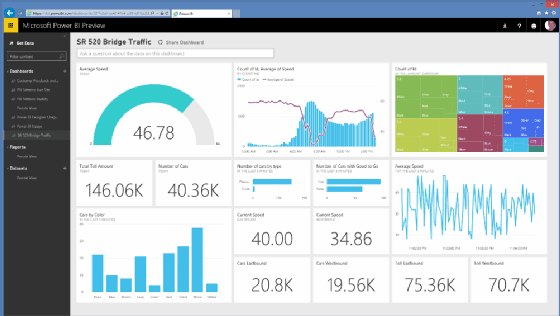
Self-service analytics gives business teams tools like Power BI to explore data and build reports without waiting for an analyst. This speeds up decision-making by giving teams direct data access.
Why it exists
In traditional business intelligence, every request for a report or data pull had to go through a specialized data team, creating a huge bottleneck. Business users couldn't get timely answers, and data analysts were buried in ad-hoc requests. Self-service analytics was created to break this dependency and speed up decision-making.
The mental model
Think of it as moving from a restaurant with a single chef (the data team) to a high-end buffet. Instead of placing an order and waiting, diners (business users) can immediately access a wide variety of prepared, high-quality ingredients (clean data) and assemble their own plates (reports and dashboards) to their exact liking.
How it works
A self-service analytics system has two core components. First, a user-friendly front-end application, like Tableau or Power BI, allows users to connect to data, create visualizations, and build dashboards with a drag-and-drop interface. Second, and more importantly, is the back-end data pipeline. This process involves extracting data from multiple sources, transforming it into a clean, accurate, and reliable dataset (often via an ELT process), and ensuring it is secure. The front-end tool is only as good as the data it's fed.
When to use it
Use it to empower non-technical teams like marketing, sales, or product to make faster, data-driven decisions without being blocked by a central team. It's ideal for organizations where business questions are frequent and varied, and you want to foster a culture where teams can self-serve insights and collaborate around a shared view of the data.
When not to use it
This is not a replacement for deep, specialized analysis. Complex statistical modeling or building foundational data architecture still requires dedicated data scientists and engineers. It's also a poor choice for organizations without a strong commitment to data governance; giving users tools to access messy, unreliable data will only lead to wrong answers and a deep mistrust of the system.
One canonical example
A product manager wants to know how a new feature is being used. Instead of filing a ticket with the data team, she opens a ThoughtSpot dashboard. She connects to a pre-approved, clean data source containing user events. In minutes, she filters for users who have enabled the feature, segments them by subscription tier, and creates a chart showing daily usage, all without writing any code or waiting in a queue.
Interview question
What is the primary benefit of implementing a self-service analytics system in an organization?
- a.It guarantees the data is always 100% accurate and free from any governance issues.
- b.It allows business users to perform advanced statistical modeling without data scientists.
- c.It automates the entire data pipeline, removing the need for data engineers.
- d.It enables business teams to directly access and analyze curated data to answer their own questions faster.Correct
Why? this is the answer
The correct answer highlights that self-service analytics empowers business users to directly interact with data, speeding up decision-making by reducing reliance on central data teams. Option B is incorrect because self-service tools are not designed for complex statistical modeling, which still requires specialized data scientists.
Just read this? Test yourself on what you have been reading.
Read the original → techtarget.com
You just looked this up. Could you explain it out loud?
That is the part interviews actually test. Tezvyn takes questions like this one and gives you what the interviewer is really checking, the answer that lands, and the mistake that ends the conversation, in the four minutes before your next meeting.
The iPhone app is on the way
We are building it. Until it lands, nothing here is held back from you: every interview card, your saved cards, streaks and the job board all work in Safari, plus hundreds of free practice quizzes of thirty questions each. Sign in and it all carries over to the app the day it arrives.
Want it as an icon? Tap Share at the bottom of Safari, then Add to Home Screen. It opens full screen and the cards you have read stay available offline.
We are hiring for this. Open roles that interview on analytics — each one lists the topics its interview covers.
See open roles