StyleGAN: Controllable, High-Fidelity Image Generation
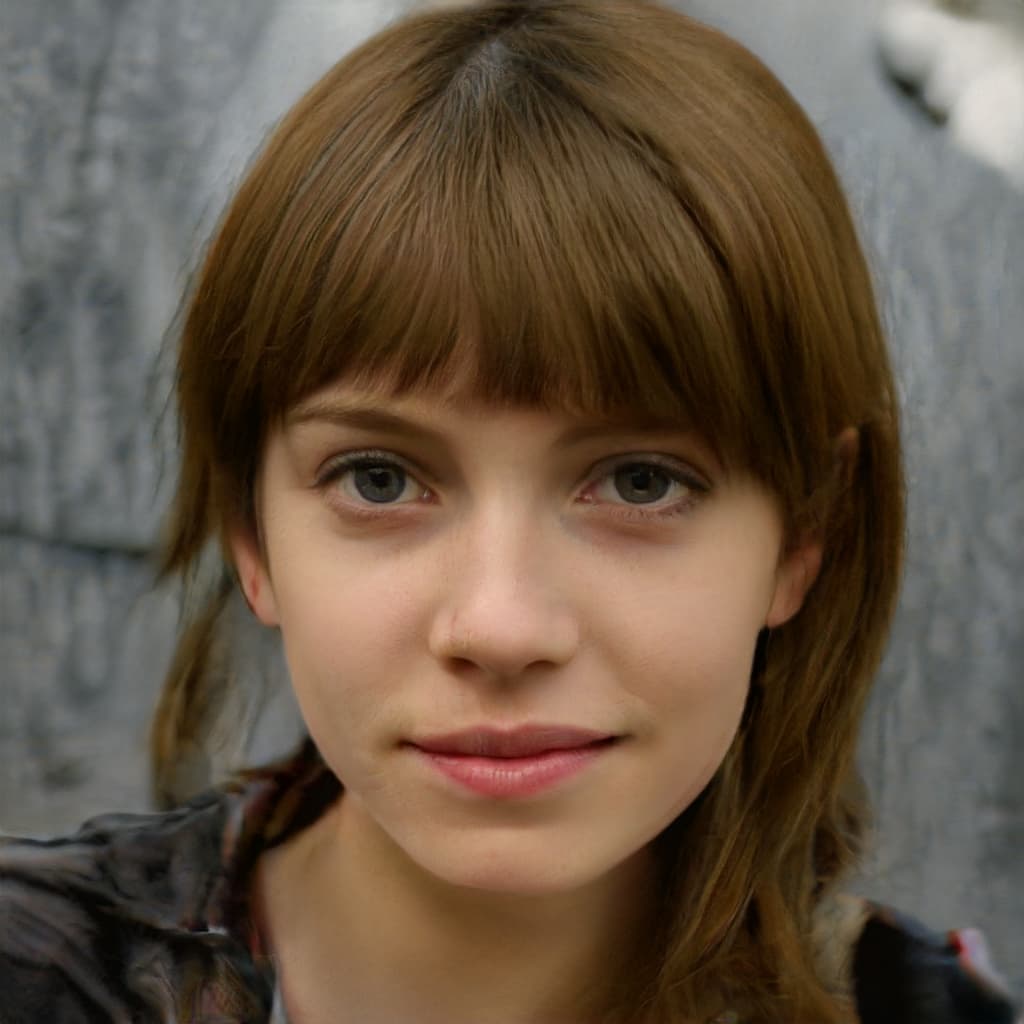
StyleGAN generates images by controlling 'style' at different levels, like a painter layering coarse, medium, and fine details. It excels at creating hyper-realistic images with tunable features.
WHY IT EXISTS: Traditional Generative Adversarial Networks (GANs) were a black box. You fed them a random vector and got an image, with no easy way to control the output's attributes. StyleGAN was created to disentangle these attributes, giving artists and researchers control over the generation process.
THE MENTAL MODEL: Think of StyleGAN not as a single machine, but as an assembly line for images. A random input is first converted into a 'style' blueprint. This blueprint is then used at multiple stations on the line. The first station lays down the coarse structure (e.g., head pose), the next adds medium-level features (e.g., facial shape), and the final ones add fine details (e.g., skin texture, hair color). You can even mix and match blueprints between different images.
HOW IT WORKS: StyleGAN's generator starts from a constant, learned input, not the random vector itself. The random vector is first mapped into an intermediate latent space (W) to produce a style vector. This style vector is then fed into each layer of the generator using a mechanism called Adaptive Instance Normalization (AdaIN), controlling visual features at different scales. Separately, random noise is added at each layer to generate stochastic details like freckles or unique hair strands, making images appear more natural.
WHEN TO USE IT: Use StyleGAN when you need to generate high-resolution, photorealistic images and require fine-grained control over the output. It's ideal for tasks like generating synthetic datasets for training other models, creating digital art, and exploring feature manipulation in domains like human faces, cars, or animals.
WHEN NOT TO USE IT: Avoid StyleGAN if training resources are scarce; it is computationally very expensive. It's also not ideal if you need perfect, guaranteed disentanglement of features, as some attributes often remain correlated. For simpler generation tasks without the need for style control, a less complex GAN architecture might be more efficient.
ONE CANONICAL EXAMPLE: The website 'This Person Does Not Exist' is the most famous application. Every time you refresh the page, a StyleGAN model generates a new, convincing, but entirely artificial human face. This showcases its ability to produce high-fidelity, diverse outputs at scale.
Read the original → en.wikipedia.org
Get five bites like this every day.
Tezvyn delivers a daily feed of 60-second tech bites with quizzes to lock in what you learn.