User Engagement Score: A Health Check for Your Product
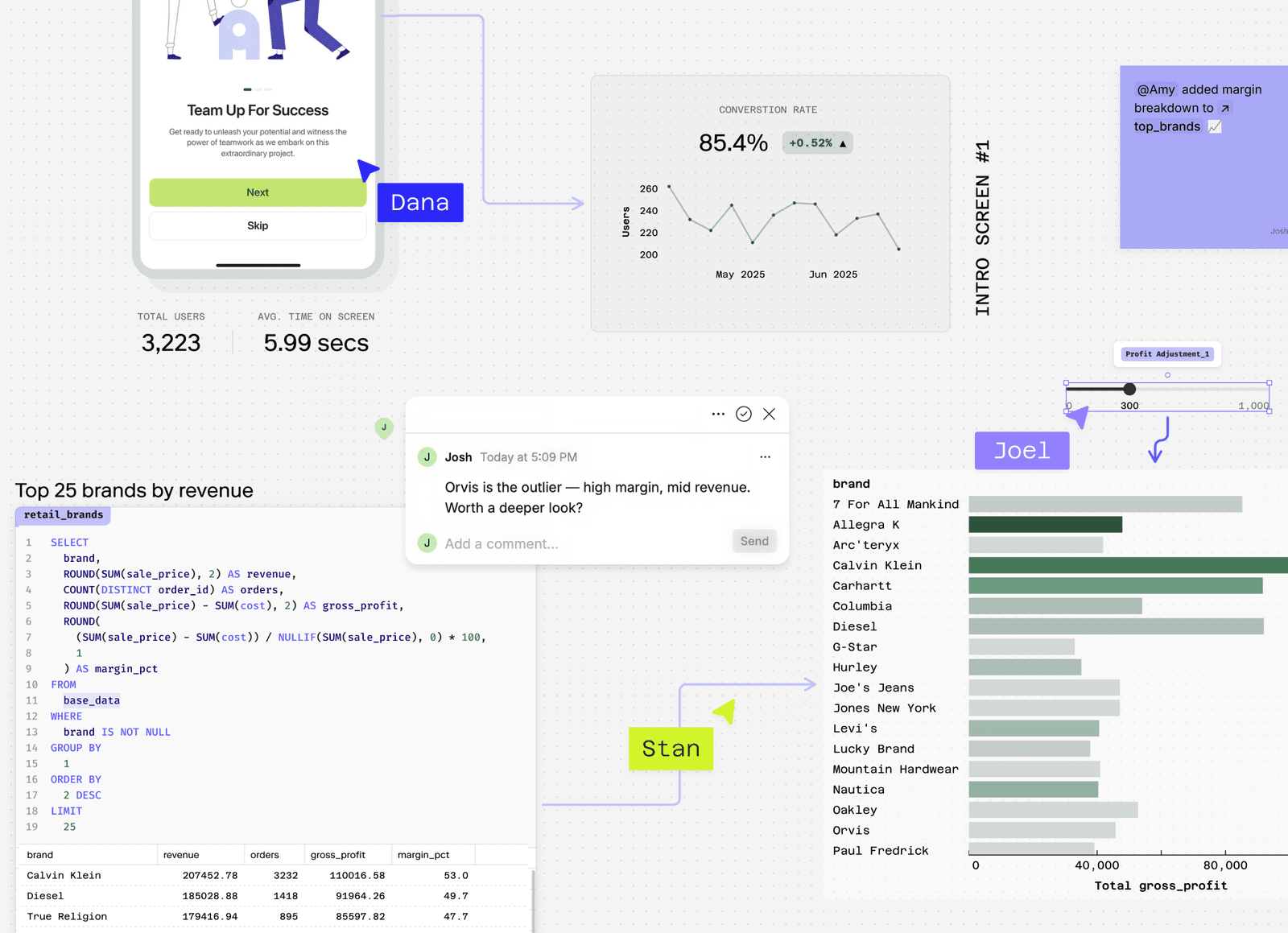
A User Engagement Score distills complex user behavior into a single number, showing if users find value or are at risk of churning. Product teams use it to gauge feature adoption, while success teams identify at-risk accounts.
The mental model
A User Engagement Score is a single number that represents how actively and meaningfully users interact with your product. Think of it as a health indicator for your user base; a high score suggests users find value and are likely to stick around, while a low score is an early warning system for churn.
How it works
The score combines various user behaviors into one metric. A common formula is (Total Meaningful Actions / Total Users) * 100. This calculates the average number of actions per user over a period. The real power comes from weighting actions. Not all interactions are equal; creating a new document is more valuable than just logging in. For example, you might assign 3 points for 'document created' but only 1 point for 'viewed page'. This weighted approach gives a more accurate picture of true engagement than a simple count of actions.
When to use it
Use this score to track product health over time, typically on a weekly or monthly basis, to spot trends. It's also powerful for segmentation. You can compare engagement between different user groups, like users on a free plan versus a paid plan, or new users versus veterans. This helps product and customer success teams focus their efforts where they're needed most.
When not to use it
Don't use this as your only North Star metric. As a composite score, it can hide underlying issues. For instance, a high overall score might be driven by a small group of power users, masking the fact that the majority of your user base is inactive. Always use it alongside other metrics like retention cohorts, daily active users (DAU), and specific feature adoption rates for a complete view.
One canonical example
A project management platform has 1,000 total users. In one month, these users perform a total of 4,800 actions (creating tasks, adding comments, etc.). The engagement score is (4,800 Total Actions / 1,000 Total Users) * 100 = 480%. This means the average user—active or not—performed 4.8 actions that month. A more advanced version would weight 'task created' more heavily than 'comment added' to better reflect deep product usage.
Interview question
Under which circumstance should a User Engagement Score NOT be used as the sole indicator of product health?
- a.When segmenting users to understand engagement differences across groups.
- b.When the goal is to monitor product health trends over several months.
- c.When a small segment of power users could inflate the score, hiding broader user inactivity.Correct
- d.When the product offers a wide variety of user interactions, making scoring complex.
Why? this is the answer
The card explicitly states that a UES should not be a sole North Star metric if a high score is driven by a small group of power users, masking inactivity among the majority. The other options describe appropriate uses or challenges that can be managed within the UES framework.
Just read this? Test yourself on what you have been reading.
Read the original → count.co
- #analytics
- #product metrics
- #user engagement
- #kpi
You just looked this up. Could you explain it out loud?
That is the part interviews actually test. Tezvyn takes questions like this one and gives you what the interviewer is really checking, the answer that lands, and the mistake that ends the conversation, in the four minutes before your next meeting.
The iPhone app is on the way
We are building it. Until it lands, nothing here is held back from you: every interview card, your saved cards, streaks and the job board all work in Safari, plus hundreds of free practice quizzes of thirty questions each. Sign in and it all carries over to the app the day it arrives.
Want it as an icon? Tap Share at the bottom of Safari, then Add to Home Screen. It opens full screen and the cards you have read stay available offline.
We are hiring for this. Open roles that interview on analytics — each one lists the topics its interview covers.
See open roles