User Journey Analysis: Finding Friction and Opportunity
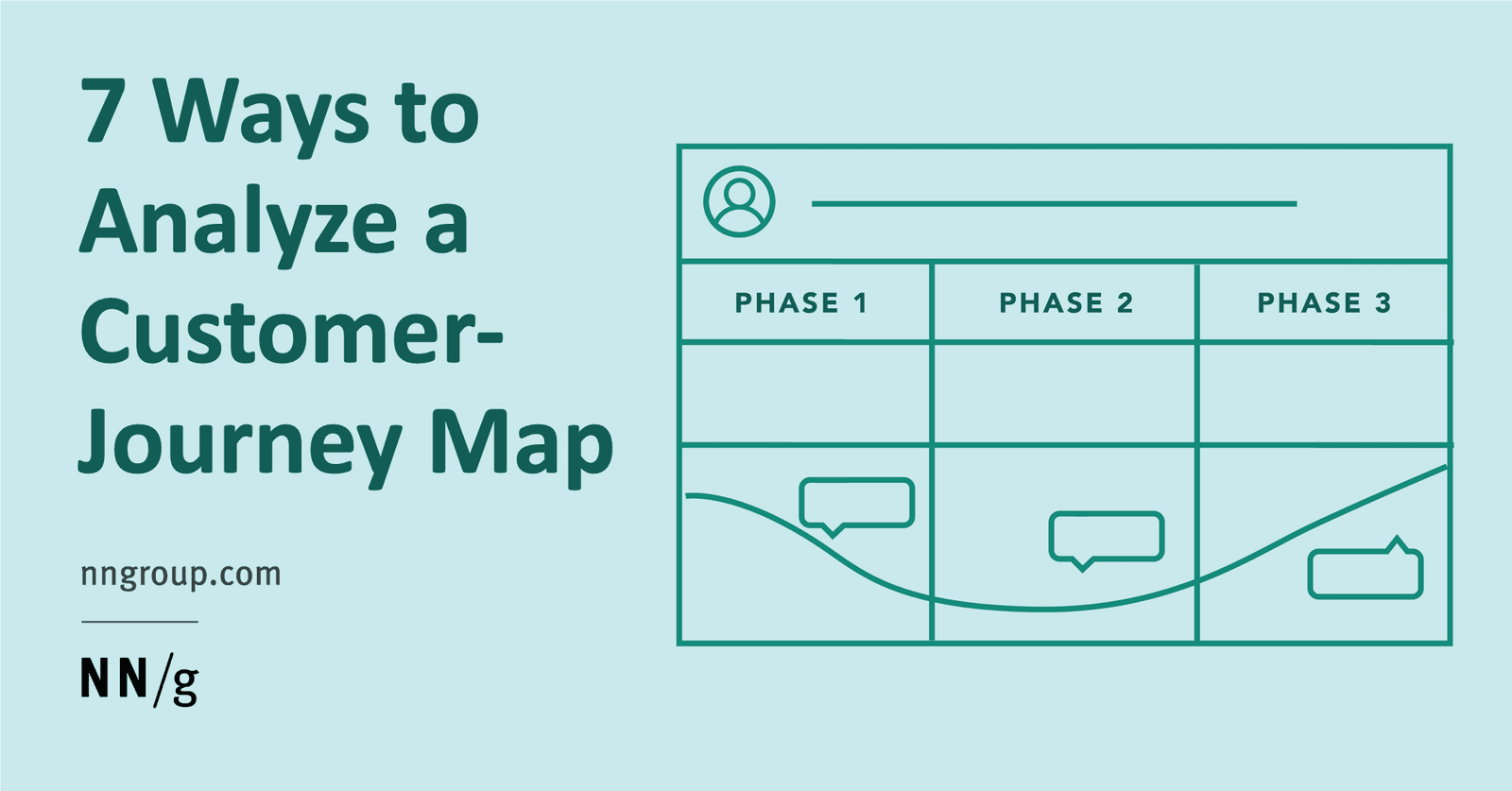
User journey analysis is like watching a film of your customer's experience to find plot holes. It helps spot where a product fails to meet expectations or has redundant steps. The biggest footgun is analyzing without a clear persona in mind.
The mental model
A user journey map is a visualization of the entire process a specific user persona follows to accomplish a goal. Analyzing this map is like being a film critic for your product's experience, looking for plot holes, bad pacing, and moments where the story breaks down. It shifts your focus from isolated touchpoints, like a single button click, to the complete narrative of a user's interaction over time.
How it works
The analysis involves scrutinizing the journey map for specific patterns of failure and opportunity. Two key methods are looking for expectation mismatches and identifying inefficiencies. First, pinpoint moments where the user's experience does not meet their expectations. These can be set by your own marketing (an ad promising features that aren't available) or by industry conventions. Second, search for unnecessary touchpoints or redundant steps. Are there interactions that could be eliminated to streamline the process and reduce the user's total effort, or "interaction cost"?
When to use it
Use journey analysis when you need to understand and improve a multi-step user flow. It's perfect for diagnosing why users drop off during complex processes like onboarding, checkout, or making a large purchase. It helps you move from fixing isolated UI bugs to optimizing the entire end-to-end experience by highlighting the most impactful areas for improvement.
When not to use it
Journey analysis is overkill for simple, single-screen interactions. If you're just evaluating the usability of a single form, standard usability testing is more direct. It's also ineffective without solid, research-backed personas; analyzing a generic "user" journey yields vague insights because you can't evaluate success without knowing the user's specific goals and context.
One canonical example
A persona, Eric, sees a TV ad for a car-buying website that shows a high level of detail and functionality. When he visits the site, he discovers those features aren't available for his region. His expectations, set by the ad, are not met. This creates immediate friction and a major pain point early in his journey, damaging his perception of the company before he even gets to the core product. This is a classic expectation mismatch found through journey analysis.
Interview question
What is the most critical mistake to avoid when performing a user journey analysis?
- a.Prioritizing the removal of redundant steps over addressing expectation mismatches.
- b.Neglecting to map out every single touchpoint in the user's interaction.
- c.Focusing solely on technical bugs rather than the overall user experience.
- d.Proceeding without a clearly defined and research-backed user persona.Correct
Why? this is the answer
The card explicitly states that the 'biggest footgun' is 'analyzing without a clear persona in mind' because it leads to vague insights and makes the analysis ineffective. While other options represent valid concerns in journey mapping, they are not identified as the single most critical foundational mistake.
Just read this? Test yourself on what you have been reading.
Read the original → nngroup.com
You just looked this up. Could you explain it out loud?
That is the part interviews actually test. Tezvyn takes questions like this one and gives you what the interviewer is really checking, the answer that lands, and the mistake that ends the conversation, in the four minutes before your next meeting.
The iPhone app is on the way
We are building it. Until it lands, nothing here is held back from you: every interview card, your saved cards, streaks and the job board all work in Safari, plus hundreds of free practice quizzes of thirty questions each. Sign in and it all carries over to the app the day it arrives.
Want it as an icon? Tap Share at the bottom of Safari, then Add to Home Screen. It opens full screen and the cards you have read stay available offline.
We are hiring for this. Open roles that interview on analytics — each one lists the topics its interview covers.
See open roles