What are the main benefits of consuming a design system?
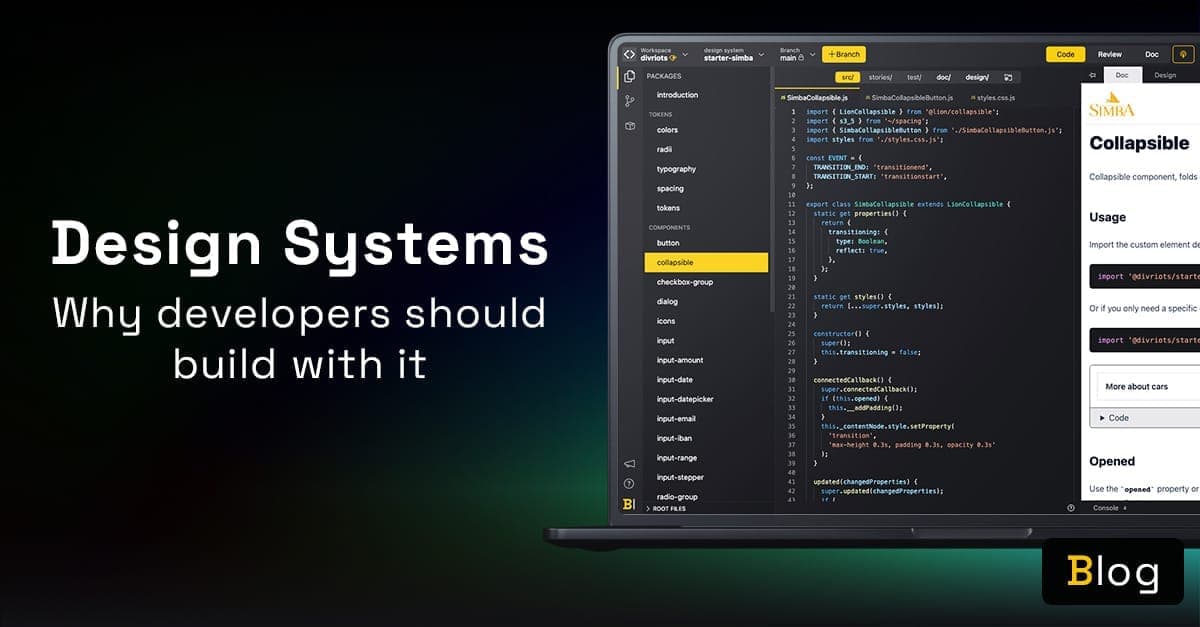
whether you see a design system as more than a UI kit and tie tokens to velocity.
cite tokens for theming, isolated components, live docs, and designer collaboration.
calling it just a CSS framework and ignoring tokens.
What's really being asked
This question checks whether you understand that a design system is a product-delivery platform, not just a bag of UI widgets. The interviewer wants to hear that you value separation of concerns between product code and component infrastructure, that you know design tokens decouple visual decisions from implementation, and that you expect documentation and collaboration tools to be first-class citizens. Senior engineers should frame benefits in terms of team velocity, maintenance cost, and cross-functional trust rather than personal convenience.
The full answer
A strong response walks through four areas in order. First, design tokens as a single source of truth for colors, spacing, typography, and elevation, which lets components react automatically when the brand evolves. Second, isolated component development inside the design system rather than inside production apps, preventing developers from hacking one-off overrides into shipped code and creating maintenance debt. Third, living documentation that pairs interactive playgrounds with copy-paste code snippets, making adoption self-service and reducing Slack questions. Fourth, collaboration infrastructure like visual reviews, pull-request previews, and designer handoff that tightens the feedback loop between design and engineering. If you can tie each point to a real outcome like faster onboarding, fewer regressions, or safer theming, you will stand out.
The mistakes people make
The biggest red flag is treating the design system as a component library or CSS framework with no mention of tokens, documentation, or workflow. Another weak pattern is listing only personal benefits such as avoiding custom CSS without connecting the system to team scale or product consistency. Saying that design systems slow you down because they are restrictive also signals a misunderstanding; the point is guarded flexibility, not freedom at any cost.
What usually comes next
An interviewer might push on how you handle a missing component, asking whether you extend the system or fork it. They may ask how you would measure the success of a design system, or how to convince a skeptical teammate to consume it rather than building a custom solution. Be ready to discuss versioning, breaking changes, and how tokens propagate across multiple brands or platforms.
A concrete example
Imagine your company acquires a new brand and must recolor every button, link, and surface in a week. With a token-driven design system, you update the primary color token in one repository, publish a new package version, and every consuming app rebuilds with the new palette without a single line of product-code change. Components stay isolated, so you test the change in the system’s visual review environment before any production app sees it, and the embedded documentation updates itself because the playground renders the same code consumers use.
Interview question
Which scenario best illustrates a design system delivering value beyond a simple UI kit?
- a.Engineers import pre-built UI widgets and override styles locally to match brand requirements.
- b.Updating a single color token automatically updates every component across all consuming apps without modifying any product code.Correct
- c.Product teams build components in isolation within their own repositories to maximize creative flexibility.
- d.Developers reference a shared CSS file to avoid writing custom styles, ensuring visual consistency across teams.
Why? this is the answer
This reflects the card's concrete example where design tokens decouple visual decisions from product code, enabling safe cross-app theming. Option D is tempting because it mentions consistency and shared code, but it reduces the system to a CSS framework and ignores tokens, living docs, and workflow integration.
Just read this? Test yourself on what you have been reading.
Read the original → backlight.dev
- #design systems
- #frontend
- #developer experience
- #component libraries
- #collaboration
You just looked this up. Could you explain it out loud?
That is the part interviews actually test. Tezvyn takes questions like this one and gives you what the interviewer is really checking, the answer that lands, and the mistake that ends the conversation, in the four minutes before your next meeting.
The iPhone app is on the way
We are building it. Until it lands, nothing here is held back from you: every interview card, your saved cards, streaks and the job board all work in Safari, plus hundreds of free practice quizzes of thirty questions each. Sign in and it all carries over to the app the day it arrives.
Want it as an icon? Tap Share at the bottom of Safari, then Add to Home Screen. It opens full screen and the cards you have read stay available offline.
We are hiring for this. Open roles that interview on design systems — each one lists the topics its interview covers.
See open roles