What is APIRouter in FastAPI and why use it?
It tests your grasp of modular architecture in FastAPI. APIRouter splits routes into separate modules so you include them in the main app with prefixes, tags, and dependencies.
What's really being asked
This question checks whether you know how to structure a production FastAPI application across multiple files. The interviewer wants to see that you understand APIRouter as a first-class modularity primitive rather than just a convenience import. They are listening for awareness of path prefix inheritance, tag grouping for OpenAPI documentation, and router-level dependency injection.
The full answer
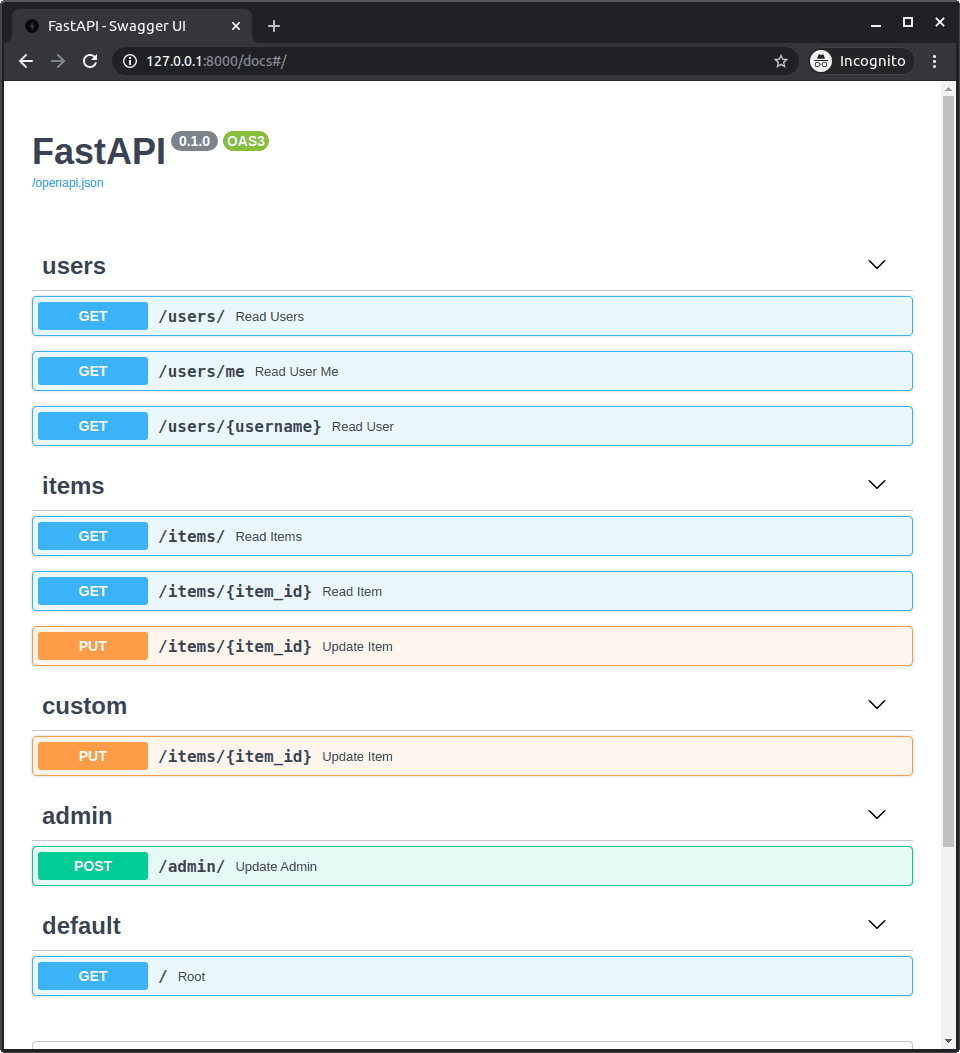
First, define APIRouter as a lightweight standalone object that registers path operations just like a FastAPI app instance does. Second, explain that you create routers in dedicated modules, for example a users.py or items.py file, and then mount them in main.py using app.include_router. Third, mention the practical levers you get when including a router: you can prepend a path prefix so every route in that module automatically starts with /users or /items, attach tags that organize the auto-generated Swagger UI, apply default responses, and attach dependencies that run for every path in that router. Fourth, note the benefit to team workflow and testing, since each domain can own its routes, schemas, and utilities without editing a shared main.py file.
The mistakes people make
A weak answer says APIRouter is just a way to make main.py shorter or cleaner without explaining the include_router mechanism. Another red flag is confusing APIRouter with Flask blueprints and claiming they are identical; while similar, FastAPI routers carry type validation and dependency injection natively. Some candidates also forget that prefixes, tags, and dependencies can be configured at inclusion time in the main app, though setting them on the router directly is also valid depending on design.
What usually comes next
The interviewer may ask how you would share dependencies across an entire router, such as requiring authentication for every user route. They might also ask what happens if you include the same router multiple times with different prefixes, or how relative imports work when splitting a project into a package structure. Be ready to sketch a folder layout with an app directory containing routers, dependencies, and models.
A concrete example
Imagine an ecommerce API. You create a routers directory with a product router assigned to APIRouter inside products.py, defining GET and POST operations there. In main.py you call app.include_router with the product router, prefix set to /products, tags set to products, and dependencies set to a verify token function. Now every product route lives under /products, appears grouped in the docs, and shares the auth dependency, while your main.py stays under twenty lines.
Interview question
Which scenario best illustrates why APIRouter is considered a first-class modularity primitive in FastAPI?
- a.Moving route definitions into separate files so they can be mounted with prefixes, tags, and shared dependencies via include_router.Correct
- b.Extracting route handlers into helper functions to keep main.py shorter while keeping all path registration in the main app.
- c.Registering all endpoints on the main app and using APIRouter solely to group them visually in the OpenAPI documentation.
- d.Importing Flask blueprints and wrapping them to gain native FastAPI type validation and dependency injection.
Why? this is the answer
APIRouter is a standalone object that lets routes live in dedicated modules and be mounted with app.include_router, inheriting prefixes, tags, and dependencies. Option B is tempting but wrong because merely shortening main.py misses the include_router mechanism and inherited configuration that makes routers a structural primitive.
Just read this? Test yourself on what you have been reading.
Read the original → fastapi.tiangolo.com
- #fastapi
- #apirouter
- #python
- #modularity
- #architecture
You just looked this up. Could you explain it out loud?
That is the part interviews actually test. Tezvyn takes questions like this one and gives you what the interviewer is really checking, the answer that lands, and the mistake that ends the conversation, in the four minutes before your next meeting.
The iPhone app is on the way
We are building it. Until it lands, nothing here is held back from you: every interview card, your saved cards, streaks and the job board all work in Safari, plus hundreds of free practice quizzes of thirty questions each. Sign in and it all carries over to the app the day it arrives.
Want it as an icon? Tap Share at the bottom of Safari, then Add to Home Screen. It opens full screen and the cards you have read stay available offline.
We are hiring for this. Open roles that interview on fastapi — each one lists the topics its interview covers.
See open roles