What technical and process challenges appear when forming cross-functional product teams?
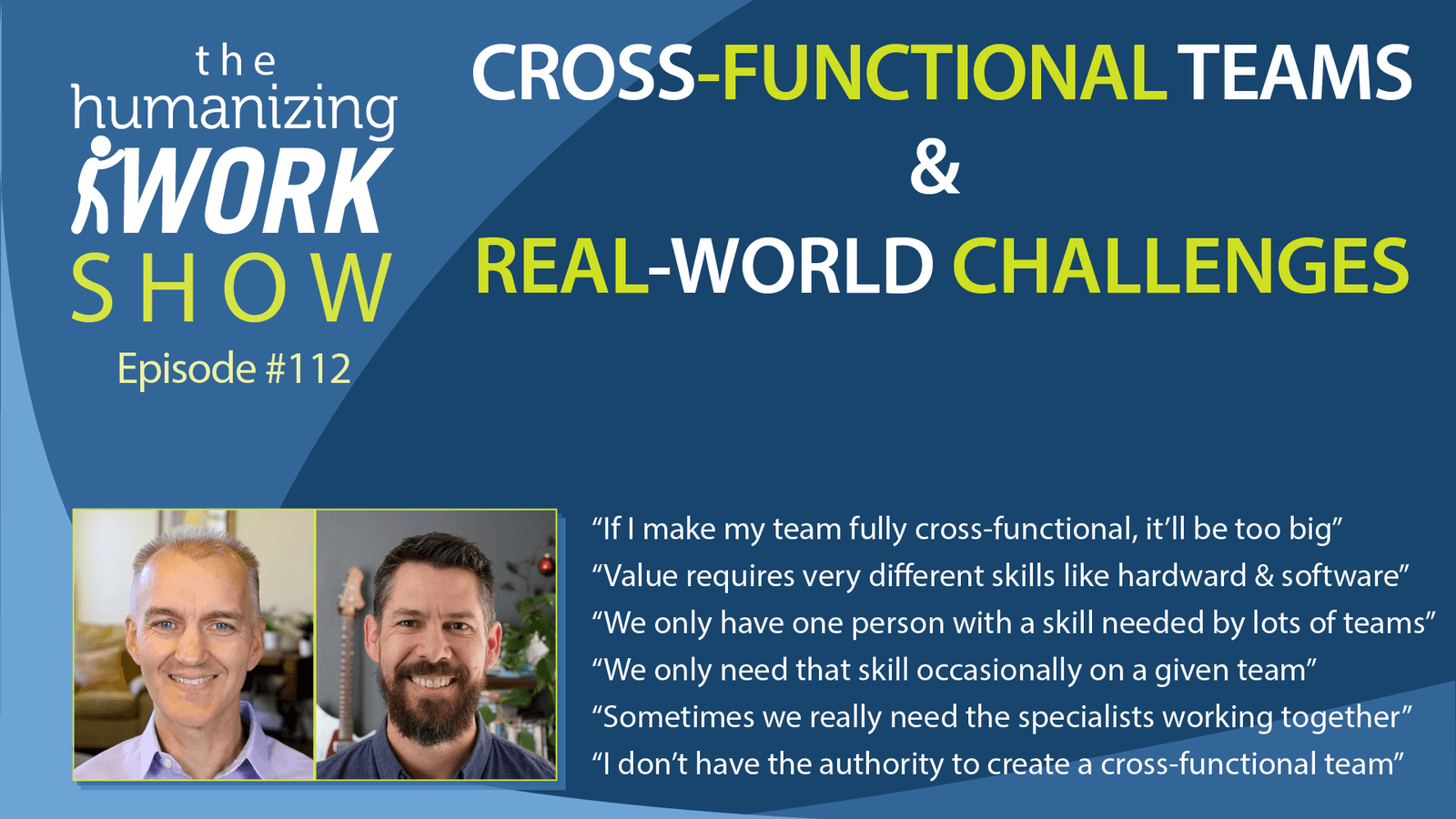
Tests whether you see cross-functional integration as dissolving handoffs, not renaming teams. Strong answers mention testing in CI/CD, collective estimation, and social friction. Weak answers treat it as a staffing reshuffle that keeps siloed workflows.
What's really being asked
This question probes whether you understand that cross-functional teams are defined by value delivery and dissolved handoffs, not by org-chart relabeling. The interviewer wants to see if you recognize the technical, process, and human challenges that appear when people who previously threw tickets over a wall now share ownership for a complete increment of value. They are also listening for systems thinking about how tooling, rituals, and team composition must change together.
The full answer
A strong answer walks through three layers in order. First, technical challenges: engineers must merge separate QA, Dev, and Ops toolchains into a unified CI/CD pipeline, shift testing left so that quality is embedded rather than gatekept, and democratize deployment expertise so the team can release without external sign-off. Second, process challenges: the team needs a shared Definition of Done that replaces stage-based approvals, collective estimation that accounts for integration work previously hidden in handoffs, and planning rituals that include all disciplines instead of sequential ticket tossing. Third, social and role challenges: former specialists must become T-shaped, which creates temporary anxiety about identity and expertise; trust deficits between silos surface immediately when blame can no longer be routed downstream; and the team may need to be intentionally oversized at first so that every skill needed for a complete increment is present, with cross-training as the explicit exit strategy.
The mistakes people make
Red flags include suggesting that QA should simply learn to code faster or that Ops should just get out of the way. Another weak pattern is describing the change as a staffing reshuffle while keeping the same sequential workflow inside the team. Saying that the biggest challenge is finding generalists in the hiring market also misses the point, because the goal is cross-training existing specialists, not replacing them.
What usually comes next
An interviewer might ask how you would measure success after three months, how you would handle a team that becomes too large during the transition, or what you would do if one discipline becomes a bottleneck because only one person holds that skill. They may also ask how you would change the architecture or codebase to support this new ownership model.
A concrete example
Suppose a team previously had a separate Ops group that handled all production deployments. In the first three months, the biggest pain point is often the on-call rotation and deployment access. A concrete answer describes pairing every developer with an Ops engineer to run deployments together, moving deployment scripts into the same repository as application code, and adding automated canary checks so the team can own release safety without an external gate. You might note that the team will likely be too big at first, which is acceptable as long as everyone is cross-training toward the goal of splitting into two fully cross-functional teams later.
Interview question
What distinguishes a genuine cross-functional team transition from a simple staffing reshuffle?
- a.All team members are replaced with generalists who can perform any role at equal skill.
- b.The team adopts a unified CI/CD pipeline and collective ownership of the complete value increment.Correct
- c.The primary focus shifts to hiring specialists who already have experience across multiple disciplines.
- d.Developers, QA, and ops report to the same manager but keep their separate sequential workflows.
Why? this is the answer
Real cross-functional integration dissolves handoffs by merging toolchains and sharing ownership of the full increment, not just relabeling the org chart. Option D is tempting because co-locating disciplines under one manager looks like change, yet preserving sequential workflows keeps the old silos intact.
Just read this? Test yourself on what you have been reading.
Read the original → humanizingwork.com
- #cross-functional teams
- #agile transformation
- #devops
- #team dynamics
- #organizational design
You just looked this up. Could you explain it out loud?
That is the part interviews actually test. Tezvyn takes questions like this one and gives you what the interviewer is really checking, the answer that lands, and the mistake that ends the conversation, in the four minutes before your next meeting.
The iPhone app is on the way
We are building it. Until it lands, nothing here is held back from you: every interview card, your saved cards, streaks and the job board all work in Safari, plus hundreds of free practice quizzes of thirty questions each. Sign in and it all carries over to the app the day it arrives.
Want it as an icon? Tap Share at the bottom of Safari, then Add to Home Screen. It opens full screen and the cards you have read stay available offline.
We are hiring for this. Every open role lists the topics its interview covers, so you can prepare for the real thing rather than guessing.
See open roles