Why is star schema preferred over 3NF for analytics?
Tests your grasp of the read-performance trade-off in analytical schemas. A great answer names fact and dimension tables, emphasizes fewer joins for aggregations, and cites simpler SQL and faster query plans.
What's really being asked
The interviewer wants to see if you understand the architectural split between OLTP and OLAP systems. They care whether you can articulate why a model optimized for fast writes and update integrity is usually the wrong shape for read-heavy analytical workloads. Specifically they are checking if you know what fact and dimension tables represent, why join minimization matters at scale, and whether you can discuss the trade-offs without treating denormalization as a moral failing.
The full answer
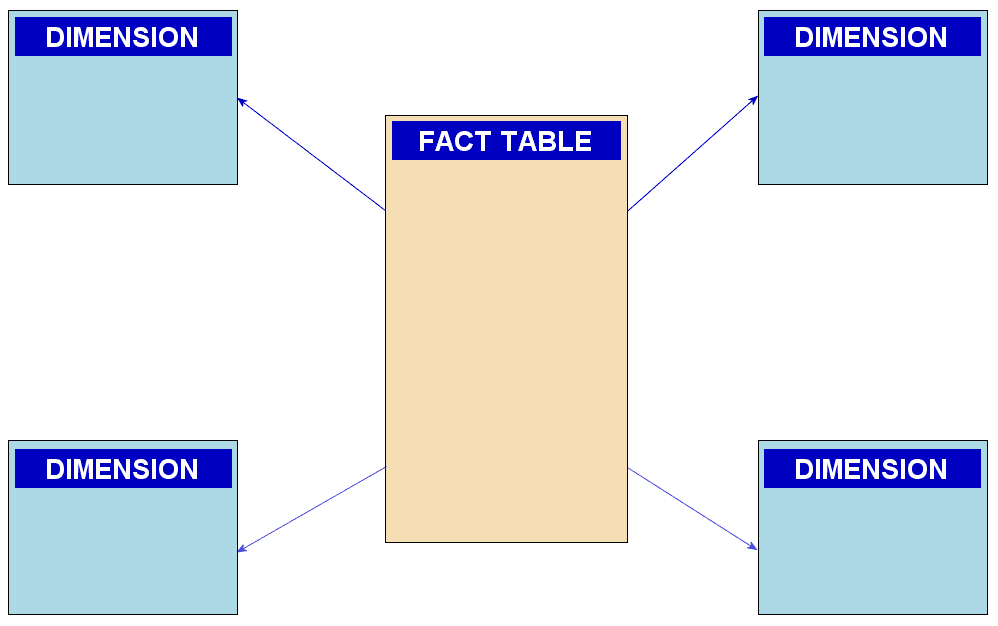
First, define the star schema structure: a central fact table containing measurable business events like orders or clicks, surrounded by dimension tables that hold descriptive attributes like date, product, or customer. Second, explain the query pattern advantage: analytics workloads typically scan millions of rows and aggregate metrics, so requiring six or eight joins across normalized tables creates CPU and memory overhead that star schemas avoid by keeping dimensions in wider denormalized tables. Third, contrast with 3NF goals: third normal form eliminates update anomalies and redundancy for transactional inserts and updates, which is irrelevant when data is batch-loaded and immutable. Fourth, mention practical benefits: simpler SQL reduces analyst errors, query optimizers generate better plans with fewer joins, and modern columnar storage often compresses denormalized dimensions better than the overhead of repeated join keys. Fifth, acknowledge the cost: dimension tables may contain redundant data and require ETL to rebuild, but this is an acceptable trade for read performance.
The mistakes people make
Claiming that star schemas are always smaller on disk is incorrect because denormalized text fields repeat. Arguing that 3NF is faster for reads shows confusion about the workload type. Saying star schemas are only for small data sets misses the point that they are the dominant pattern in petabyte-scale warehouses. Failing to mention fact versus dimension tables suggests you have only read definitions and never built one.
What usually comes next
How would you handle a slowly changing dimension like a customer address? When would you break a star schema into a snowflake schema? How do you choose the grain of a fact table? What indexing or partitioning strategies matter most for the fact table versus dimensions?
A concrete example
Imagine a retail data warehouse. A 3NF transactional schema might store orders linked to order lines, which link to products, which link to categories, which link to suppliers. An analyst asking for total revenue by product category in Q3 would join five tables. In a star schema, the fact table contains order line revenue and foreign keys, while a product dimension contains category and supplier attributes denormalized into one wide table. The analyst joins two tables, the database scans fewer blocks, and the query finishes in seconds instead of minutes.
Interview question
Why are dimension tables in a star schema intentionally denormalized despite increased data redundancy?
- a.To preserve update integrity for frequent transactional writes
- b.To optimize single-row insert speed in the central fact table
- c.To minimize total disk space by avoiding repeated descriptive attributes
- d.To reduce join count and complexity for read-heavy analytical queriesCorrect
Why? this is the answer
Denormalizing dimensions minimizes joins, which is critical for fast aggregations over millions of rows in analytical workloads. The disk-space option is a tempting misconception because denormalized text fields actually repeat across rows, so storage reduction is not the primary goal.
Just read this? Test yourself on what you have been reading.
Read the original → en.wikipedia.org
- #data modeling
- #star schema
- #olap
- #data warehousing
- #3nf
You just looked this up. Could you explain it out loud?
That is the part interviews actually test. Tezvyn takes questions like this one and gives you what the interviewer is really checking, the answer that lands, and the mistake that ends the conversation, in the four minutes before your next meeting.
The iPhone app is on the way
We are building it. Until it lands, nothing here is held back from you: every interview card, your saved cards, streaks and the job board all work in Safari, plus hundreds of free practice quizzes of thirty questions each. Sign in and it all carries over to the app the day it arrives.
Want it as an icon? Tap Share at the bottom of Safari, then Add to Home Screen. It opens full screen and the cards you have read stay available offline.
We are hiring for this. Open roles that interview on data modeling — each one lists the topics its interview covers.
See open roles