Search
Find a bite, explore a topic or look for a role.
Results for “Kubernetes”
Bites 384

ClusterIP Service: Internal-Only Networking
A ClusterIP service is like an unlisted phone number for your pods, providing a stable internal IP for communication *within* the cluster. Use it for backend-to-backend traffic. The footgun is assuming it's reachable from the outside—it's not.
Init Containers: Setup Tasks Before Your Main App Runs
Init containers are setup tasks that run to completion before your main application starts. Use them to wait for dependencies, fetch configs, or run database migrations.
Imperative kubectl: Directly Command Your Cluster
Imperative kubectl is like giving direct orders to your cluster: 'run this,' 'scale that.' It's great for quick, one-off tasks like debugging a pod or handling an incident.
Recreate Deployment: Downtime for a Clean Slate
The Recreate strategy is like flipping a switch: it shuts down all old pods before starting new ones. This guarantees downtime but is necessary for breaking changes, like a database migration. The footgun is a failed deployment leaves you with no running app.
kube-scheduler: The Cluster's Matchmaker
The kube-scheduler is your cluster's matchmaker, assigning new Pods to the best possible Node based on their needs. This is the default workload placement engine. The footgun is thinking it runs Pods; it only *assigns* them to a Node.
Container Image Signing: Verifying What You Run
Think of image signing as a digital "tamper-evident seal" on your containers. It proves who built an image and that it hasn't been altered. This is crucial for production systems to prevent running malicious code.
Image Digest: The Immutable Image Identifier
An image digest is a unique fingerprint for a container image, guaranteeing you get the exact version you expect. Use it in production to pin an image, preventing unexpected updates from mutable tags like :latest. The footgun is assuming a tag is immutable.
Extending Compose Files for Different Environments
Think of extending Compose files like CSS for your services; a base file defines the structure, and override files style it for different environments. This is used to manage settings like local code mounts for dev vs. restart policies for prod.
Building Images with Docker Compose
Docker Compose builds images from a compose.yml file, turning a Dockerfile into a runnable service within a multi-container app. It's for local dev where you need a database and backend to start together. The footgun: up won't rebuild without --build.
Docker Compose: Orchestrate Multi-Container Apps Locally
docker compose is a conductor for multi-container apps, using a single YAML file to define and run all the parts of your stack together. It's ideal for local development to spin up a database and API with one command.
Docker Compose Services: Defining Your App's Components
A service in Docker Compose is a blueprint for a running container. You define its image, ports, and environment to describe one piece of your application, like a web server or database. The footgun is using build and image together for one service.
The docker-compose.yml File: Your App's Blueprint
The docker-compose.yml file is a blueprint for defining and running multi-container Docker applications. Use it to spin up a local dev environment with a database, backend, and frontend with one command.
The Dockerfile: A Recipe for Your Container
A Dockerfile is a text-based recipe for building a Docker image, specifying the OS, code, and dependencies. You use it to create consistent, portable application environments.
Container Lifecycle: From Create to Remove
A container is a state machine: created, running, paused, stopped, and removed. You manage this with commands like docker run, while orchestrators automate it. The footgun: stop doesn't delete a container; you must rm it to free up disk space.
Container Runtime Shim: Decoupling the Container Lifecycle
A runtime shim is a small process that decouples the container daemon (like containerd) from the container itself. This lets the daemon restart without killing running containers.
OCI Runtime Spec: The 'How to Run' Standard for Containers
The OCI Runtime Spec is the universal instruction manual for executing a container. It defines a standard config.json and lifecycle actions, ensuring a container runs the same way across different runtimes like runc or crun.
Contributor License Agreement (CLA): A Legal Pre-Nup for Code
A Contributor License Agreement (CLA) is a legal pre-nup for code contributions, giving the project owner clear rights to use your work. It's used by projects like Angular or Go to avoid legal ambiguity. The footgun is confusing it with the project's license.
YARN: Hadoop's Cluster Operating System
YARN acts as the operating system for a Hadoop cluster, separating resource management from job processing. This allows multiple engines like Spark or MapReduce to run on the same hardware.
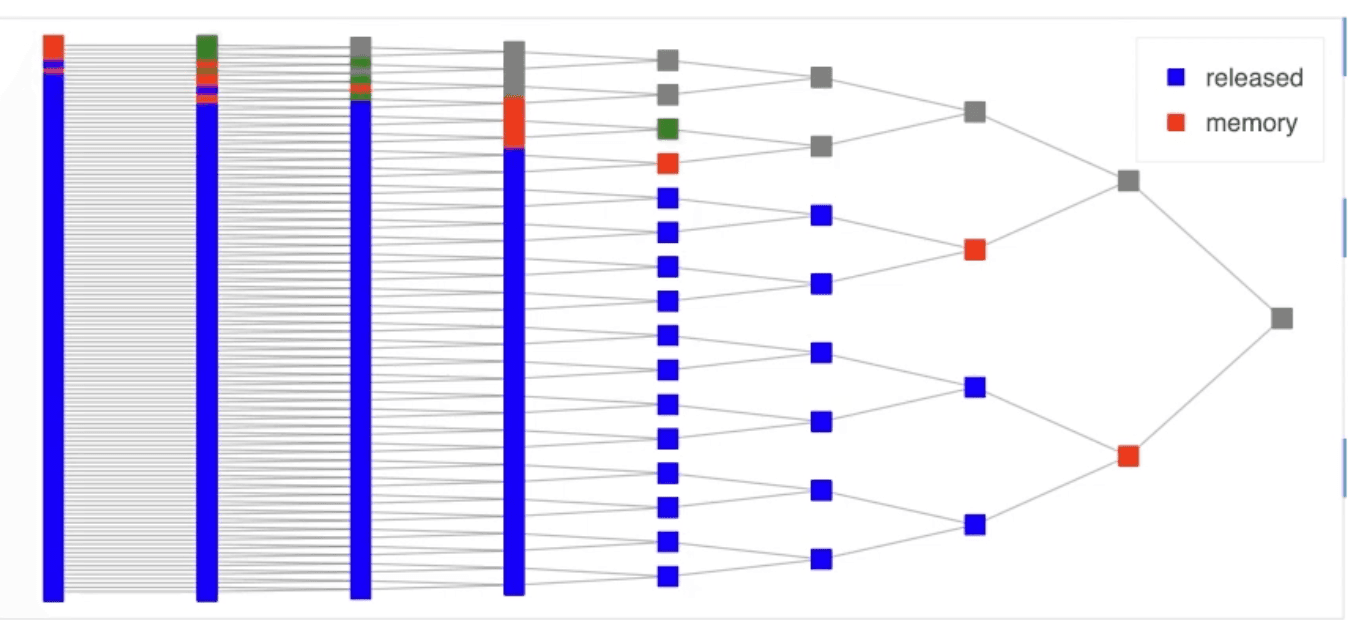
Dask: Parallel Computing with Familiar APIs
Dask parallelizes Python analytics by breaking data into chunks and building a task graph of operations. It's like giving Pandas and NumPy superpowers for data too big for RAM. The footgun: its lazy evaluation means you must explicitly call .compute().
Pillar Pages: The Hub-and-Spoke SEO Model
A pillar page is the "hub" for a topic, with related articles as the "spokes." This structure signals to search engines that you're an authority. It's used to rank for broad keywords by linking many specific articles to one central resource.