Search
Find a bite, explore a topic or look for a role.
Results for “PostgreSQL”
Bites 111
Google Cloud Spanner: A Globally Distributed SQL Database
Spanner is a globally distributed SQL database that scales like NoSQL but keeps the strong consistency of a relational database. Use it for global applications like financial ledgers that need ACID transactions across continents.
NewSQL: SQL Scalability Without Sacrificing ACID
NewSQL databases aim for NoSQL's horizontal scaling with the ACID guarantees of a traditional relational database. They suit high-throughput OLTP systems, like e-commerce, that must scale out. The footgun is assuming they are a simple drop-in replacement.
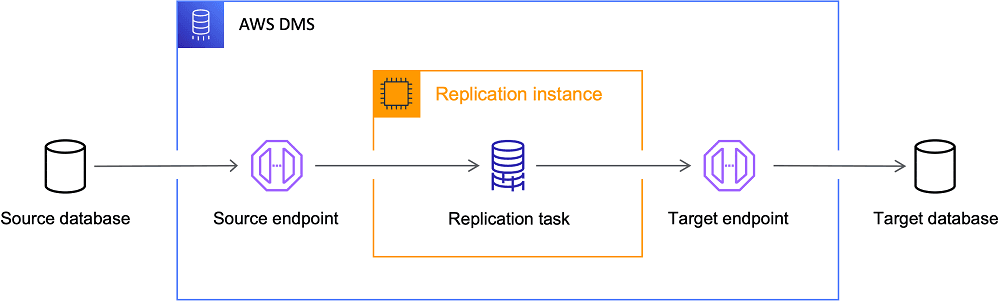
AWS DMS: Your Managed Database Migration Engine
AWS DMS is a managed service for migrating databases. It acts like a replication server you point at a source and target, handling the data transfer. It's used for one-time migrations to AWS or for continuous replication.
Amazon Aurora: AWS's Proprietary Relational Database
Amazon Aurora is a proprietary relational database from AWS, offered as part of the Amazon Relational Database Service (RDS). It provides a managed database solution within the AWS cloud ecosystem, available since October 2014.
SQL Query Builders: Write SQL Without Writing SQL
An SQL query builder is a translator for your database, converting visual clicks or chained code methods into raw SQL. It's used to write safer, database-agnostic code or to let non-technical users build queries. The footgun is generating inefficient queries.

ODBC: The Universal Translator for Databases
ODBC acts as a universal translator, letting one application speak to many different relational databases. Your app uses the standard ODBC interface, and a specific "driver" handles the unique protocol for each database. The footgun is performance overhead.

Database Parameter Tuning: Beyond the Defaults
Database defaults are a compromise. Parameter tuning tailors the database to your specific workload, hardware, and reliability needs. It's used to optimize memory, WAL settings, or query planning.
Database High Availability: Surviving Server Failure
High Availability (HA) means having a hot standby database ready to take over instantly upon failure. It's essential for critical systems like payment gateways where downtime is unacceptable.
Point-in-Time Recovery: Rewind Your Database to a Specific Second
Point-in-Time Recovery (PITR) is a database time machine, restoring data to a specific second, not just the last snapshot. It's crucial for reversing application-level errors.
Role-Based Access Control (RBAC) in Databases
RBAC bundles permissions into roles, like 'analyst' or 'admin', instead of assigning them to individuals. This simplifies managing who can read or write data in a database. The footgun is creating too many roles, making it as complex as individual permissions.
Polyglot Persistence: Use the Right Database for the Job
Polyglot persistence means using multiple, specialized data stores in one system. Instead of one database handling everything, you might use a relational DB for transactions, a document DB for profiles, and a graph DB for connections.
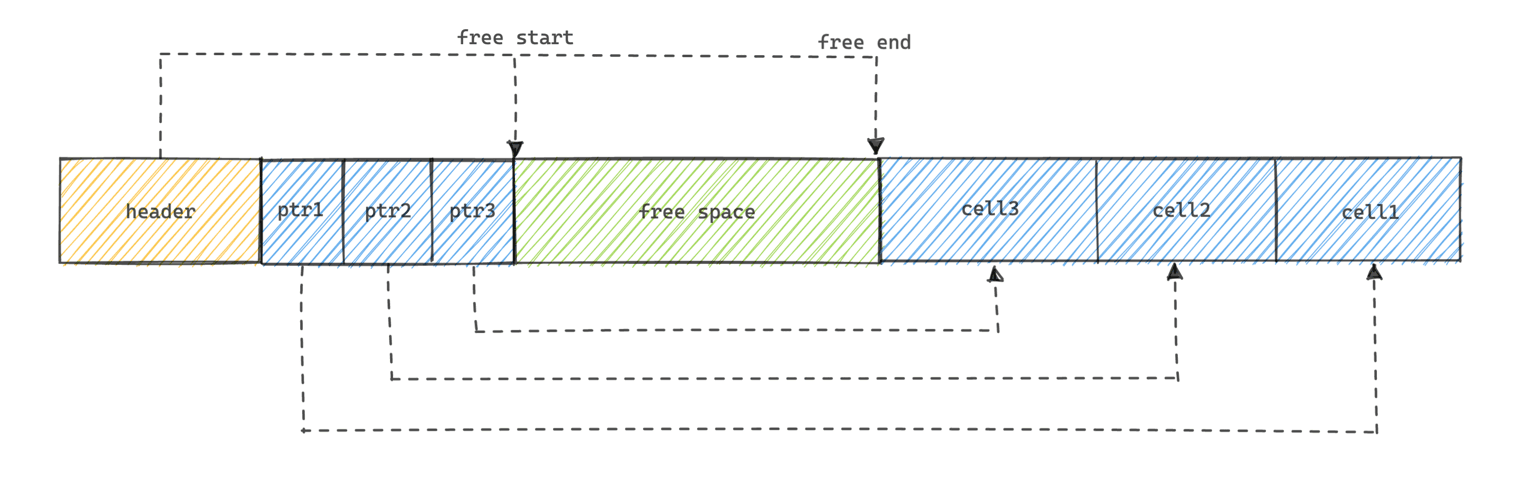
Slotted Page Structure: Stable Pointers on Disk
A slotted page organizes data by growing records from the end of the page and pointers from the beginning. This allows databases to handle variable-sized records without costly reshuffling, keeping pointers stable.
Row vs. Columnar Storage: Organizing Data for Speed
Row stores group data by record, like a phone book entry. Column stores group by attribute, like separate lists for all names. Use row stores for transactions (OLTP), but for analytics (OLAP), they force you to read unneeded data from disk.
Storage Engine: The Database's Filing System
A database's storage engine is its specialized filing system, handling how data is physically written to and read from disk. Different engines optimize for different tasks, from fast writes to complex queries.
Cardinality Estimation: How Databases Guess Query Costs
A database's query optimizer guesses how many rows each part of a query will return to pick the fastest execution plan. This guess, cardinality estimation, is key for choosing join strategies.
Query Execution Plan: The Database's Road Map
A query execution plan is the database's internal strategy for fetching your data. It's the recipe it creates before running your SQL. This plan determines whether to use an index or scan a whole table, directly impacting performance.
Write Skew: The Phantom Anomaly of Snapshot Isolation
Write skew is when two transactions read the same data, make decisions, and then update *different* data, violating a business rule. It's common in booking systems or when enforcing multi-row constraints under Snapshot Isolation.
Snapshot Isolation: A 'Photo' of Your Database
Snapshot Isolation gives a transaction a private 'photo' of the database from when it started, ensuring consistent reads. It's used in high-concurrency systems to prevent readers from blocking writers. The footgun is that it doesn't prevent all anomalies.
Two-Phase Locking (2PL): Preventing Database Race Conditions
2PL is a database's pessimistic strategy for safe concurrency. A transaction acquires all necessary locks before releasing any, ensuring operations don't clash. It's used to guarantee consistency.
Database Transaction Log: Your System's Safety Net
A transaction log is your database's safety journal. Before changing data, it records the intended action in a durable file. This is vital for crash recovery, ensuring data isn't left corrupt. The footgun: its primary role is integrity, not just auditing.