Search
Find a bite, explore a topic or look for a role.
Results for “PostgreSQL”
Bites 111
Write-Ahead Logging (WAL): Survive Crashes by Journaling First
Think of it as a journal of intentions. Before changing data, a database writes the intended change to a log file first. This ensures that if the system crashes, it can recover by replaying the log, guaranteeing no writes are lost.
First Normal Form (1NF): No Nested Data
First Normal Form (1NF) means every table cell holds one single value, not a list. It's the first rule of relational databases, stopping you from storing comma-separated strings. The footgun is stuffing multiple values into one field, which breaks SQL queries.
Database Normalization: Tidy Tables, Less Redundancy
Database normalization organizes data into smaller, related tables to eliminate redundancy, like separating addresses from orders. It's the standard for transactional (OLTP) systems where data integrity is critical.
ACID: The Four Guarantees of Database Transactions
ACID is a contract for database transactions: all-or-nothing guarantees for data validity, even during crashes. It's critical for relational databases in finance or e-commerce. The footgun is assuming all databases offer this; many NoSQL systems don't.

How a SQL SELECT Query Actually Runs
A SQL SELECT query runs in a different order than you write it. It first builds the dataset with FROM/JOINs and filters it with WHERE, only then computing the final columns in SELECT. This is crucial for debugging.
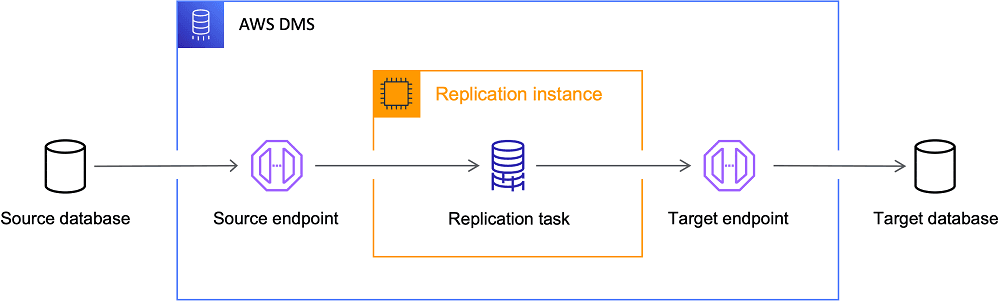
AWS DMS: Automating Database Migrations
AWS DMS automates moving data between databases, not just as a simple data pump. Use it for one-time migrations to the cloud or for continuous replication. The footgun is assuming DMS also converts your schema; for different engines, you must use the Schema…
Managed Time Series Databases (TSDB)
A managed time series database is a hosted service optimized for data with a timestamp. It's used for application monitoring, IoT sensor data, and financial analytics. The main footgun is using a general-purpose database, which fails at high-volume writes.

Database Multi-AZ: High Availability vs. Read Scaling
Multi-AZ deployment is like a hot spare database in another datacenter for automatic failover. It's for critical systems where downtime is costly. The footgun is assuming all standbys serve reads; only the 'cluster' type does, not the 'instance' type.
Managed Databases: Let the Cloud Handle Ops
A managed database is like leasing a car with a full-service plan instead of fixing it yourself; you trade control for convenience. This is the model for AWS RDS or GCP Cloud SQL.
Block Storage: Your Virtual Hard Drive in the Cloud
Think of block storage as a raw hard drive in the cloud. It's the foundation for virtual machine disks (like AWS EBS) and databases that need direct control over their storage. The footgun is treating it like a web-accessible file share; it's a raw device.
Score: Define Your Workload Once, Run Anywhere
Score is a universal remote for your workload configs, letting you define what your app needs once in a score.yaml file. It translates this spec into files for Docker Compose or Kubernetes, preventing config drift.