Search
Find a bite, explore a topic or look for a role.
Results for “Kubernetes”
Bites 384
Helm Templates: Turning Static YAML into Dynamic Manifests
Think of Helm templating as a mail merge for Kubernetes. It combines static YAML templates with dynamic values to generate manifests for different environments. Use it to manage configurations for dev, staging, and prod.
GitOps Principles: Your Repo as the Source of Truth
GitOps treats infrastructure state like code, with your Git repo as the single source of truth. Automated agents pull declarative configs from the repo to reconcile the live system, making it ideal for Kubernetes.

Prometheus Architecture: A Pull-Based Monitoring System
Prometheus is a monitoring system that actively pulls metrics from your services, rather than waiting for them to push data. It's the standard for tracking performance in dynamic environments like Kubernetes.
Falco: Real-Time Threat Detection for Cloud-Native
Falco is a runtime security camera, watching Linux syscalls to detect threats in real time. It's used in Kubernetes to spot abnormal behavior like privilege escalation or writing to /etc. The key is it only *detects* and *alerts*; it doesn't block threats.
Container Storage Interface (CSI): The Universal Adapter for K8s Storage
CSI is a universal adapter for storage in Kubernetes, letting any storage system speak a common language. This allows providers to create plugins for their systems without touching core Kubernetes code.
Dynamic Volume Provisioning: Storage on Demand
Dynamic Volume Provisioning lets you request storage by its type (e.g., "fast-ssd") instead of pre-provisioning a disk. Kubernetes automatically creates a matching volume. This is standard for stateful apps.
Sealed Secrets: Safely Commit K8s Secrets to Git
Sealed Secrets lets you commit encrypted Kubernetes secrets to a public Git repo. In a GitOps workflow, this allows all configuration to live in version control. The footgun: a SealedSecret is a one-way street; only the target cluster can decrypt it.
Immutable Secrets & ConfigMaps: Write-Once Configuration
Treat your Kubernetes configuration like a container image: create it once, then create a new version to update it. The immutable flag enforces this "write-once" pattern for Secrets and ConfigMaps, reducing API server load and preventing accidental updates.
Ingress Controller: Your Cluster's Smart Reverse Proxy
An Ingress Controller is the traffic cop for your Kubernetes cluster, directing external HTTP/S requests to the correct internal services. It exposes multiple services under a single IP, handling host and path routing.
Pod Affinity: Grouping or Separating Your Pods
Pod affinity tells Kubernetes to place pods together for performance or apart for high availability. Use it to co-locate a web server and cache for low latency, or spread database replicas across nodes to prevent a single point of failure.
Pod Disruption Budgets: Stop Upgrades From Killing Your App
A Pod Disruption Budget (PDB) is a contract with Kubernetes to maintain minimum availability. It limits how many pods can be voluntarily terminated at once during node drains or cluster upgrades, preventing self-inflicted outages.
kube-controller-manager: The Cluster's Reconciliation Engine
The kube-controller-manager is Kubernetes' reconciliation engine, running multiple control loops to make the cluster's actual state match your desired state. It handles tasks like ensuring a Deployment has the correct pod count.
Harbor: A Private, Secure Artifact Registry
Think of Harbor as a private Docker Hub with built-in security. Use it to scan images for vulnerabilities, enforce role-based access control, and sign artifacts before deploying to Kubernetes.
seccomp: A Kernel-Level Allowlist for Syscalls
seccomp is a Linux kernel firewall for system calls (syscalls), restricting which operations a process can request. Docker and Kubernetes use it to harden containers against exploits. The footgun is creating a custom profile so restrictive it breaks your app.
Container Runtime: The Engine That Runs Your Containers
A container runtime is the low-level engine that executes containers. Kubernetes uses a runtime like containerd or CRI-O on each node to pull images and manage container lifecycles.
Linux cgroups: Resource Fences for Processes
Cgroups are resource fences for processes, letting the Linux kernel enforce CPU and memory limits. Container runtimes use them to isolate containers, which is how Kubernetes enforces Pod resource limits.

What is Cloud Native Architecture?
Cloud Native refers to a collection of practices and open-source projects, like Kubernetes, governed by the CNCF. It's used by enterprises to build modern products and services.
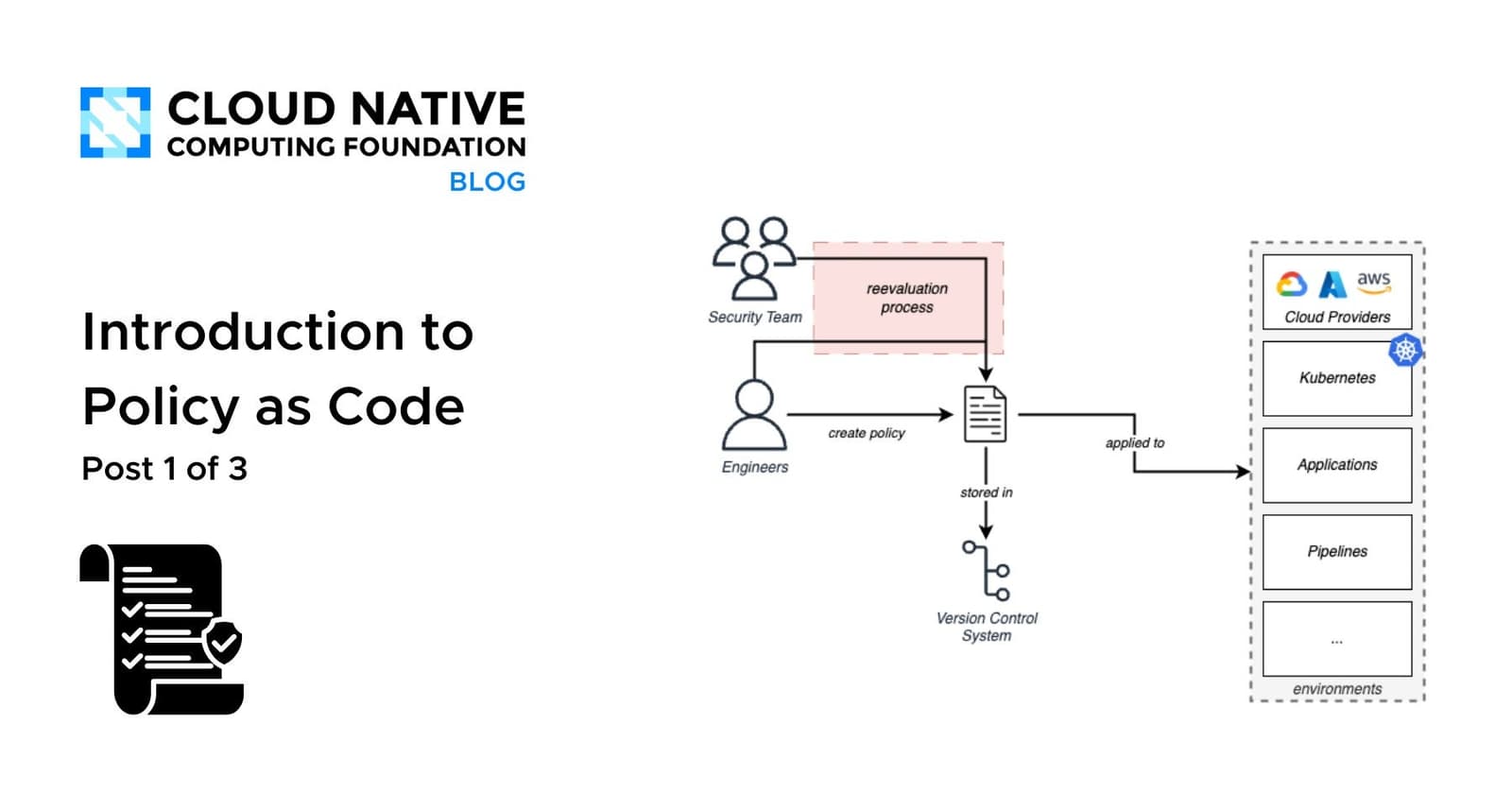
Policy as Code: Rules as Versioned, Testable Code
Policy as Code (PaC) treats rules like code: versioned, tested, and automated. Instead of manual UI clicks, you define guardrails in a declarative language. Use it in CI/CD to block bad deploys or in Kubernetes to enforce runtime rules.
Rolling Updates: Deploying Code Without Downtime
A rolling update deploys new code by gradually replacing old application instances with new ones, ensuring zero downtime. It's the default for stateless services in orchestrators like Kubernetes.
The Twelve-Factor App: A Blueprint for Portable Cloud Apps
The Twelve-Factor App is a blueprint for building portable, resilient cloud apps. It's used for microservices or apps on platforms like Kubernetes, ensuring they can be easily deployed and scaled. The footgun is treating it as dogma, not a guide.