Intermediate concepts in AI & ML, page 3

Recursive Feature Elimination: Survival of the Fittest Features
RFE runs a tournament for your features, repeatedly training a model and dropping the weakest ones. It's used to simplify models by selecting a core subset of impactful features. The main footgun: RFE's output is only as good as the model used for ranking.
Feature Definition Language: Define ML Features as Code
A feature definition language is like infrastructure-as-code for ML features. It lets you define a feature's source and schema once, then use it for both offline training and online serving, ensuring consistency.
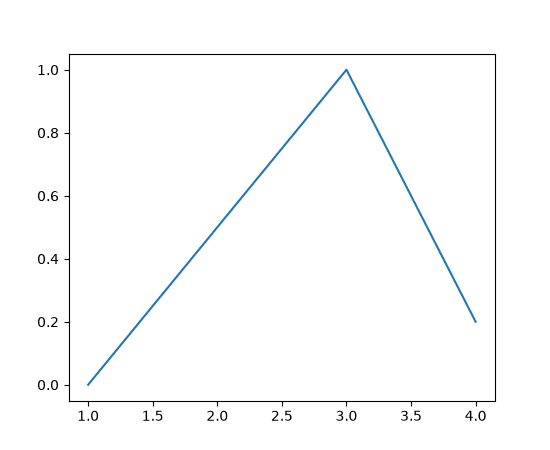
Matplotlib's Object-Oriented API: Explicit Plot Control
Instead of the stateful plt.plot(), Matplotlib's OO API gives you explicit control by creating Figure and Axes objects to call methods on, like ax.plot(). This is crucial for complex plots with multiple subplots. The footgun is mixing styles.
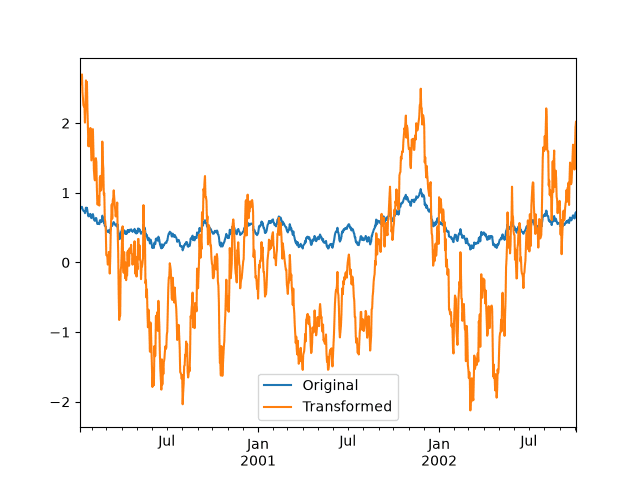
Groupby: The Split-Apply-Combine Strategy
Groupby operations let you split data into groups, apply a function to each, and combine the results. It's how you answer 'what's the average salary per department?' The footgun is using a slow custom .apply() function when a faster built-in method exists.
Scale-Space: Analyzing Images at Multiple Scales
Scale-space representation is like viewing an image from far away and up close simultaneously. It creates a stack of progressively blurred images to reveal structures at different sizes, which is key for robust feature detection.
Scikit-learn's Universal API: Fit, Predict, Transform
The scikit-learn Estimator API is a universal contract: .fit() to learn, .predict() to guess, and .transform() to change data. It's used for everything from StandardScaler to RandomForestClassifier.
Difference of Gaussians: Finding Edges by Subtracting Blurs
Difference of Gaussians (DoG) finds features by subtracting a heavily blurred image from a lightly blurred one, isolating details at a specific scale. It's used for fast blob and edge detection.
Tidy Data: One Variable, One Column
Tidy data is a standard for structuring datasets: each column is a variable, each row an observation. This format simplifies analysis, as tools can expect a consistent input shape.
FAST: High-Speed Corner Detection for Real-Time Vision
FAST finds corners by checking if a pixel is significantly brighter or darker than a ring of its neighbors. This simple, high-speed test makes it perfect for real-time video processing.

In-Context Learning: Teaching a GPT Without Retraining
In-context learning is like giving an LLM a cheat sheet in the prompt. You provide examples of a task, and the model follows the pattern for your new query without any permanent changes. Use it for one-off tasks like reformatting text or classifying sentiment.
ggplot2: Building Graphics with a Grammar
ggplot2 treats plots like sentences. You declare components—data, aesthetics (x/y axes, color), and geoms (points, bars)—and it assembles the visual. It's essential for data exploration in R, letting you iterate by swapping layers.
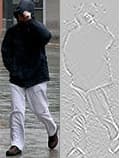
Histogram of Oriented Gradients (HOG)
HOG describes an object's shape by summarizing the directions of local intensity changes (gradients). It's a classic computer vision method for tasks like pedestrian detection where form matters more than color.
Few-Shot Prompting
Few-shot prompting embeds task examples directly in the prompt to guide output format without retraining. It excels at niche tasks and consistent formatting, but mismatched examples degrade performance more than no examples at all.
dplyr: A Grammar for Data Manipulation
dplyr offers a consistent grammar for data manipulation, letting you chain simple verbs to perform complex transformations. It's essential for cleaning, summarizing, and reshaping data frames in R.
SIFT: Finding Image Features That Scale
SIFT finds key points in an image that are stable across changes in scale. It's used for object recognition or stitching panoramas by matching these features between images. The main footgun is assuming it's invariant to all changes, not just scale.
MLflow Tracking: A Lab Notebook for Your ML Experiments
Think of MLflow Tracking as a lab notebook for your models. It logs parameters, metrics, and artifacts for every training run, letting you compare results and find the best model. The main footgun is forgetting to set a remote server, trapping logs locally.
Model Signature: The API Contract for Your ML Model
A model signature is an API contract for your ML model, defining the exact shape and types of its inputs, outputs, and parameters. It's used by platforms like MLflow to validate requests and enable safe deployments. Forgetting it will block model registration.
Chain-of-Thought Prompting: Making LLMs 'Show Their Work'
Chain-of-Thought (CoT) prompting gets better answers from LLMs by asking them to 'show their work.' It's best for complex reasoning like math problems or logic puzzles where breaking the problem down helps.
Hydra: Composable Configuration for Complex Apps
Hydra treats configuration like LEGOs. Instead of one monolithic file, you compose small, reusable config pieces for each run. It's ideal for ML experiments where you override settings from the command line.
API Authentication: Who Goes There?
API authentication is the bouncer at your application's door, checking IDs to prove who is making a request. It's used to protect any networked service, from weather data to banking.
We are hiring for this. Every open role lists the topics its interview covers, so you can prepare for the real thing rather than guessing.
See open roles