Concepts in AI & ML, page 17
Two-Stream ConvNets: Seeing What vs. How It Moves
Two-Stream ConvNets split video analysis into two paths: a spatial stream sees *what* is in a frame, and a temporal stream sees *how* it moves via optical flow. This is used for action recognition, like telling 'typing' from 'waving'.
Logging Model Explanations, Not Just Predictions
Log *why* your model makes a prediction, not just the output. This captures the model's reasoning, creating a debuggable audit trail. It's essential for diagnosing model drift and ensuring fairness.
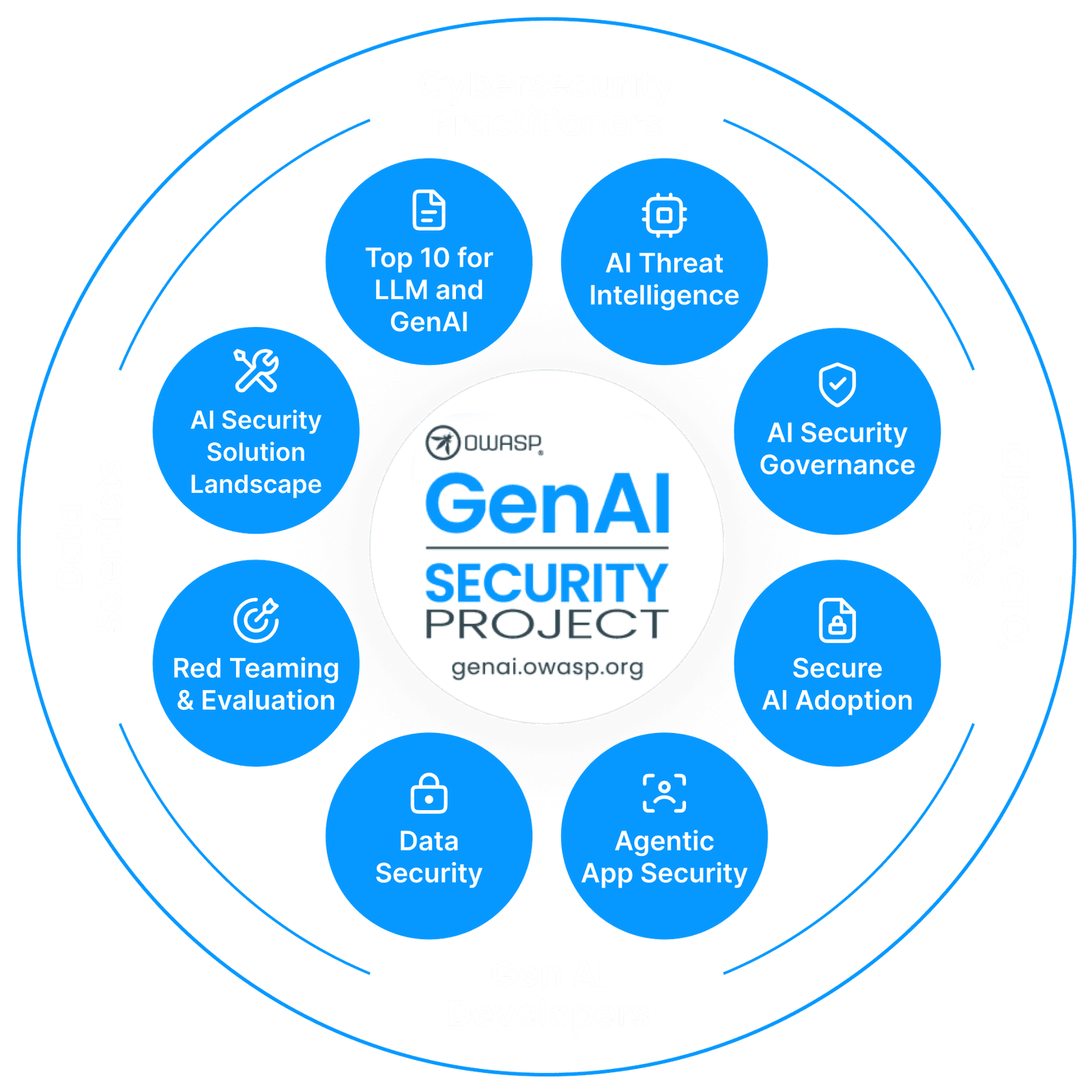
LLM Red Teaming: Adversarial Security Testing
LLM Red Teaming is a simulated attack where you proactively try to break your own AI to find security flaws. It's used to test for vulnerabilities like prompt injection or data leakage, which traditional security tools miss.

Word Embeddings: Turning Words into Math
Word embeddings turn words into vectors, where distance equals a difference in meaning. They power features like search relevance and text classification by letting algorithms 'understand' context.
Correlation Filters: Fast and Robust Object Tracking
Correlation filters track objects by learning a template that gives a peak response at the object's location. This makes them extremely fast for real-time visual tracking. The footgun: basic versions fail when the object changes scale or is occluded.
DDM: Detecting Drift with Error Rate Statistics
DDM acts as a statistical alarm on your model's error rate, watching for spikes that signal the underlying data has changed. Use it for online binary classification with immediate feedback, like spam filtering.

LLM Guardrails: Keeping Model Outputs on Track
LLM guardrails are safety policies that steer model outputs, acting like bumpers in a bowling alley to prevent responses from going off-topic, leaking data, or generating harmful content. They are crucial for topic control and preventing prompt injections.
Convolutional Neural Networks: Finding Patterns with Filters
A CNN learns to spot features by sliding optimized filters over data like images, audio, or text. It's the go-to for computer vision, but a common mistake is thinking it's the only modern tool, as transformers sometimes replace it.
Particle Filters for Object Tracking
A particle filter tracks an object by maintaining a cloud of possible states ('particles'), not one best guess. It's used to follow objects through clutter and occlusion, like tracking a face in a crowd.

Adversarial Attacks: Tricking LLMs into Misbehaving
Adversarial attacks are inputs designed to trick an LLM, bypassing its safety alignment. This is how "jailbreaks" coax models into generating harmful content. The footgun is assuming safety training makes a model foolproof; it just makes attacks more subtle.

Transfer Learning: Don't Train Models from Scratch
Transfer learning means not training a model from zero. You start with a model pre-trained on a large, general dataset, then fine-tune it for your specific task. This is common in image recognition, using a general model to learn a niche classification.
DeepSORT: Adding Visual Memory to Object Tracking
DeepSORT adds a 'visual memory' to object tracking, using a deep learning model to re-identify objects after they're hidden. It's used in surveillance and autonomous driving to maintain consistent IDs across frames.
Workflow Engine: The Conductor for Your Business Logic
A workflow engine conducts your business logic, ensuring complex tasks run in the right order. It's for multi-step processes like order fulfillment or data pipelines. The footgun is building one from scratch—you'll poorly reinvent state management and retries.
ML Interpretability: Cracking Open the Black Box
ML interpretability cracks open the 'black box' to explain *why* a model made a specific decision. It's essential in high-stakes fields like finance or medicine to ensure automated decisions are fair. The footgun is trusting accuracy alone.
Recurrent Neural Networks: Networks with Memory
An RNN is a neural network with a memory loop, processing sequential data by feeding its own output back in as input. It's used for text generation or time-series analysis where context is key.
Temporal Segment Networks: Seeing the Whole Video Story
Temporal Segment Networks (TSN) understand video actions by sampling sparse snippets across the entire timeline. This gives a model long-range context to distinguish complex actions.
Generative Adversarial Network (GAN)
A GAN trains two networks in competition: a generator that fabricates fake samples and a discriminator that judges real versus fake. Their adversarial game pushes the generator toward realistic outputs, enabling image synthesis and data generation without…
Value Learning
Value learning is the AI-safety approach of having a system infer what humans actually value, rather than optimizing a hand-coded proxy, so that capable agents pursue goals aligned with human intent even in novel situations.
TensorFlow Extended (TFX): Production ML Pipelines
TFX is an end-to-end platform for building production ML pipelines, like an assembly line for your models. It automates data validation, training, analysis, and serving. The footgun: TFX is not one tool, but a suite of libraries you must learn and connect.

Attention in Vision: Teaching Models Where to Look
Attention teaches a model where to look in an image by dynamically weighting important pixels or features. It's used in object detection to focus on relevant regions. The footgun is assuming it's free; attention adds computational cost and complexity.
We are hiring for this. Every open role lists the topics its interview covers, so you can prepare for the real thing rather than guessing.
See open roles