Concepts in AI & ML, page 25
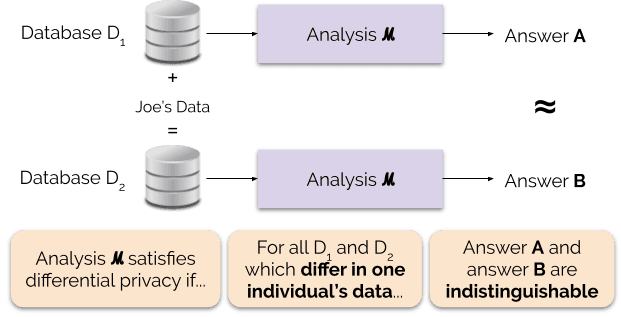
Differential Privacy: Anonymize Data with Math
Differential Privacy adds mathematical noise to data queries, making it impossible to know if one person's data is included. Tech giants use it to learn from user behavior without seeing individual activity.
Prototypical Networks: Learning from a Handful of Examples
Prototypical Networks classify new categories from few examples by finding the average representation, or 'prototype,' for each class. This is key for few-shot image recognition where you have only 1-5 examples.
MLflow Models Standardize Deployment Packaging
MLflow Models wrap artifacts into a standard package so one pipeline serves sklearn or PyTorch without new deployment code. Teams ship experiments to REST endpoints without Dockerfiles per model. Missing dependency logging lets model load but fail to predict.
Quantization-Aware Training (QAT): Forcing Models to Learn While Quantized
QAT forces a model to "learn its own compression" by simulating quantization during training. This lets you shrink LLMs to aggressive low-bit formats (like 4-bit) where simpler post-training methods fail.
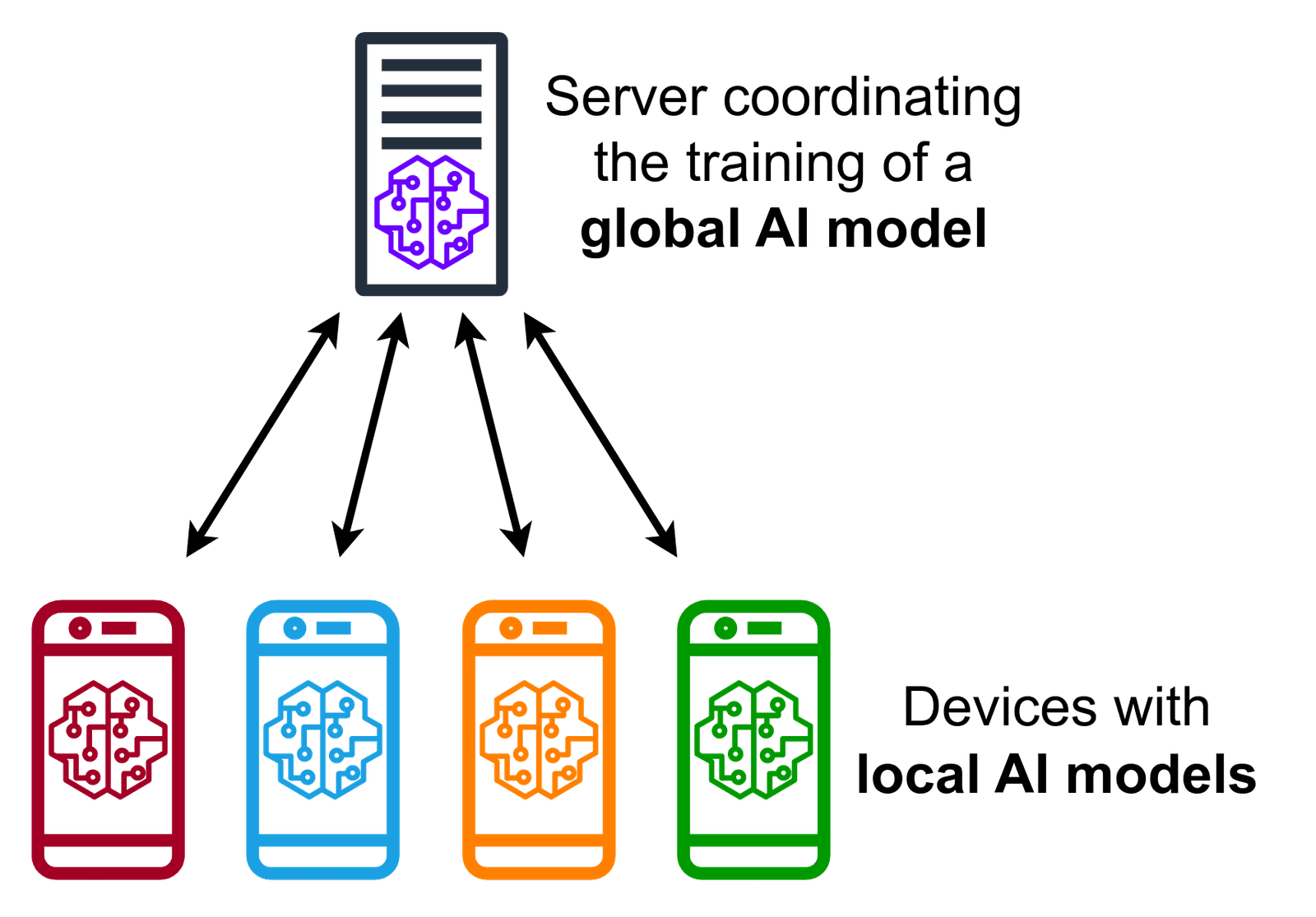
Federated Learning: Train Models on Decentralized Data
Federated learning trains a shared model by sending the model to the data, not the other way around. It's used for training on sensitive, decentralized data like phone keyboards. The main footgun is that non-uniform data across clients can skew the model.

Weakly Supervised Learning: Cheaper Labels, Smarter Models
Weakly Supervised Learning trains models on cheap, imprecise labels to perform complex tasks. It's used for object detection when you only have image-level tags, not pixel-perfect annotations.
Docker Image vs. Container: Blueprint vs. Runtime
A Docker image is a read-only blueprint; a container is a live instance with a writable layer. You build an image once in CI and run many containers from it in production. The footgun is mutating a running container without updating the image recipe.
AI's Dual-Use Problem: Good Tools, Bad Outcomes
AI models built for good can be easily repurposed for harm. A language model that helps with coding can also generate malware. The footgun is assuming good intentions prevent misuse; the risk is in the capability, not the creator's intent.

Counterfactual Fairness: What if You Were Different?
Asks "what if?" for fairness: would your model's decision change if only a sensitive attribute like race were different? It's used to audit models for hidden bias in areas like hiring.
SimCLR: Learning Powerful Vision Features Without Labels
SimCLR learns image features from unlabeled data by teaching a model that two augmentations of one image are similar, and all other images are different. It's used to pre-train models on vast, unlabeled datasets.
Why GPUs Dominate Neural Network Training
A GPU is a freight train, a CPU a race car: deep learning moves identical math across huge batches. GPUs win on transformers and CNNs. The footgun is using them for tiny models, where data transfer overhead eats the gains.
AI Coding Assistants: Your LLM Pair Programmer
AI coding assistants are like pair programmers powered by large language models. They assist in tasks across the software lifecycle, from code generation and testing to debugging and documentation. The key footgun is over-reliance; they assist, not replace.
Homomorphic Encryption: Compute Without Decrypting
Homomorphic encryption lets you perform computations on data while it's still encrypted. This allows a third party, like a cloud provider, to process your sensitive data without ever seeing the raw information, ensuring privacy.
Momentum Contrast (MoCo): A Dynamic Dictionary for Unsupervised Learning
MoCo learns visual features without labels by treating contrastive learning as a dynamic dictionary lookup. A momentum-updated encoder creates a large, consistent set of keys on-the-fly, enabling powerful pre-training on unlabeled data for downstream vision…
Staging Environments for ML Pipelines
A staging environment mirrors production so models and pipelines are validated on production-like data and infrastructure before release. It catches drift, integration breaks, and serving regressions early, making promotion to production a safe, repeatable…
Open LLM Leaderboard: Separating Hype from Performance
The Open LLM Leaderboard is the de facto scoreboard for open-source models, providing reproducible benchmarks to cut through marketing hype. It helps you compare models on standardized tests, but remember that a high rank doesn't guarantee performance on your…

Proxy Metrics: Estimate Long-Term Impact Now
A proxy metric uses a model to estimate a slow, long-term outcome, like annual revenue. It lets you quickly judge an A/B test's impact without waiting months for the true result. The footgun is trusting a biased model or ignoring its error, giving you false.
Masked Autoencoders: Learning Vision by Filling in the Blanks
Masked Autoencoders (MAEs) teach models vision by playing "fill-in-the-blanks" with images, masking most of an image (e.g., 75%) and learning to reconstruct it. This is used for self-supervised pre-training of large Vision Transformers on unlabeled data.
Transformer Encoder-Decoder Architecture
The encoder-decoder Transformer maps an input sequence into rich contextual representations with an encoder, then a decoder generates output tokens autoregressively while attending to those representations via cross-attention, making it ideal for…
Right-Size Inference and Stop Paying for Idle GPUs
Instance right-sizing matches inference to the smallest hardware that serves it without choking. It matters when GPU endpoints idle at 10% utilization. The footgun is copying your training spec into production; inference rarely needs that memory or multi-GPU.
We are hiring for this. Every open role lists the topics its interview covers, so you can prepare for the real thing rather than guessing.
See open roles