Advanced interview questions in AI & ML
Does forcing profile completion cause retention?
Name the confounder (engaged users self-select into completing profiles), warn that forcing it may not transfer the effect, and propose a randomized experiment.

Design an MLOps platform for a mid-sized company: components and build-vs-buy trade-offs
Tests pragmatic scoping and build-vs-buy reasoning. Strong answers rank data estate, feature store, registry, CI/CD/CT, and monitoring above exotic serving, buying commodity and building differentiators. Red flag: custom orchestrators or missing governance.
Explain positional encodings in Transformers and their necessity
Explain encodings inject order into embeddings; cite sinusoidal or learned vectors.
Framing ad-load tradeoffs: revenue versus retention
Define revenue plus guardrail engagement metrics, run a long-enough experiment to see retention effects, and weigh short-term lift against lifetime-value erosion.
Design a robust automated testing strategy for ML models before production
Statistical offline thresholds, shadow-canary launches, input drift detection, and rollbacks tied to KPIs.

How do you guarantee identical feature engineering for training and real-time inference?
Tests unifying feature engineering across batch and online paths to eliminate skew. Answer: shared transformation libraries, versioned feature stores, and logged feature validation. Red flag: separate training and serving code without a single source of truth.

How would you build and validate a proxy target for employee burnout?
Combine survey scales with behavioral signals such as off-hours logins and PTO drops; validate via convergent and predictive validity against attrition.
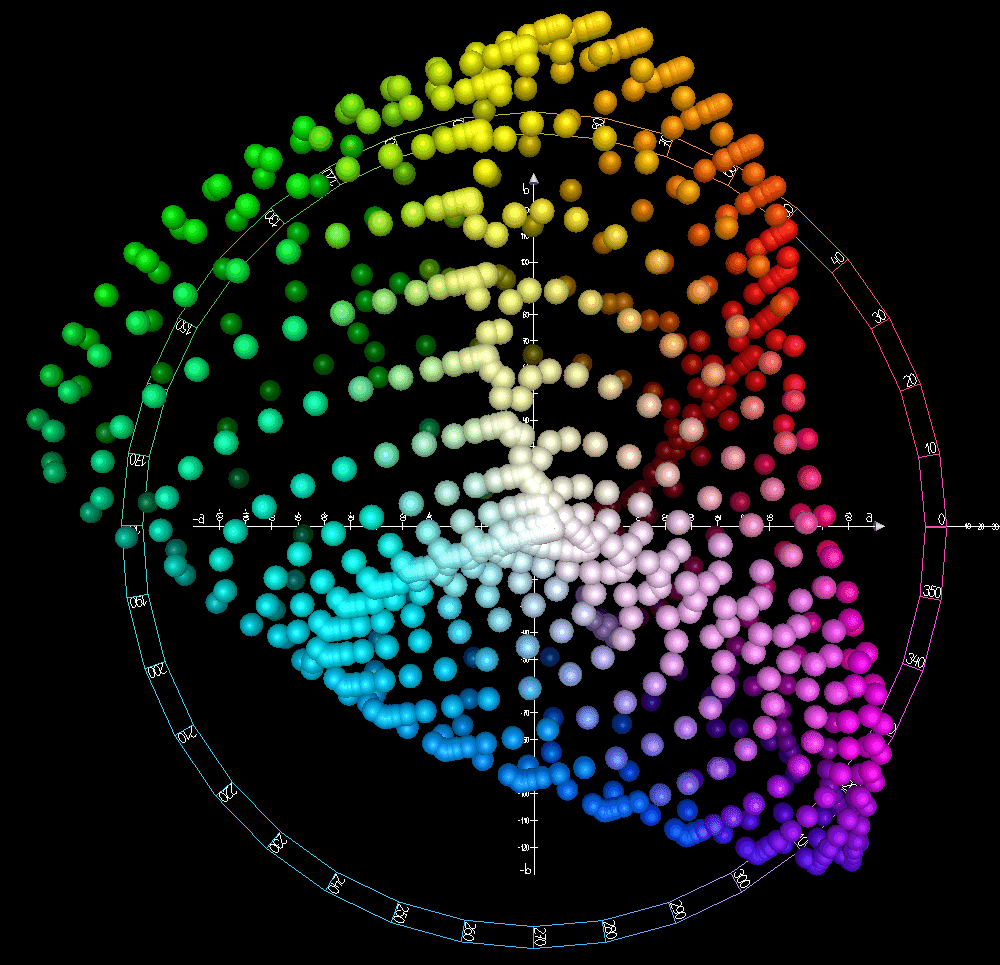
Why is RGB Euclidean distance a poor measure of perceptual color difference?
This tests perceptual uniformity. A good answer explains that RGB distance does not match human vision, then describes CIELAB as a space where deltas approximate perceived differences, making segmentation align with human vision.

Describe the BRDF, its advantage over Lambertian, and critical CV tasks
Tests 4D view-dependent reflectance. Strong answers define BRDF as dL_r/dE_i (sr^-1) over four angles; note Lambertian is isotropic; cite photometric stereo and shape-from-shading where specularity breaks the model. Red flag: calling it albedo.
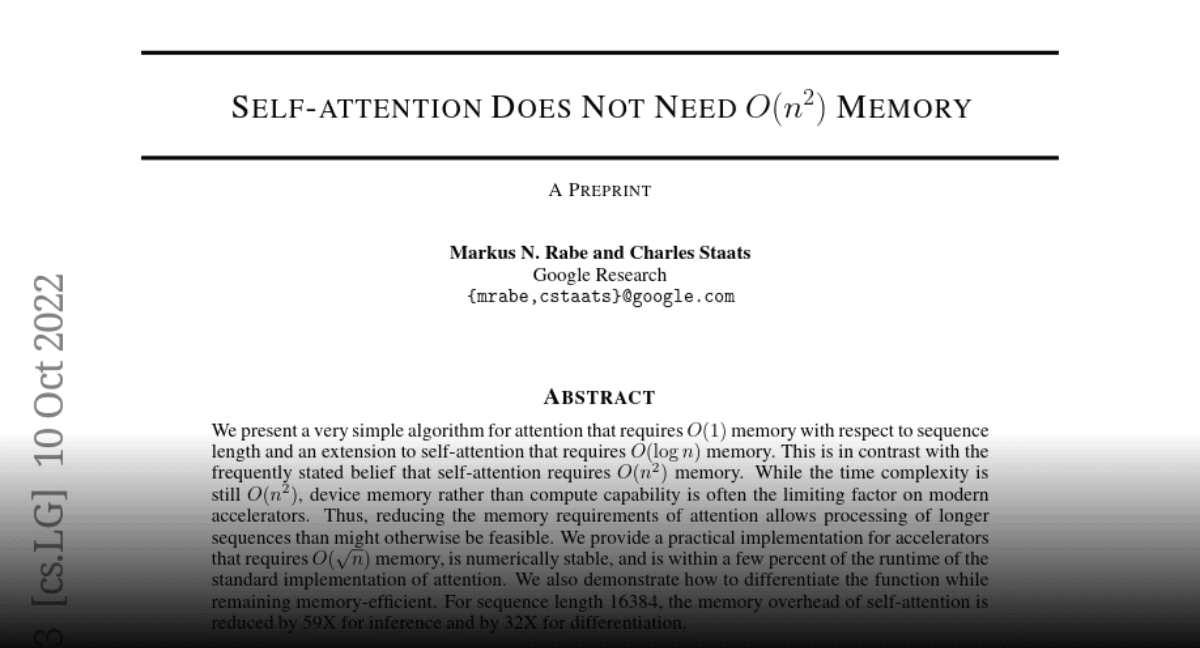
Why is self-attention O(n^2) and what are the implications?
Tests the attention matrix bottleneck. Strong answers note QK^T yields an N×N matrix, creating quadratic compute and memory that blocks long documents and high-res images. Red flag: confusing model size with activation memory.
Layer Norm and Residuals in Transformer Blocks
Residuals preserve gradient flow, layer norm stabilizes activations per token, and it beats batch norm because it is independent of batch and sequence length.
Eigenvalues, eigenvectors, and their role in PCA
An eigenvector keeps direction under a matrix, its eigenvalue scales it; PCA finds eigenvectors of the covariance matrix as principal axes.
Image rotation: forward versus inverse mapping
Forward mapping sends source pixels to non-integer destinations, leaving holes and overlaps; inverse mapping iterates over output pixels, finds the source location, and interpolates.
Design a sub-50ms real-time bidding feature pipeline
Tests merging batch historical and streaming data under sub-50ms latency. Strong answers use dual paths: batch backfills a KV store, streaming writes to an in-memory cache, serving merges both at request time. Red flag: one database without hot-cold split.
How do you determine sample size for a conversion lift experiment?
Tests fluency with statistical experiment design. A strong answer frames N as a function of alpha, power, baseline rate, and MDE, noting that shrinking the MDE or raising power inflates N. Red flag: picking N from traffic instead of risk tolerance.

How does filter separability optimize Gaussian blur and its complexity?
This tests if you know a 2D Gaussian separates into two 1D convolutions. A strong answer gives complexity as O(N^2 K^2) dropping to O(N^2 K) for an N-by-N image and K-by-K kernel. A red flag is claiming all kernels are separable or omitting dimensions.
MLE versus MAP estimation and the role of priors
MLE maximizes likelihood alone; MAP maximizes likelihood times a prior, acting as regularization that shrinks toward prior beliefs; with abundant data they converge.
How to establish data lineage and reproducibility for hundreds of ML models
This tests MLOps traceability architecture. A strong answer proposes a unified metadata graph linking raw data, feature transforms, dataset versions, training runs, and deployed models via automated hooks.
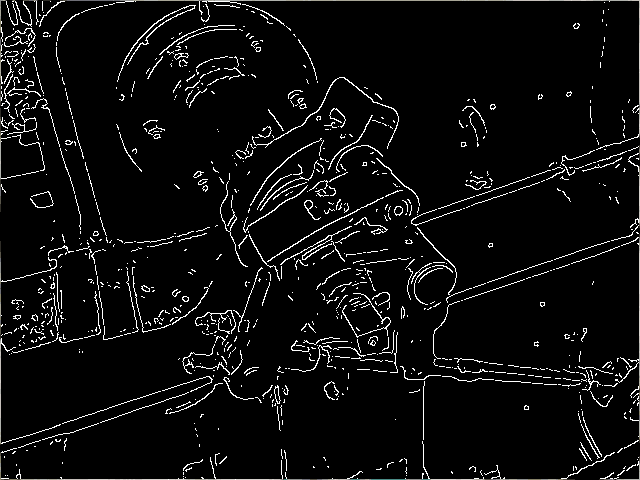
Walk me through Canny edge detection and why it beats Sobel thresholding
Tests multi-scale edge detection and noise robustness versus raw gradient thresholding. Strong answer lists Gaussian blur, Sobel gradients, non-maximum suppression, double thresholding, hysteresis. Red flag: calling it blurred Sobel without hysteresis or NMS.
Scalable multi-modal data quality pipeline
Staged distributed pipeline doing schema and integrity checks, modality-specific filtering, dedup, PII and toxicity removal, and metric-gated quarantine.
We are hiring for this. Every open role lists the topics its interview covers, so you can prepare for the real thing rather than guessing.
See open roles