Advanced interview questions in AI & ML, page 4

How would you design safe, automatic schema evolution in CI?
Tests whether you separate schema evolution from semantic validation. Strong answer: versioned data contracts allowing additive enums, unknown-category model buckets, and automated contract negotiation. Red flag: manual allow-lists or disabling validation.
CI/CD for microservice-based ML systems
Independent per-service pipelines, contract testing to protect interfaces and schemas, and incremental deploys (canary, blue-green); manage data and model contracts, not just code.
Diffusion-based image inpainting design
At each denoising step keep the known region by replacing it with the noised original, let the model generate only the masked area, condition on prompt and mask.
Temporal consistency in video diffusion
Add temporal layers, such as temporal attention or 3D convolutions across frames, so the model attends across time and frames denoise jointly rather than independently.
How would you systematically debug an inference API latency breach?
This tests structured debugging across the full inference stack. A strong answer traces the request path from ingress to GPU, splits TTFT from token-generation latency, inspects queuing and batching, then applies targeted fixes.
How would you visualize high-cardinality categorical relationships?
This tests dimensionality reduction when categories exceed roughly fifty levels. A strong answer proposes top-N aggregation with an other bucket and density or hierarchy plots like heatmaps or treemaps. A red flag is scrolling a bar chart or sampling rows.

Architectural challenges for deploying ML models on resource-constrained edge devices
Tests Edge MLOps architecture under severe constraints. Strong answers hit quantization and delta OTA updates for flaky networks, power-aware scheduling, and closed-loop drift detection.

Describe your systematic approach to interpreting an 8-feature pair plot
Check 8 diagonals for skew; scan 28 off-diagonals for nonlinear trends, variance patterns, and hue clusters; flag redundancy; spot outliers.
Self-supervised pretraining for video understanding
Define a label-free task like temporal order prediction or contrastive clip matching that forces temporal reasoning, then fine-tune on labeled action data.
How can EDA and visualization identify dataset bias before modeling?
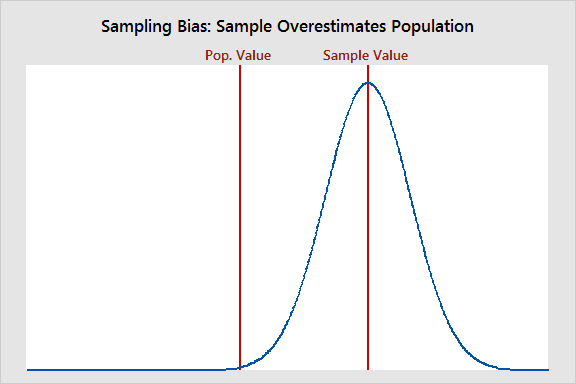
Tests operationalizing bias detection before modeling. Strong answers compare sample distributions to population norms, audit feature coverage with heatmaps, and track missingness by subgroup. Red flag: citing only class imbalance or ignoring sampling frame.
LLaVA versus Flamingo vision-LLM design
LLaVA projects image features into the LLM input space and feeds them as tokens, keeping the LLM mostly intact; Flamingo inserts gated cross-attention layers inside a frozen LLM.
Scene flow versus optical flow
Optical flow is 2D pixel motion in the image plane; scene flow is the 3D motion field of points in space, needing depth via stereo, RGB-D, or LiDAR.
Batching strategy for multimodal training
Control dataset mixing ratios, use balanced sampling and per-source weighting, keep enough text-only data to avoid forgetting, and handle variable shapes via grouping or padding.

Design cost-effective inference for spiky traffic without idle GPUs
Tests designing inference that cuts idle GPU cost during troughs yet handles spiky peaks with low latency via SageMaker blue/green fleets, production variants, and CloudWatch baking periods. Red flag: always-on GPU pools with naive auto-scaling.
Design a multi-model serving architecture for infrequently used models
Tests sparse-traffic cost efficiency via shared compute and dynamic loading. Strong answers: LRU cache on fast storage, scale-to-zero with async preload, pinned hot models, per-model quotas.

High ROC-AUC but low PR-AUC: what does this imply?
Tests if ROC-AUC hides imbalance while PR-AUC exposes it. Severe imbalance dilutes FPR across many negatives, inflating ROC-AUC, but precision crashes. Critical for rare positives with costly false positives. Praising the model on ROC-AUC alone fails.
Core principles of a Neural Radiance Field
An MLP maps a 3D point plus view direction to color and density; novel views render by casting rays, sampling points, querying the MLP, and volume-integrating along each ray.
K-Means vs DBSCAN: which for geospatial hotspots?
Tests matching algorithmic assumptions to data structure. K-Means needs K and assumes spheres; DBSCAN discovers arbitrary density shapes and labels noise. Choose DBSCAN for geospatial hotspots because density is irregular.
Interpreting a black-box gradient boosting model
Global tools like permutation importance or aggregated SHAP rank overall feature influence; local tools like per-instance SHAP or LIME explain one prediction; SHAP unifies both via additive…
Pure ViT vs hybrid CNN-Transformer for medical segmentation
Pure ViT captures global context but is data hungry and weak on local detail; hybrid CNN-Transformer gets local features cheaply plus global attention, ideal for scarce…
We are hiring for this. Every open role lists the topics its interview covers, so you can prepare for the real thing rather than guessing.
See open roles