Easy interview questions in AI & ML, page 4
What is a model registry's purpose in CI/CD4ML and its CI/CD interaction?
Tests if you see the model registry as the bridge between experiments and production, not just storage. A strong answer explains how CI publishes validated artifacts and CD consumes versioned models. Red flag: calling it a passive file dump without versioning.
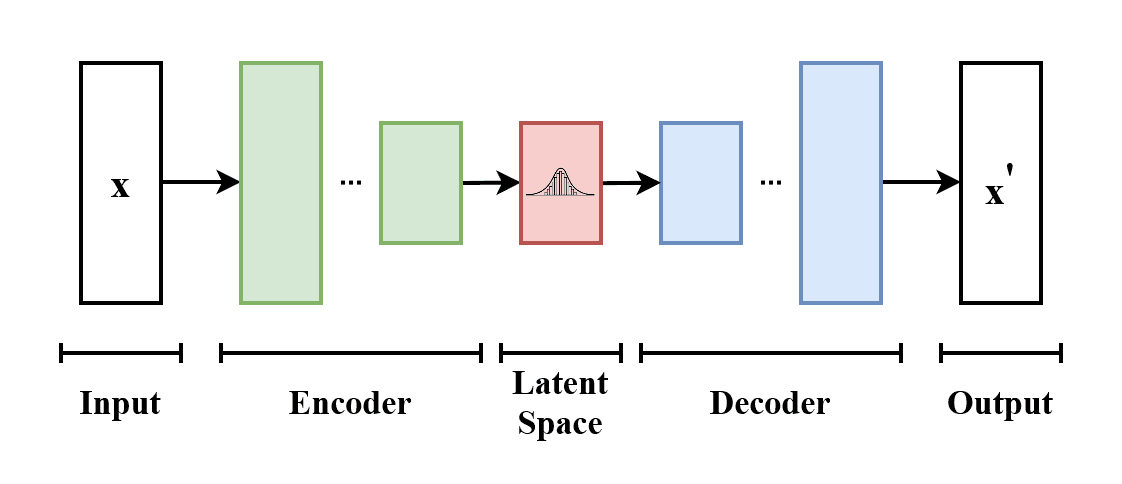
Key latent space difference between Autoencoder and VAE, and generative use
This tests deterministic versus probabilistic latent representations. Standard autoencoders encode fixed points; VAEs encode distributions. Sampling the regularized latent distribution generates new data. Red flag: calling VAEs mere noise adders.
Explain Denoising Diffusion models and forward/reverse processes.
This tests if you see diffusion as iterative latent generation, not GANs. Forward: add Gaussian noise over T steps until data is pure noise. Reverse: a network iteratively denoises random noise into data.
First steps to identify and handle missing values
Tests systematic diagnosis before imputation. Strong answers visualize nulls, classify MCAR/MAR/MNAR, and contrast mean imputation with KNN, weighing bias versus complexity.
Sparse vs dense optical flow and Lucas-Kanade
Sparse flow tracks selected feature points, dense flow computes a vector per pixel; Lucas-Kanade solves brightness constancy in a local window assuming constant motion.
Design a tracking-by-detection tracker
Detect per frame, then associate boxes across frames by IoU or appearance using Hungarian matching, maintaining track ids.
Describe the difference between online and batch inference.
Online serves single requests in ms on live endpoints; batch processes data offline with elastic compute.
Classic image captioning architecture
A CNN encoder extracts image features, a recurrent or transformer decoder generates the caption word by word, and attention lets the decoder focus on image regions per word.
Early versus late modality fusion
Early fusion merges raw or low-level features so the model learns cross-modal interactions, while late fusion processes each modality separately and combines outputs.

Describe the difference between online and batch inference.
Online uses autoscaling APIs for millisecond-to-second latency; batch uses scheduled compute for minute-to-hour latency.
Deploy a trained model as a containerized REST API
This tests practical MLOps fluency. A strong answer covers loading the artifact, wrapping it in a web server, building a Dockerfile, and exposing health and predict endpoints. Red flag: conflating training with serving or omitting resource limits.
How ViT and CNN process an image differently
A CNN slides local filters over the raw pixel grid; a ViT splits the image into patches, flattens and linearly embeds each into a token, adds positional embeddings, and feeds the sequence to…
Perplexity versus BLEU for LMs
Perplexity measures intrinsic next-token prediction quality needing no references; BLEU measures n-gram overlap with reference outputs for tasks like translation.
Self-attention over image patches explained
Each patch projects to query, key, value; a patch's query is scored against all keys, softmax-normalized into weights, used to combine all values.
Why human evaluation is the gold standard
Humans judge fluency, helpfulness, and correctness that n-gram or distribution metrics miss; automated scores correlate weakly with quality, are gameable, and penalize valid diverse outputs.
Standard metric for image generation quality
Name FID, explain it compares feature distributions of real and generated images via a pretrained network.

Differences between monitoring a traditional REST API and a production ML model
Contrast latency/errors with ML signals like data drift and training-serving skew against baselines, noting ground truth delays.
Detecting data drift on a continuous feature
Data drift is when serving feature distributions shift from training; detect with a Kolmogorov-Smirnov test comparing distributions; a small p-value signals drift to alert on.
How do you determine required sample size for an A/B test?
Tests statistical power and experimental design. Name four inputs: baseline conversion rate, minimum detectable effect, alpha (5%), and power (80%), then solve for N. Red flag: "test until significant" or fixed guesses like 1000 users without effect size.
What RLHF is and the safety problem it solves
Collect human preference rankings, train a reward model, fine-tune the policy with PPO; it aligns outputs with human intent the loss function cannot specify.
We are hiring for this. Every open role lists the topics its interview covers, so you can prepare for the real thing rather than guessing.
See open roles