Intermediate interview questions in AI & ML, page 3
Bag of Visual Words model
Cluster many local descriptors (e.g. k-means) into visual words; assign each image's features to words; represent the image as a histogram of word counts for a classifier.
Zero-Shot, Few-Shot, and Chain-of-Thought Trade-offs
Zero-shot is cheap but weak on reasoning, few-shot adds demos at token cost, CoT boosts multi-step accuracy but spends the most tokens and latency.
Backfill a complex feature for millions of users without impacting production
Reuse the live pipeline on historical partitions, run bounded batches on separate compute, stage results, and validate before promotion.
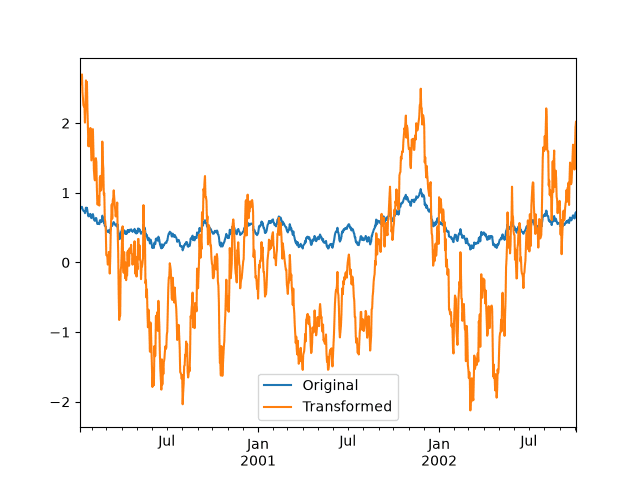
Calculate total and average sales per region in pandas
Tests split-apply-combine fluency. A strong answer groups by Region then calls agg with a dict or named aggregation to return sum and mean of Sales_Amount together. Red flag: chaining separate groupby calls or looping rows manually.
How would you implement versioning for feature definitions in a feature store?
Tests separation of metadata schema versions from data snapshots for reproducible training. Strong answers cover: immutable schema versions on breaking changes, safe appends without backfill, and time-travel data reads.
Convert string timestamps to datetime and extract day of week
This tests pandas datetime parsing and accessor fluency. A strong answer uses pd.to_datetime, assigns the result, then extracts the day via .dt.day_name() or .dt.dayofweek. Red flag: manual string splitting or Python loops instead of vectorized ops.
Full fine-tuning or LoRA on a tight compute budget?
This tests budget-constrained adaptation for many tasks. A strong answer picks LoRA: it trains only a small number of extra parameters, cutting compute and storage versus full fine-tuning while matching performance.
Fundamental matrix versus essential matrix
Both relate corresponding points across two views via the epipolar constraint; the fundamental matrix works in pixel coordinates, the essential matrix in calibrated coordinates and encodes relative pose.
Why use a Model Registry over dated pickle files?
A strong answer covers versioning, lineage, promotion aliases, and governance.
How does LoRA work and why is it memory-efficient?
LoRA freezes weights and trains A and B so delta-W equals BA, cutting trainable params 10,000x and memory 3x since only A and B get grads.
Incremental Structure from Motion pipeline
Detect and match features, estimate two-view geometry, triangulate, then incrementally add images with PnP and refine via bundle adjustment.
Design a CI/CD pipeline that automates model promotion from Staging to Production
Tests whether you treat model promotion as a gated software delivery workflow. Strong answers use registry state-change triggers, automated drift and performance checks, canary deployment gates, and rollback.
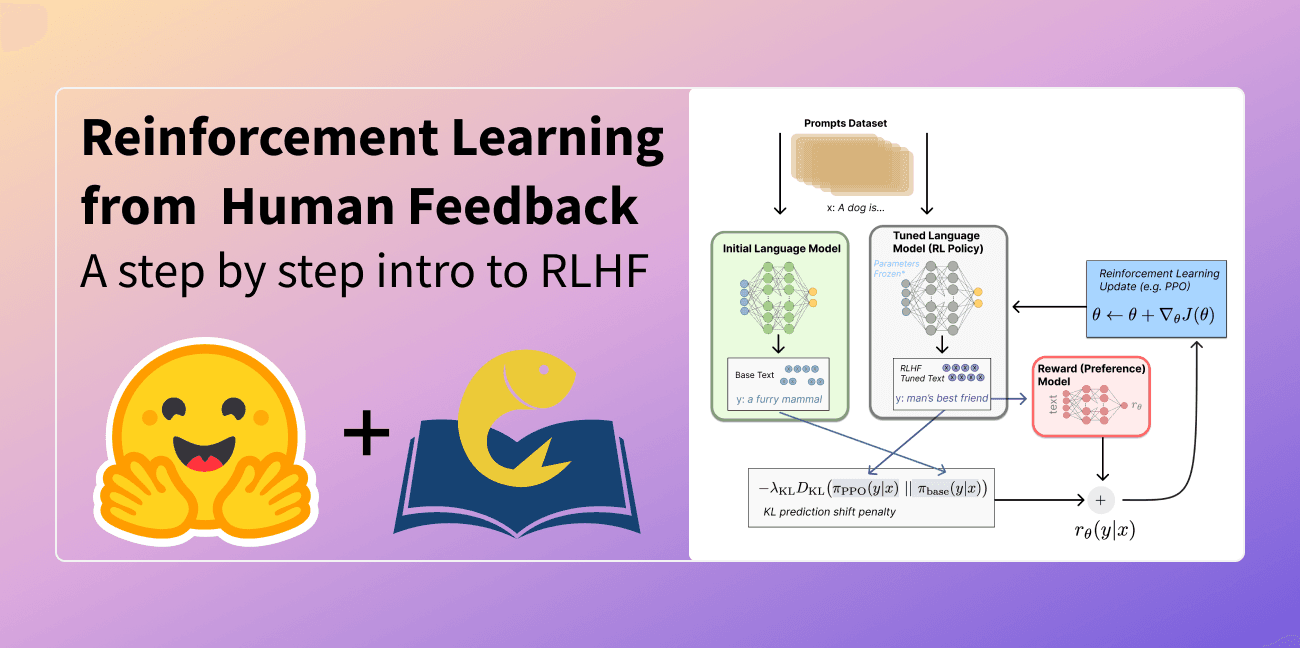
Walk through RLHF's three stages, outputs, and purposes.
Tests your grasp of the RLHF pipeline end-to-end. A strong answer lists: pretrain an instruction-following LM, train a reward model outputting a scalar preference score, then fine-tune the LM via RL.
Reward models in RLHF and PPO
It learns from human preference comparisons to score responses, then supplies the reward signal that PPO maximizes while a KL penalty keeps the policy near the reference.
The PnP problem in Structure from Motion
PnP recovers a camera's pose from known 3D points and their 2D projections; it registers new frames against the existing point cloud in SfM.

Design a rate-limited REST API data collection script
Tests client-side throttling discipline versus reactive 429 handling. Strong answers proactively pace calls using rate-limit headers, cap concurrency, and apply exponential backoff with jitter. Red flag: tight-loop retries or ignoring headers.

What is catastrophic forgetting in LLMs and how do you mitigate it?
This tests stability-plasticity trade-offs in fine-tuning. A strong answer defines catastrophic forgetting as lost prior capabilities, cites LoRA, regularization, and continual learning.
How would you scrape a page with dynamically loaded JavaScript content?
It tests if you know dynamic pages need a real renderer. A great answer names Playwright or Selenium, uses explicit waits for elements, and extracts via DOM or network interception. Red flag: suggesting only static parsers like BeautifulSoup or blind sleeps.

SQL or NoSQL for high-volume semi-structured event ingestion?
Choose NoSQL for schema-less landing; use SQL downstream for structured analytics.
How do you persist notebooks and artifacts in Docker?
Tests Docker storage abstractions. A strong answer distinguishes bind mounts for live notebook editing from named volumes for datasets and artifacts, and warns against docker commit for persistence. Red flag: treating containers as stateful VMs.
We are hiring for this. Every open role lists the topics its interview covers, so you can prepare for the real thing rather than guessing.
See open roles