Interview questions in AI & ML, page 4
Describe feature store architecture and training-serving skew
This tests FTI pipeline glue and dual-store skew elimination. A strong answer lists offline and online stores, shared transformation logic for consistent compute, and point-in-time correctness. A red flag is calling it merely a database or cache.

Why is 99% accuracy misleading with 1% disease prevalence?
Tests class imbalance intuition. A strong answer notes that an all-negative classifier hits 99% accuracy, then names precision, recall, F1, and AUC-PR to expose false negatives and false positives. Red flag: claiming accuracy is fine after rebalancing.
How does the Sobel operator approximate image gradients for edge detection?
This tests discrete gradient approximation via separable convolution. A strong answer covers 3x3 Gx and Gy kernels as smoothed central differences, then combines magnitude as sqrt(Gx^2 + Gy^2) or L1 norm. A red flag is treating them as arbitrary blur filters.
How gradient descent and the learning rate work
Gradient descent steps downhill along the negative gradient to minimize cost; the learning rate sets step size; too high diverges or oscillates, too low converges painfully slowly.
How would you scale 1TB Pandas feature computation across machines?
This tests memory limits and distributed migration. A strong answer contrasts single-machine tactics, column pruning and efficient dtypes, with distributed frameworks like Dask or Spark, noting shuffle costs and API parity.
How did Chinchilla change compute allocation between model size and data size?
This tests whether you know prior scaling fixed data while growing parameters, but Chinchilla showed parameters and tokens must scale equally. A good answer: double both together, so train smaller models on more data. Red flag: huge models, fixed data.

Zero-padding vs reflect vs replicate padding and their visual artifacts
This tests boundary assumptions in convolution. Zero-padding adds black borders causing dark vignettes; reflect padding mirrors edges for continuity; replicate padding repeats edge values outward. A red flag is saying padding choice does not affect outputs.
Eigenvalues, eigenvectors, and their role in PCA
An eigenvector keeps direction under a matrix, its eigenvalue scales it; PCA finds eigenvectors of the covariance matrix as principal axes.
Image rotation: forward versus inverse mapping
Forward mapping sends source pixels to non-integer destinations, leaving holes and overlaps; inverse mapping iterates over output pixels, finds the source location, and interpolates.
How would you design automatic data drift detection for production inference?
This tests reference-vs-live monitoring architecture. A strong answer chunks data, runs univariate per-feature drift, adds multivariate PCA or domain classifiers, and ranks threshold alerts. A red flag is checking aggregate metrics instead of feature shifts.

Explain data, tensor, and pipeline parallelism and hybrid training strategy
Tests communication and memory tradeoffs of core distributed training strategies. Strong answers contrast data parallelism (shard batch), tensor parallelism (shard layers, all-reduce), and pipeline parallelism (shard stages, p2p), then propose a 3D hybrid…
Design a sub-50ms real-time bidding feature pipeline
Tests merging batch historical and streaming data under sub-50ms latency. Strong answers use dual paths: batch backfills a KV store, streaming writes to an in-memory cache, serving merges both at request time. Red flag: one database without hot-cold split.

What causes sudden loss spikes in long pre-training runs?
Name gradient explosions, LR mismatch, FP16 overflow, and poison batches; propose norm checks, rollback, and LR cuts.
How do you determine sample size for a conversion lift experiment?
Tests fluency with statistical experiment design. A strong answer frames N as a function of alpha, power, baseline rate, and MDE, noting that shrinking the MDE or raising power inflates N. Red flag: picking N from traffic instead of risk tolerance.

How does filter separability optimize Gaussian blur and its complexity?
This tests if you know a 2D Gaussian separates into two 1D convolutions. A strong answer gives complexity as O(N^2 K^2) dropping to O(N^2 K) for an N-by-N image and K-by-K kernel. A red flag is claiming all kernels are separable or omitting dimensions.
MLE versus MAP estimation and the role of priors
MLE maximizes likelihood alone; MAP maximizes likelihood times a prior, acting as regularization that shrinks toward prior beliefs; with abundant data they converge.
How to establish data lineage and reproducibility for hundreds of ML models
This tests MLOps traceability architecture. A strong answer proposes a unified metadata graph linking raw data, feature transforms, dataset versions, training runs, and deployed models via automated hooks.
How does pre-training dataset composition influence capabilities and biases?
This probes whether you link data mix to capabilities and bias. Answer: code strengthens reasoning, web text adds noise; for science, use domain-adaptive pretraining on filtered literature, instruction tuning, and reasoning distillation, validating via…
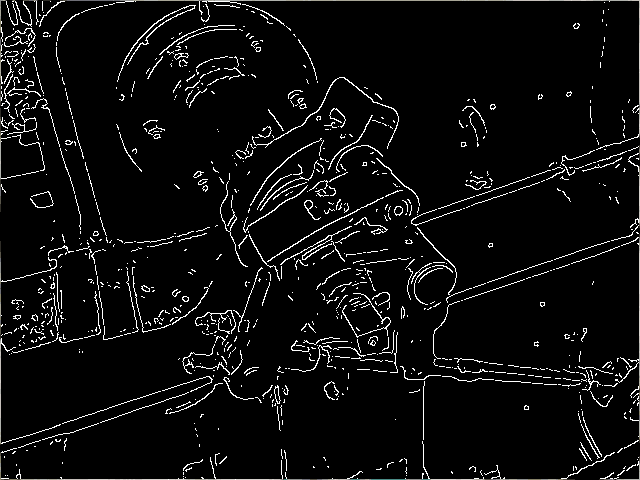
Walk me through Canny edge detection and why it beats Sobel thresholding
Tests multi-scale edge detection and noise robustness versus raw gradient thresholding. Strong answer lists Gaussian blur, Sobel gradients, non-maximum suppression, double thresholding, hysteresis. Red flag: calling it blurred Sobel without hysteresis or NMS.
Scalable multi-modal data quality pipeline
Staged distributed pipeline doing schema and integrity checks, modality-specific filtering, dedup, PII and toxicity removal, and metric-gated quarantine.
We are hiring for this. Every open role lists the topics its interview covers, so you can prepare for the real thing rather than guessing.
See open roles