Easy everything in AI & ML, page 5
What data validation strategy prevents new categories from breaking your encoder?
Lock categorical domains in a schema, reject unseen categories before encoding, and use an OOV bucket as fallback.

ETL vs ELT: when to prefer each for ML?
Tests architecture tradeoffs. Contrast ETL's pre-load transformation with ELT's in-warehouse transformation, map structured legacy to ETL and raw lakes to ELT, and cite ML iteration needs. Red flag: calling one better ignoring compute placement or volume.

Design ingestion for clickstream and batch product metadata
Use a data lake for raw data, a feature store for joins, columnar formats for batch, and row formats for events.
What are the primary differences between traditional DevOps and MLOps?
Tests if you know MLOps extends CI/CD to data and probabilistic assets. Contrast code artifacts with models and datasets. Distinguish commit triggers from drift or retraining triggers. Red flag: treating models as static binaries and ignoring data lineage.
Describe the key stages of a typical ML lifecycle
It tests end-to-end systems thinking beyond notebook prototyping. Strong answers list: problem framing, data processing, model development, deployment, and monitoring with retraining. A red flag is skipping data validation or post-deployment observability.

ETL: Extract, Transform, Load
ETL moves data through three phases from sources to containers. It handles one or more inputs and outputs via software that automates the process on recurring schedules or in batches. The footgun is defaulting to manual runs when automation is typical.
Explain Denoising Diffusion models and forward/reverse processes.
This tests if you see diffusion as iterative latent generation, not GANs. Forward: add Gaussian noise over T steps until data is pure noise. Reverse: a network iteratively denoises random noise into data.
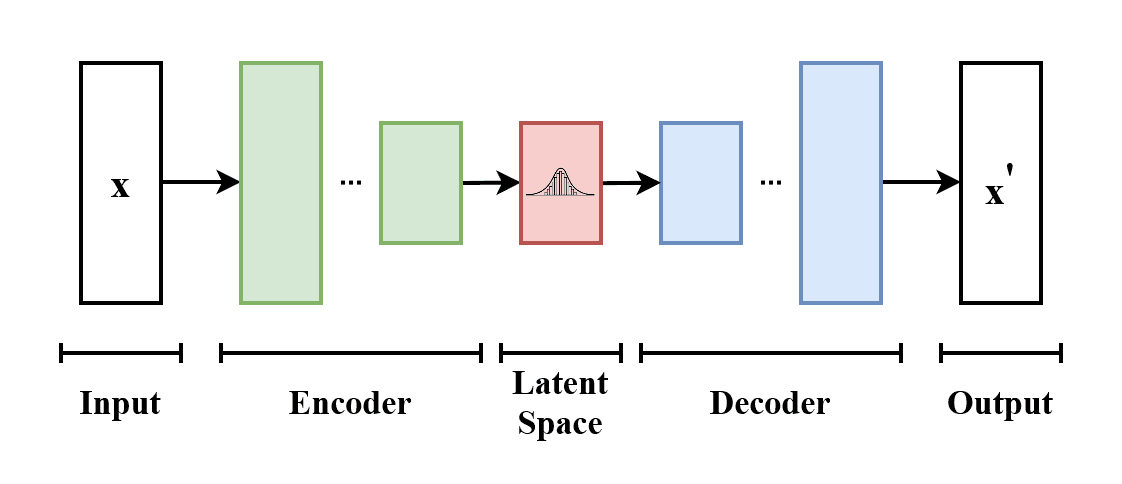
Key latent space difference between Autoencoder and VAE, and generative use
This tests deterministic versus probabilistic latent representations. Standard autoencoders encode fixed points; VAEs encode distributions. Sampling the regularized latent distribution generates new data. Red flag: calling VAEs mere noise adders.
Explain GAN architecture, generator and discriminator roles, and objective function
Tests adversarial training as a minimax game. Strong answers: generator maps noise z to fakes; discriminator classifies real versus fake; both optimize V(D,G)=E[log D(x)]+E[log(1-D(G(z)))].

Walk me through building a weather agent with get_weather
Register get_weather, let the model emit parameters, execute it yourself, feed the result back, then synthesize the answer.
How does function calling work in modern LLMs?
Schemas in the prompt; model emits JSON name and arguments; client executes and returns results.
Describe a basic RAG architecture and its two main components
This tests retrieval-generation separation. Good answers name the retriever, which fetches relevant documents, and the generator, which synthesizes an answer using those documents plus the query.
Describe supervised fine-tuning for a pre-trained language model
Tests if you know SFT aligns a base model to instructions using curated prompt-completion data. A strong answer covers next-token prediction on completions, conversational formats, and small learning rates.
Explain Chain-of-Thought prompting, its reasoning mechanism, and ideal use cases
This tests reasoning scaffolding. A good answer says CoT makes the model emit intermediate steps before the final answer, excelling at multi-step math and logic versus direct instructions.
How would you construct zero-shot and few-shot prompts for feedback classification?
Tests knowledge of zero-shot versus few-shot prompt structure. Zero-shot gives instructions, labels, and format without examples; few-shot prepends 2-4 labeled demonstrations before the target input. Red flag: calling an example-containing prompt zero-shot.

Explain word embeddings and why they beat one-hot encoding for large vocabularies
Embeddings cluster similar meanings in low-dimensional space, while one-hot vectors are orthogonal, huge, and semantically blank.

Google TPU: Built for Matrix Math
A TPU is a specialist ASIC, not a faster GPU; it trades graphics flexibility for matrix-math throughput per watt. Google deploys them for TensorFlow, JAX, and PyTorch at scale. They excel at CNNs but can lag on tasks needing rasterization or recurrent logic.
What is a word embedding and how does it beat one-hot encoding?
Tests dense semantic vectors versus sparse one-hot representations. A good answer defines embeddings as learned real-valued vectors where similar words are close, contrasts them with orthogonal one-hot vectors lacking similarity, and names Word2Vec or GloVe.
What is overfitting and how does Dropout prevent it?
Tests generalization intuition: overfitting is low train error but high test error. Good answers say dropout randomly zeros hidden units during training to stop co-adaptation. Bad answers say dropout permanently deletes neurons or just reduces capacity.
Explain vanishing and exploding gradients and common mitigation techniques.
Why deep backpropagation causes diverging gradient magnitudes. Repeated multiplication across layers shrinks or explodes gradients; cite tanh [0,1] range; list ReLU, batch norm, and gradient clipping. Blaming activation choice alone without citing depth.
We are hiring for this. Every open role lists the topics its interview covers, so you can prepare for the real thing rather than guessing.
See open roles