Intermediate everything in AI & ML, page 17

Describe the bias-variance tradeoff and how model complexity affects bias and variance
More complexity cuts bias but boosts variance via overfitting; test error forms a U.
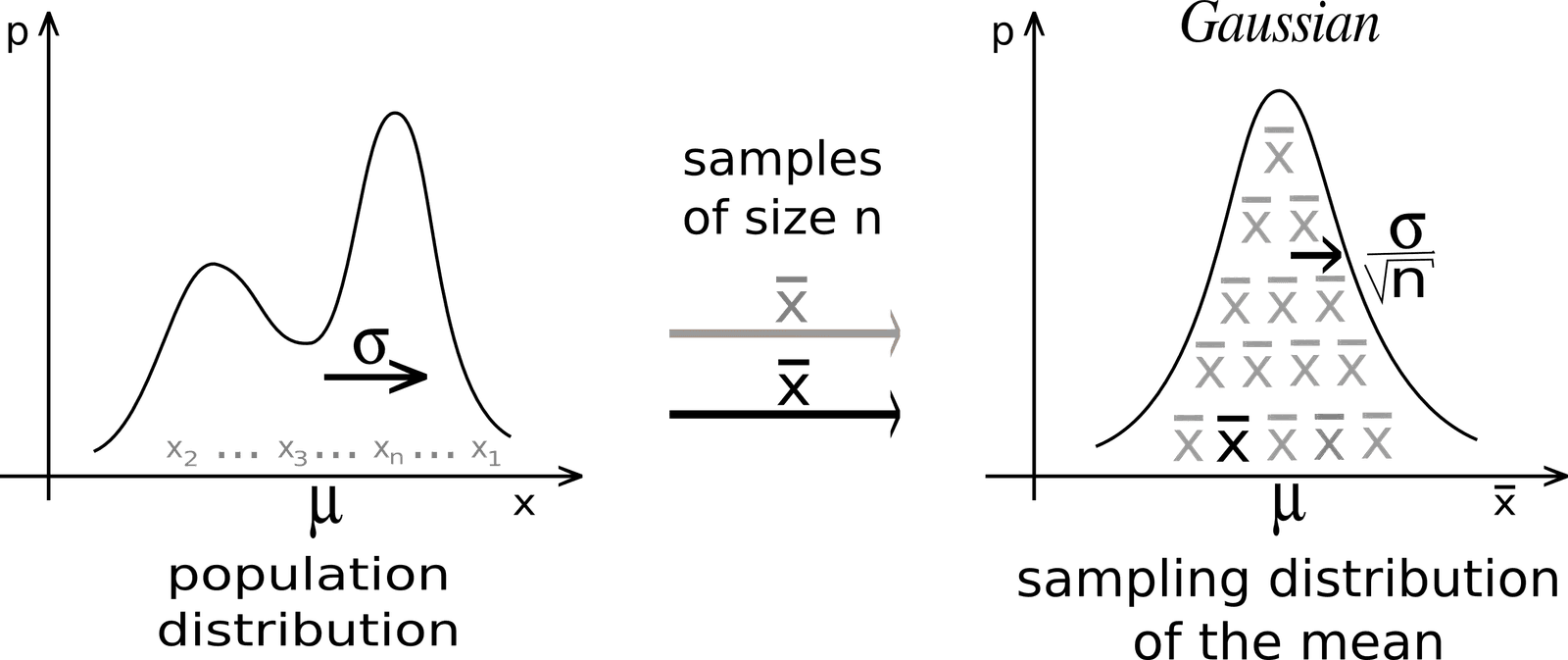
Explain the Central Limit Theorem and its importance for hypothesis testing
This tests whether you know why sample means from skewed populations tend toward normal as size grows, enabling tests. A strong answer covers mean convergence to normal and standard error. Red flag: claiming the CLT works for small samples or single points.

How do you frame high-value customer identification as classification versus regression?
Tests mapping a business goal to a defensible target. Outline: define value and action, then contrast regression predicting spend versus classification predicting tiers. Red flag: picking models before fixing the label or the campaign action.
How would you recommend launching a checkout flow with mixed A/B metrics?
This tests multi-metric trade-offs. A strong answer tags conversion as success and AOV as a guardrail, estimates net revenue impact, and frames decision as a risk-managed business choice. A red flag is demanding all metrics win or ignoring business context.
How do you define churn for a subscription service?
This tests operationalizing a business metric into a data definition. A strong answer separates voluntary from passive churn, picks a moment, and aligns to the billing cycle. Red flag: counting all cancellations as churn while ignoring grace periods.
ML Model Registry: Source of Truth for Production Models
A model registry is version control for trained models, not just code. It tracks which artifact is running in production, who approved it, and how it was built. Skip it and you get untracked files in S3 with no way to reproduce a production model.
Spark Structured Streaming: Unify Batch and Stream
Spark Structured Streaming treats a live stream as an unbounded DataFrame. It unifies batch and streaming ETL on Kafka, but the footgun is confusing event time with processing time without watermarks, which silently drops late data.
Vectorization: Ditch the Python Loop
Vectorization means issuing one batch command to C-backed arrays instead of looping in Python. Use it for million-row DataFrames or matrix math. The footgun is treating apply() as vectorized, or silently materializing giant temporaries that exhaust RAM.

ML Pipeline: Systematic Model Delivery
A machine learning pipeline is the systematic workflow that carries models from data labeling through deployment inside MLOps. It keeps the AI lifecycle repeatable rather than ad hoc. The footgun is treating a one-off notebook as a production pipeline.

ETL: The Three-Phase Data Pipeline
ETL is a three-phase pipeline: extract from sources, transform, and load into containers. It supports many sources and destinations and runs as automated software, manual jobs, or scheduled batches. The footgun is manual execution of recurring jobs.

Zero-padding vs reflect vs replicate padding and their visual artifacts
This tests boundary assumptions in convolution. Zero-padding adds black borders causing dark vignettes; reflect padding mirrors edges for continuity; replicate padding repeats edge values outward. A red flag is saying padding choice does not affect outputs.
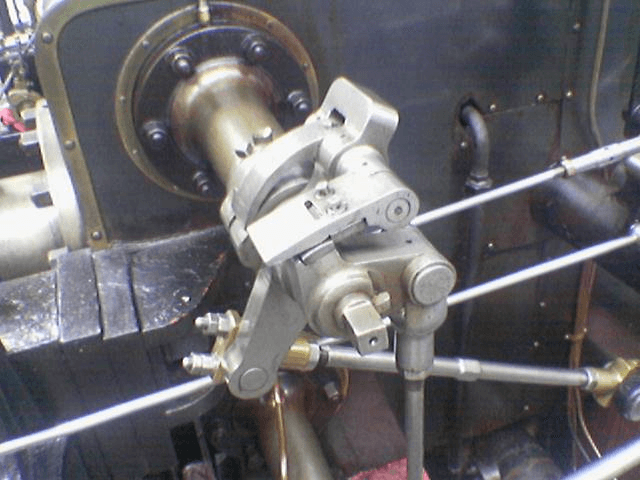
How does the Sobel operator approximate image gradients for edge detection?
This tests discrete gradient approximation via separable convolution. A strong answer covers 3x3 Gx and Gy kernels as smoothed central differences, then combines magnitude as sqrt(Gx^2 + Gy^2) or L1 norm. A red flag is treating them as arbitrary blur filters.
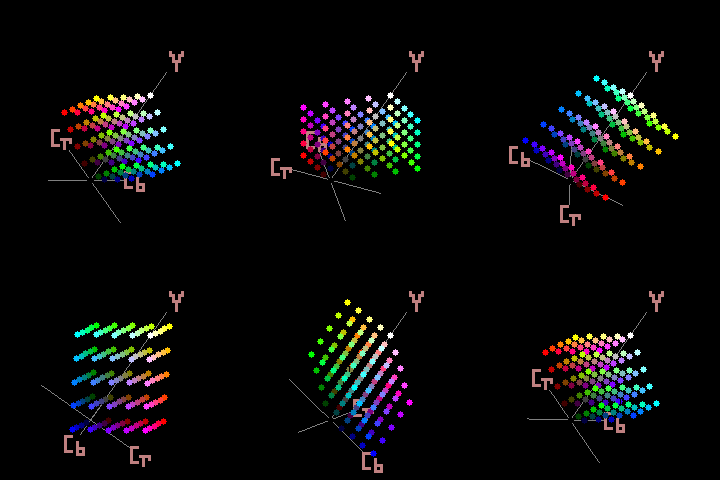
Compare YCbCr and RGB. Why chroma subsampling for compression?
Tests color decorrelation and perceptual redundancy. Contrast correlated RGB with YCbCr's luma-chroma split; eyes resolve brightness better than color, so 4:2:0/4:2:2 cuts chroma bandwidth ~50-75% with little loss.
How does a Bayer filter capture color and what is demosaicing?
This tests CFA sampling tradeoffs. The answer covers the RGGB mosaic, demosaicing as interpolation of missing channels, and moire or zippering artifacts. A red flag is believing pixels capture full RGB natively or that demosaicing is only averaging.

Explain the pinhole camera model and intrinsic matrix K
Tests projective geometry and mapping sensor properties to K. Good answers derive perspective projection via similar triangles, list fx, fy, cx, cy, skew, and explain pixel scaling. Red flag: mixing intrinsics with extrinsics or saying K includes distortion.
COCO: The Messy Real-World Vision Benchmark
COCO is the standard benchmark for detecting overlapping objects in cluttered scenes. Use it to test object detectors and segmentation. Strong scores here do not mean your model works on specialized domains like medical or satellite imagery.
U-Net: Segmentation with Less Data
U-Net retrofits fully convolutional networks to segment images precisely with fewer training examples. It runs a 512 by 512 frame in under a second on a 2015 GPU, fitting latency-sensitive pipelines.

MLOps: When to Build vs. Buy Your Infrastructure
Deciding to build or buy MLOps tools hinges on whether it creates a competitive advantage. For commodity tasks like experiment tracking, buying a managed service avoids locking up engineers.
TensorFlow Serving: A Production Server for ML Models
Think of TensorFlow Serving as a dedicated web server for your ML models. It provides a stable API for inference and manages model versions, abstracting away deployment complexity. The main footgun is thinking it only serves models; it serves any 'Servable'.
Weights & Biases: MLOps for Experiment Tracking & Evaluation
Weights & Biases is a platform for MLOps, providing experiment tracking, evaluation, and observability for AI models. It helps you develop models and ship LLM applications. The main risk it addresses is losing track of which model version used which data.
We are hiring for this. Every open role lists the topics its interview covers, so you can prepare for the real thing rather than guessing.
See open roles