Concepts in Android & Kotlin, page 8
CoroutineWorker: Background Tasks with Coroutines
CoroutineWorker simplifies background tasks by letting you use suspend functions inside a WorkManager job. It's for deferrable work, like syncing data, that needs to survive process death.
Isolating Units for Tests with Mockito-Kotlin
Mockito-Kotlin creates fake objects (mocks) to stand in for real dependencies in your tests. This lets you test a class in isolation, for example, testing a ViewModel without making a real network call. The footgun is testing implementation, not behavior.

Android Network Security Configuration
Define your app's network trust rules in a simple XML file instead of writing complex code. Use it to block cleartext (HTTP) traffic, trust self-signed certs in debug builds, or pin certificates.
Doze and App Standby: Android's Battery Savers
Doze and App Standby are Android's battery-saving modes that restrict background work. Doze activates when a device is idle, while App Standby targets unused apps. The footgun is assuming background jobs run on time; they are deferred and batched.
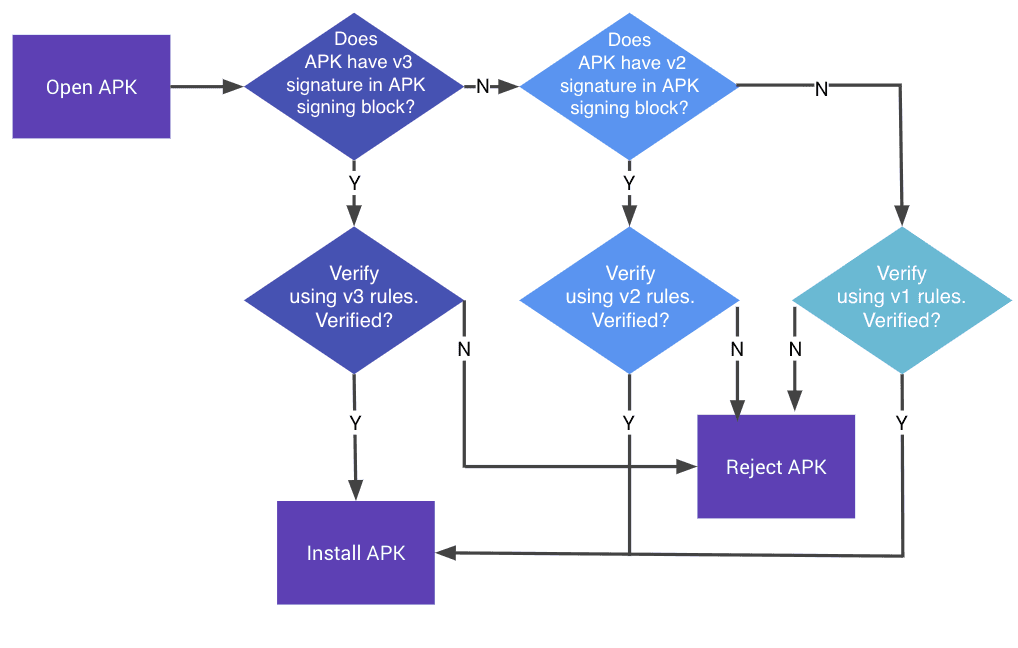
APK Signature Scheme: Verifying App Integrity
An APK signature is a tamper-evident seal, proving an app is from a specific developer and hasn't been altered. Android uses it to trust app updates and prevent malware. The footgun: losing your signing key means you can never update your app again.
Higher-Order Functions: Passing Code as Data
Higher-order functions treat code as data, accepting other functions as arguments. Lambdas are a concise syntax for creating these function arguments inline, powering collection operations like map and filter or UI listeners.
Android XML Layouts: The Classic UI Blueprint
XML layouts are the classic blueprints for Android screens, defining the structure of UI elements (Views) in a static file. You'll find them in legacy projects or when using View-based components like ConstraintLayout and RecyclerView.
Android Custom Views: Beyond the Standard Library
A custom view gives you full control over a UI component's drawing and interaction. Use it for unique elements like charts or radial menus that standard widgets can't handle. The footgun is building one when composing existing views would be simpler.
Android Worker: For Deferrable Background Tasks
An Android Worker handles background tasks that must complete, even if the app closes or the device restarts. Use it for reliable, deferrable work like syncing data or uploading logs. The footgun is using it for immediate tasks; the OS can delay its execution.
Google Play Release Tracks: A Funnel for Quality
Google Play's release tracks are a funnel for quality, moving from a small trusted group to the public. Use them to get feedback, from internal QA (Internal track) to a wider audience (Closed/Open tracks), before a full production launch.
Android Overdraw: Stop Painting Pixels Twice
Overdraw is wasted GPU work, painting the same pixel multiple times in one frame. It causes UI stutter and drains battery. Fix it by removing unneeded backgrounds and flattening your UI layouts.
Android Work Chaining: An Assembly Line for Tasks
Chaining work in Android is like an assembly line for background tasks, ensuring one task finishes successfully before the next begins. It's used for multi-step operations like fetching, processing, and saving data.
ProGuard Keep Rules: A "Do Not Remove" List for Your Code
ProGuard keep rules are a "do not remove" list for Android's code shrinker, telling it what to spare when it can't detect usage. This is crucial for code accessed via reflection or JNI.
Gradle Build Scripts: The Recipe for Your App
Gradle build scripts are your app's recipe, using a declarative DSL to define dependencies and build variants. They manage libraries and create versions like debug vs. release.
OkHttp Interceptors: Middleware for Your Network Stack
OkHttp Interceptors act as middleware for your network stack, letting you observe, modify, or short-circuit requests and responses. Use them to automatically add auth tokens or log traffic. The main footgun is order: application interceptors run once per call.
WorkRequest: The Blueprint for Android Background Tasks
A WorkRequest is the blueprint for a background task in Android. It defines *what* work to do and *when*, letting WorkManager handle execution for tasks like syncing data. The footgun is putting logic in the request; it only configures, the Worker acts.
Constraints: Building UIs with Relationships, Not Boxes
Constraints define UI by relationships, not nested boxes. Think of it like telling elements 'align with that one' instead of placing them in rigid rows. This is key for complex, responsive layouts, but can lead to unsolvable rules if not defined carefully.
We are hiring for this. Every open role lists the topics its interview covers, so you can prepare for the real thing rather than guessing.
See open roles