Advanced concepts in Backend Dev, page 2
Starlette's Request Object: A Clean API for ASGI
Starlette's Request object is a high-level wrapper around the raw ASGI scope, providing a clean API for request data. Use it in endpoints to read headers, query params, or parse the body. The footgun: the request body can only be read once.

Promise.race(): First Promise to Settle Wins
Promise.race() returns a promise that mirrors the outcome of the first promise in a set to finish—the winner takes all, whether it resolves or rejects. Use it to set a timeout on a network request.
Go's sync.Map: A Specialized Concurrent Map
Go's sync.Map is a concurrent map optimized for keys written once and read many times. It's ideal for long-lived caches, but it's not a generic replacement for a map with a mutex. The footgun is using it for frequent writes, which can be slower.
Timestamp Concurrency Control: No Locks, Just Time
Timestamp-based concurrency control bets that transaction conflicts are rare, using timestamps to order operations instead of locking data. It's used where lock overhead is high, but the footgun is that frequent conflicts can cause transaction starvation.
Pydantic Computed Fields: Serialize Derived Values
A Pydantic computed field makes a derived value, like an area from width and length, part of your model's serialized output. Use it to include calculated attributes when calling .model_dump().
Promise.allSettled(): Never Fail a Batch of Promises
Promise.allSettled() waits for every promise in a set to finish, success or fail, without short-circuiting. Use it for independent tasks, like multiple API calls, where you need the outcome of each.
Rust's Rc<T>: Shared Ownership on a Single Thread
Rust's Rc<T> enables shared ownership within a single thread. Think of it as a counter on a heap-allocated resource: cloning an Rc increments the count, and the resource is freed only when the count hits zero. Use it for graph nodes with multiple owners.
Snapshot Isolation: A 'Photo' of Your Database
Snapshot Isolation gives a transaction a private 'photo' of the database from when it started, ensuring consistent reads. It's used in high-concurrency systems to prevent readers from blocking writers. The footgun is that it doesn't prevent all anomalies.
Promise.any(): Get the Fastest Successful Result
Promise.any() is a race where only finishers count. It returns the value of the first promise to succeed, ignoring any that fail. Use it to query redundant endpoints and take the first successful response.
Rust's Arc<T>: Share Data Ownership Across Threads
Rust's Arc<T> lets multiple threads share ownership of heap data. It's a smart pointer that counts references atomically. Use it for shared caches or config. The footgun: Arc only makes sharing safe, not mutation—you still need a Mutex for that.
Write Skew: The Phantom Anomaly of Snapshot Isolation
Write skew is when two transactions read the same data, make decisions, and then update *different* data, violating a business rule. It's common in booking systems or when enforcing multi-row constraints under Snapshot Isolation.
Top-Level Await: `await` Without an `async` Function
Top-level await lets you use await directly in an ES module, no async function needed. Use it to initialize resources like database connections on startup. The footgun: the entire module's execution blocks until the promise resolves, delaying startup.
Serializable Snapshot Isolation: True Serializability Without Heavy Locking
SSI upgrades Snapshot Isolation to true serializability. It optimistically lets transactions run, but aborts one if a dangerous read-write dependency arises. This prevents subtle data corruption in systems like PostgreSQL without heavy locking.
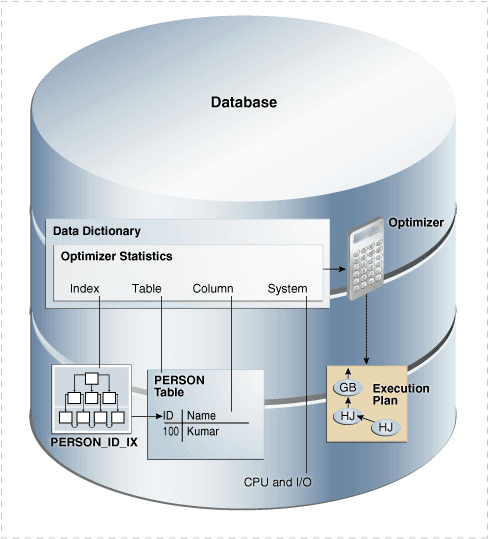
Database Statistics: The Query Optimizer's Internal Map
Database statistics are the raw data the query optimizer uses to guess the cheapest way to run your query. It uses stats like row counts and value distribution to decide between a full table scan and an index seek.
Cardinality Estimation: How Databases Guess Query Costs
A database's query optimizer guesses how many rows each part of a query will return to pick the fastest execution plan. This guess, cardinality estimation, is key for choosing join strategies.
FastAPI `yield` Dependencies for Setup and Teardown
A yield dependency is a context manager for your endpoints. Code before yield runs setup, like getting a DB connection; code after yield runs teardown.

Predicate Pushdown: Filter Data at the Source
Predicate pushdown tells the database to filter data at the source, not after fetching it. This speeds up queries in data warehouses and lakehouses by reducing network traffic. The main footgun: not all data sources can execute all types of filters.
Hashing Data with Node.js's `crypto` Module
Hashing creates a unique, fixed-size fingerprint of data. It's a one-way process used to verify data integrity or store passwords securely without saving the plain text. The footgun is using weak algorithms like MD5 or SHA1 for security-sensitive tasks.
FastAPI: Setting Custom Response Headers
Set custom HTTP headers in FastAPI by adding a Response parameter to your endpoint. This lets you add metadata like trace IDs without changing your return data. The footgun is thinking you must return the Response object; just return your data as usual.
Node's zlib Module: Trading CPU for Bandwidth
Node's zlib module trades CPU cycles for network bandwidth by shrinking data with algorithms like Gzip and Brotli. Use it to compress large API responses or files before sending them. The main footgun: never use synchronous ...Sync methods in a server.
We are hiring for this. Every open role lists the topics its interview covers, so you can prepare for the real thing rather than guessing.
See open roles