Concepts in Backend Dev, page 12
Wide-Column Store: Flexible Schema for Massive Datasets
A wide-column store is like a spreadsheet where each row can have its own unique columns. It's ideal for sparse data like user profiles or IoT readings. The footgun is thinking it's just a relational table with many columns—the flexibility is the point.
Graph Databases: When Relationships Are the Data
A graph database treats connections between data as first-class citizens. It's ideal for social networks or fraud detection where you query relationships by traversing links. The footgun is using it for simple tabular data where a relational DB is faster.
Go's Panic/Recover: For Exceptional Errors Only
Go's panic/recover is a last-resort error mechanism, not a try/catch replacement. A panic unwinds a goroutine's stack until a recover in a defer'd function catches it. It's used to keep a server alive when one request fails catastrophically.
Database Sharding: Splitting Data for Scale
Sharding splits a database across multiple servers, like dividing a phone book into A-M and N-Z volumes. It's used when a single server can't handle the data size or write load. The footgun is that querying across shards is complex and slow.
Coordinating Asyncio Tasks with Locks and Events
asyncio sync primitives are traffic signals for coroutines, preventing collisions over shared state. Use a Lock for exclusive access or an Event to signal multiple tasks to proceed. Footgun: these are for asyncio tasks only, not OS threads.
Rust's `panic!`: When to Crash Your Program Intentionally
Rust's panic! is an emergency stop for unrecoverable bugs, intentionally crashing the current thread. It's for impossible states where continuing is dangerous, not for recoverable errors like failed I/O—use Result for that.
Time Series Database: A Logbook, Not a Filing Cabinet
A Time Series Database (TSDB) is a specialized logbook for data that happens over time, like server metrics or sensor readings. It's built for high-speed writes and fast range queries. The footgun: don't use it for relational data like user profiles.
asyncio Queues: Coordinating Asynchronous Tasks
An asyncio queue is a channel for coroutines to safely exchange data. It's ideal for producer-consumer patterns, like a web crawler feeding URLs to parsers. The main footgun: it's not thread-safe and must be used within a single event loop.
Composable Error Types with `thiserror` in Rust
thiserror generates boilerplate for custom Rust error types, letting you define specific, matchable errors for a library. Use it when callers need to handle different failure modes. The footgun is using it for simple app errors where anyhow would suffice.

BASE: Trading Consistency for Availability
BASE is a database design philosophy that prioritizes availability over strict consistency, the opposite of ACID. It's used in large-scale systems like social media where uptime is key and slightly stale data is okay.
Polyglot Persistence: Use the Right Database for the Job
Polyglot persistence means using multiple, specialized data stores in one system. Instead of one database handling everything, you might use a relational DB for transactions, a document DB for profiles, and a graph DB for connections.
Implicit Interface Satisfaction in Go
Go types satisfy an interface automatically by having the right methods, with no explicit implements declaration. This structural typing decouples implementations from interface definitions, so you can define interfaces around how you use a type without…
Python's Asyncio Subprocesses: Non-Blocking Shell Commands
Run external commands without blocking your async app's event loop. asyncio.create_subprocess_shell lets you launch processes and await their results, keeping your server responsive.
REST: The Architectural Style of the Web
REST is a set of design rules, not a strict protocol, for building massive distributed systems like the web. These constraints enable independent component deployment, scalable interactions, and a layered architecture that supports caching and security.
Vector Databases: Searching by Meaning, Not Keywords
A vector database finds "what's most like this?" instead of "find me exactly this." It organizes data by semantic meaning, not just exact values, making it ideal for recommendation engines, semantic search, or finding similar images.

Async Generators: `yield` in an `async` World
Async generators let you write I/O-bound data streams with the elegance of yield. An async def function with yield produces values one at a time, pausing for I/O without blocking. This is ideal for streaming data from a database.
CRDTs: Syncing Data Without Locks or Conflicts
CRDTs are data structures where updates can be applied in any order and reach the same state, avoiding locks. They enable offline editing in collaborative apps and distributed databases.
asyncio: Transports Move Bytes, Protocols Decide Which Bytes
asyncio Transports are the "how" (moving bytes), while Protocols are the "what" (deciding which bytes to send). They're the low-level foundation for libraries handling raw socket I/O.

HTTP Status Codes: The Server's Signal
HTTP status codes are the server's signal for a request's outcome: success, client error, or server error. You see them when fetching data (200 OK), hitting a bad link (404), or when a server fails (500). Footgun: Don't just check for 'not 200'.
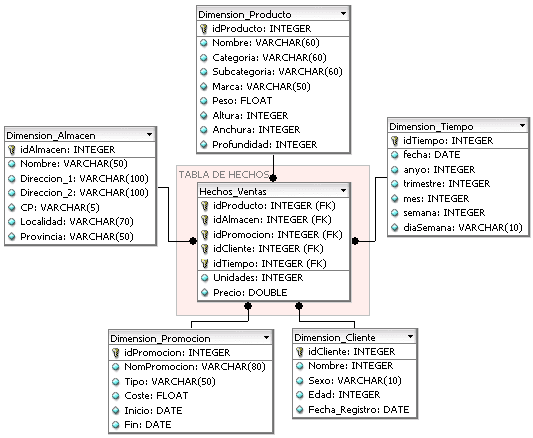
Fact Table: The Numbers in Your Data Warehouse
A fact table is the ledger of business events, recording what happened and how much. It's the core of a data warehouse, holding sales figures or page views. The footgun is storing descriptive text here; that belongs in linked dimension tables.
We are hiring for this. Every open role lists the topics its interview covers, so you can prepare for the real thing rather than guessing.
See open roles