Concepts in Backend Dev, page 22
Node.js perf_hooks: A High-Precision Stopwatch for Your App
The perf_hooks module is a high-precision stopwatch for your Node.js code, offering nanosecond accuracy. Use it to benchmark async operations or HTTP request durations.
Go Memory Profiling with pprof
pprof takes a snapshot of your Go app's memory usage, showing which functions allocate the most. Use it to diagnose high memory consumption or find leaks. A common footgun is profiling total allocations (allocs) instead of current memory use (heap).
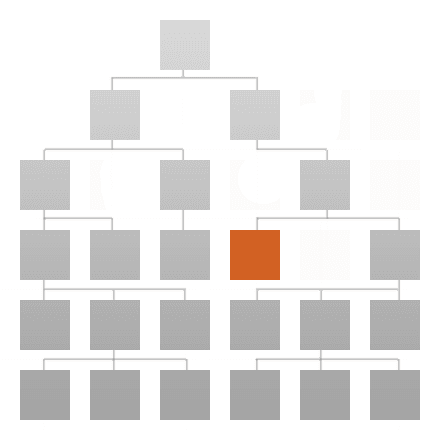
Faceted Search: Guided Drill-Down for Large Datasets
Faceted search turns a massive result list into an interactive drill-down experience, like the filters on a shopping site. It's used in e-commerce and document libraries where items have structured attributes.
Criterion: Statistical Benchmarking for Rust
Criterion isn't just a stopwatch; it's a statistical lab for your code. It provides stable performance metrics by running functions many times, letting you detect regressions and prove optimizations. The footgun is ignoring its statistical reports.

Downsampling: Trading Precision for Storage in Time Series Data
Downsampling trades precision for storage in aging time series data. It's like summarizing old notes: you keep key trends but discard granular details. This is vital for observability systems that need recent precision but only coarse historical views.
Rust Mocking: Using Traits as Test Seams
Mocking in Rust uses traits as test doubles. You program a mock's behavior—what calls to expect and what to return—to isolate the code under test. The mockall crate's #[automock] macro generates mocks from traits. The footgun is over-specifying behavior.
Semantic Search: Finding Meaning, Not Just Keywords
Semantic search finds meaning, not just keywords. It's like asking a librarian for 'books about space travel' and getting results for 'astronaut biographies,' not just titles with the exact words. It's used in search engines to find conceptually related items.

SharedArrayBuffer: True Shared Memory for JS Threads
SharedArrayBuffer is a shared whiteboard for JS threads, letting them access the same memory without slow data copies. It's used for high-performance parallel tasks. The footgun: without Atomics to coordinate, you'll get race conditions and corrupted data.
Go Fuzz Testing: Automated Bug Discovery
Go's fuzz testing automatically generates strange inputs to crash your code, finding bugs you'd never think to test. It's ideal for stress-testing parsers or security-sensitive functions.
Approximate Nearest Neighbor (ANN) Search: Good Enough, Fast Enough
ANN search finds 'pretty close' neighbors in a massive dataset for a fraction of the cost of finding the exact closest one. It powers vector databases and semantic search.
FastAPI's WebSocket State Machine
FastAPI manages WebSockets with a state machine, tracking client and application states separately. You must explicitly accept() a connection before communicating. This is key for chat or notification features.
V8's Garbage Collector: A Performance Pillar
V8's garbage collector is a key to its speed, using a "stop-the-world, generational, accurate" approach to reclaim memory. This runs automatically in Node.js and Chrome, but its pauses can impact performance.
Fuzz Testing in Rust with cargo-fuzz
Fuzz testing automatically finds bugs by feeding your code pseudo-random inputs. Use cargo-fuzz to stress-test parsers and APIs that handle untrusted data. The main footgun is assuming random bytes are enough; effective fuzzing needs structure-aware inputs.

Continuous Queries: Automating Time-Series Aggregation
A continuous query automatically aggregates real-time data on a schedule. Use it to create downsampled rollups, like hourly averages from raw sensor data, storing results in a new series.
The WebSocket Protocol
WebSocket (RFC 6455) is a protocol providing full-duplex, persistent communication over a single TCP connection. It begins as an HTTP request that upgrades, then both client and server can send messages anytime, enabling real-time apps without HTTP's…
Go Execution Tracer: Pinpointing Concurrency Bottlenecks
Go's Execution Tracer creates a visual timeline of your program, capturing goroutine state changes, syscalls, and GC events. It's essential for diagnosing subtle concurrency issues like lock contention. The main footgun is misusing annotations for work.
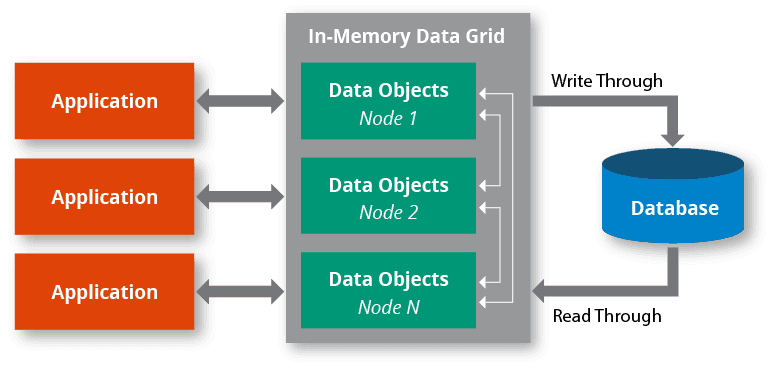
In-Memory Data Grid: A Shared RAM Pool for Your Cluster
An In-Memory Data Grid (IMDG) pools the RAM of multiple computers into one massive, shared data space. It's for high-speed processing on datasets too large for one machine. The footgun is mistaking it for a simple cache; it also provides parallel computation.
Your First Python Dockerfile Blueprint
A Dockerfile is a recipe for building a self-contained environment for your Python app. Use it to ensure your app runs identically everywhere, from your laptop to production. The common footgun is forgetting a .dockerignore file, which bloats your image.
Polling vs. WebSockets: Stop Asking, Start Listening
Polling is like repeatedly asking "Are we there yet?", while WebSockets is a persistent, two-way conversation. Use polling for infrequent updates, but use WebSockets for real-time apps like chat. The footgun is using polling for high-frequency updates.

HNSW: Vector Search with a Graph Highway System
HNSW finds approximate nearest neighbors in huge datasets by building a multi-layered graph, like a highway system over local roads. It's the engine in vector databases for similarity search. The footgun: it trades perfect accuracy for massive speed gains.
We are hiring for this. Every open role lists the topics its interview covers, so you can prepare for the real thing rather than guessing.
See open roles