Advanced interview questions in Backend Dev
Contrast unsafe in Go versus Rust and the invariants you assume
Tests divergent safety philosophies. Go unsafe enables FFI and pointer casting; you guarantee valid memory, alignment, and GC reachability. Rust unsafe unlocks raw pointers and FFI; you manually uphold aliasing and validity invariants behind safe APIs.

How does Uvicorn use asyncio to handle thousands of concurrent connections?
Tests async concurrency and the GIL. Great answers cover the event loop suspending coroutines at await, Uvicorn interleaving connections, and multi-process workers for parallelism. Red flag: claiming asyncio uses threads per request or bypasses the GIL.
Implement an async database session dependency using yield for setup and teardown
This tests async resource lifecycle management in FastAPI. A strong answer uses async def, yields a session inside try, closes in finally, and injects with Depends. A red flag is omitting finally or using sync def for async I/O, which leaks connections.
Read Committed versus Serializable isolation levels
Name the four levels, map each anomaly (dirty read, non-repeatable read, phantom) to the level that blocks it.
Create a generic Pydantic BaseModel for API response wrappers
Subclass BaseModel and Generic[T]; type data as T; use ResponseWrapper[User]; note unparametrized TypeVars validate as Any.
Diagnosing and fixing the N+1 query problem
Define the 1 parent plus N child queries, fix via JOIN or batched IN, and ORM eager loading.
When to intentionally denormalize a schema
Identify read-heavy join cost, duplicate or precompute data, and own the consistency burden.
Circular dependencies in CommonJS modules
When A requires B which requires A, the cache returns A's partial exports; fields defined later are undefined at that moment.
Default integer overflow behavior in Go versus Rust
Go wraps silently; Rust panics in debug, wraps in release; Rust has wrapping_, checked_, saturating_ methods; Go needs manual checks.
Diamond dependencies and nested node_modules
Npm hoists one version to the top and nests the conflicting version under the dependent package; both coexist on disk.
Go nil pointers vs Rust Option: impact on signatures and safety
Tests encoding of absence. Go nil means any pointer may be null, pushing checks to runtime; Rust Option<T> forces compile-time handling. Strong answers cover signatures, validity, and NPO. Red flag: calling Option syntactic sugar for null.
Monorepo workspaces vs private npm packages
Workspaces give atomic cross-service changes and instant local linking but couple release cadence; private packages give versioned isolation but add publish overhead and version drift.
Shadowing in Go and Rust: idioms, bugs, and if-block scoping
Tests lexical scoping in Go and Rust. Strong answers show Go's := narrowing and Rust's let rebinding, warn that Go's if := scopes across both branches, and contrast that with Rust's block-local let. Red flag: calling shadowing mutation.
Polymorphic associations and referential integrity
A single column can't FK two tables, so integrity is unenforced; alternatives use exclusive arcs or per-type tables.
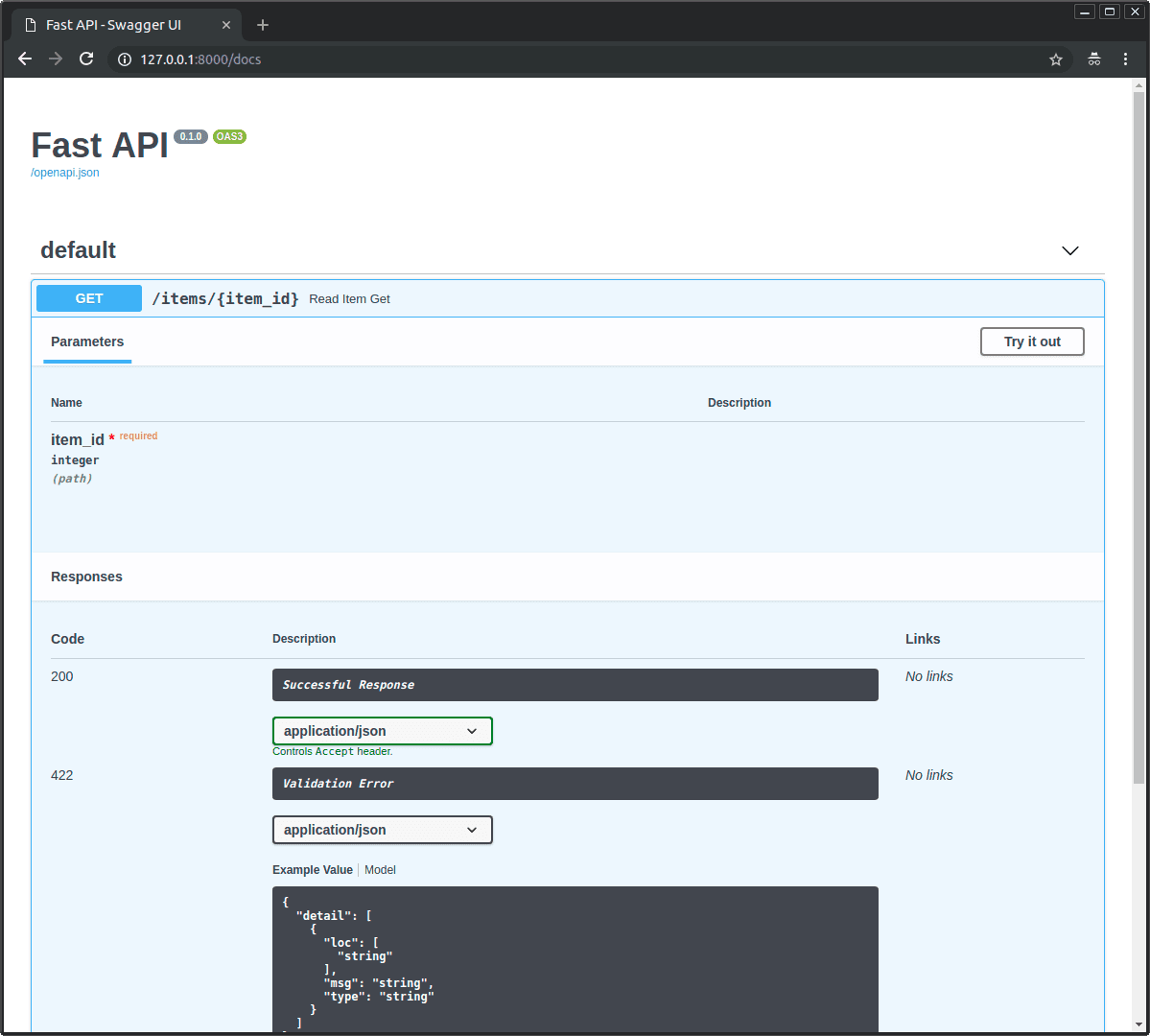
FastAPI non-integer query param default behavior
Tests FastAPI's automatic Pydantic validation and default error contracts. Strong answer: 422 Unprocessable Entity with JSON detail array containing loc, msg, and type fields. Red flag: saying 400 Bad Request or manual validation is needed.
Relational versus wide-column for a news feed
Relational gives flexible joins but read-time fan-out; Cassandra precomputes per-user feed rows for fast writes-side fan-out.
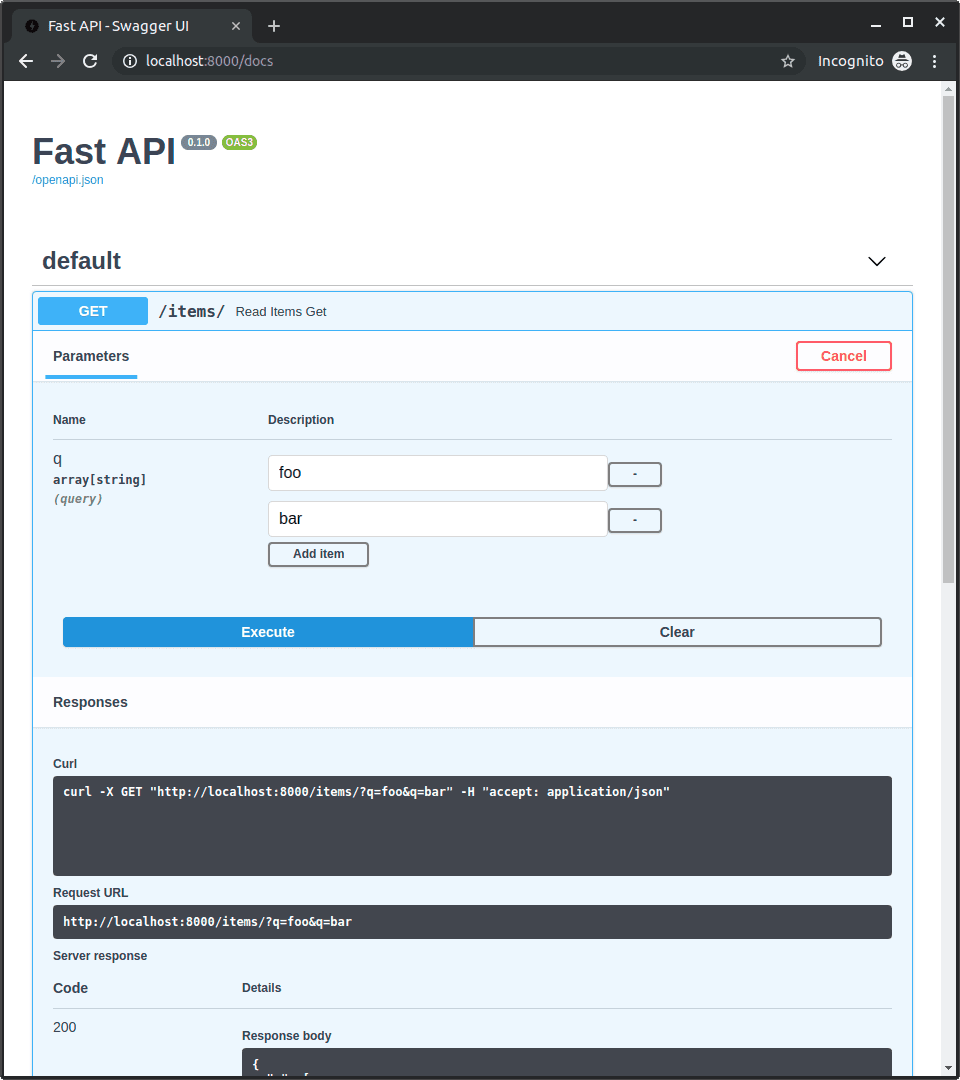
How do you type-hint repeated query params in FastAPI?
Tests FastAPI's Annotated pattern for multi-value query strings. A great answer uses Annotated[list[str], Query()] = [] to collect repeated keys, and notes the old Query-as-default alternative. Red flag: manual parsing or typing it as str.
Shard key impact on uniqueness and cross-shard lookups
Uniqueness and FKs hold only within a shard; non-shard-key lookups need scatter-gather or a secondary index.
What is the :path converter in FastAPI?
Tests FastAPI routing semantics and URL segmentation. A strong answer states :path captures slashes across segments while plain str stops at the next slash, and cites file-serving as the use case.
Bounded concurrency for many async requests
Chunk the array and await Promise.all per chunk, or run a fixed worker pool pulling from a shared index; cap in-flight requests.
We are hiring for this. Every open role lists the topics its interview covers, so you can prepare for the real thing rather than guessing.
See open roles