Advanced everything in Cloud Platforms, page 5
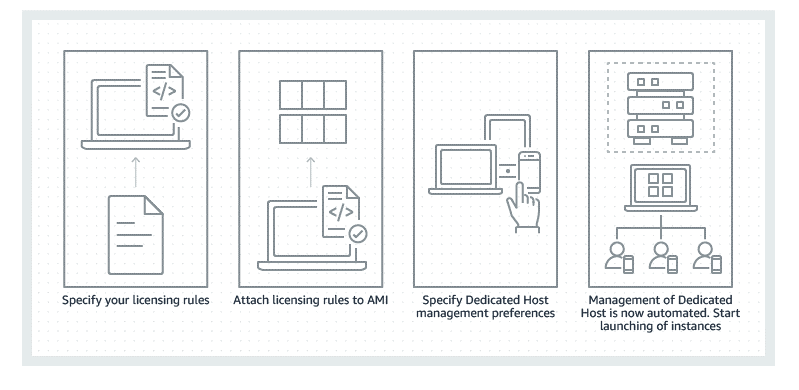
AWS Dedicated Hosts: Your Own Physical Server in the Cloud
An AWS Dedicated Host is your own physical server in the cloud, providing single-tenant hardware. Use it for "bring your own license" (BYOL) software tied to physical cores, or for compliance rules that forbid multi-tenancy.

AWS Placement Groups: Control Where Your Instances Run
AWS Placement Groups let you control where EC2 instances run relative to each other. Use a Cluster group for low-latency HPC, or Spread/Partition groups to reduce correlated hardware failures. The main footgun is picking the wrong strategy for your workload.
Bare Metal Instances: Your Own Dedicated Cloud Server
A bare metal instance is your own dedicated physical server in the cloud—no sharing, no virtualization layer. Use it for workloads needing direct hardware access or for licensing that forbids VMs. The footgun: you trade cloud elasticity for this control.
Spot Instances: Trade Reliability for Huge Cost Savings
Spot Instances let you use spare AWS compute for up to 90% off. They're great for fault-tolerant jobs like batch processing or CI/CD. The footgun: AWS can reclaim your instance with a two-minute warning, so don't use them for critical workloads.
FaaS: Run Code, Not Servers
FaaS lets you run code without managing servers, like renting a contractor for one task. It's ideal for event-driven actions like processing uploads or handling webhooks. The footgun is cost: for high, steady traffic, a dedicated server is often cheaper.
Multi-cloud: Spreading Bets Across Cloud Providers
Multi-cloud is a strategy for using services from two or more cloud providers to avoid vendor lock-in. It's used to cherry-pick best-in-class services or improve resilience. The footgun is underestimating the complexity of managing disparate APIs and security.
We are hiring for this. Every open role lists the topics its interview covers, so you can prepare for the real thing rather than guessing.
See open roles