Interview questions in Data Science & Analytics, page 2

How would you build and validate a proxy target for employee burnout?
Combine survey scales with behavioral signals such as off-hours logins and PTO drops; validate via convergent and predictive validity against attrition.
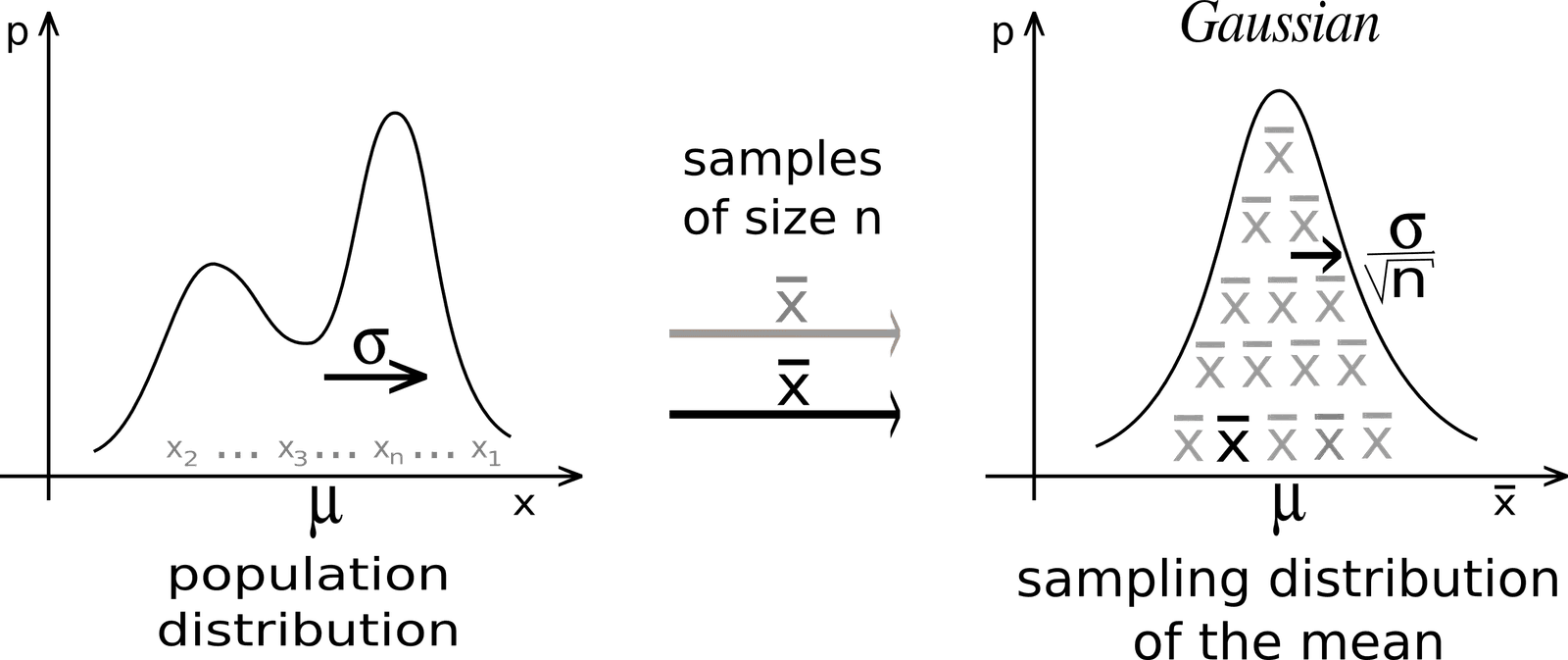
Explain the Central Limit Theorem and its importance for hypothesis testing
This tests whether you know why sample means from skewed populations tend toward normal as size grows, enabling tests. A strong answer covers mean convergence to normal and standard error. Red flag: claiming the CLT works for small samples or single points.

Describe the bias-variance tradeoff and how model complexity affects bias and variance
More complexity cuts bias but boosts variance via overfitting; test error forms a U.

Why is 99% accuracy misleading with 1% disease prevalence?
Tests class imbalance intuition. A strong answer notes that an all-negative classifier hits 99% accuracy, then names precision, recall, F1, and AUC-PR to expose false negatives and false positives. Red flag: claiming accuracy is fine after rebalancing.
How gradient descent and the learning rate work
Gradient descent steps downhill along the negative gradient to minimize cost; the learning rate sets step size; too high diverges or oscillates, too low converges painfully slowly.
Eigenvalues, eigenvectors, and their role in PCA
An eigenvector keeps direction under a matrix, its eigenvalue scales it; PCA finds eigenvectors of the covariance matrix as principal axes.
How do you determine sample size for a conversion lift experiment?
Tests fluency with statistical experiment design. A strong answer frames N as a function of alpha, power, baseline rate, and MDE, noting that shrinking the MDE or raising power inflates N. Red flag: picking N from traffic instead of risk tolerance.
MLE versus MAP estimation and the role of priors
MLE maximizes likelihood alone; MAP maximizes likelihood times a prior, acting as regularization that shrinks toward prior beliefs; with abundant data they converge.
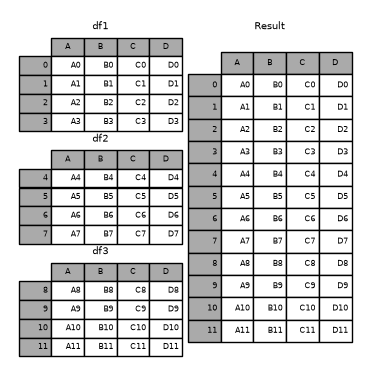
How would you combine customer and transaction DataFrames and describe join types?
This tests relational merging and join semantics in pandas. Answer: use pd.merge on customer_id, then groupby sum; describe inner, left, right, and outer joins by key preservation. Red flag: proposing concat without keys or conflating inner and left joins.
What is vectorization in NumPy and pandas?
Tests if you know why NumPy operations beat Python loops via contiguous memory and C-level SIMD. A strong answer defines vectorization as array-wide operations without explicit loops, contrasts a ufunc to a for-loop, and cites interpreter overhead removal.
Calculate total and average sales per region in pandas
Tests split-apply-combine fluency. A strong answer groups by Region then calls agg with a dict or named aggregation to return sum and mean of Sales_Amount together. Red flag: chaining separate groupby calls or looping rows manually.
Convert string timestamps to datetime and extract day of week
This tests pandas datetime parsing and accessor fluency. A strong answer uses pd.to_datetime, assigns the result, then extracts the day via .dt.day_name() or .dt.dayofweek. Red flag: manual string splitting or Python loops instead of vectorized ops.

Process a 50GB CSV with only 16GB RAM
Chunk with read_csv chunksize, filter columns via usecols, downcast int64 to int32/int16, skip rows.
How do you analyze and reduce large pandas DataFrame memory usage?
This tests in-memory representation and systematic optimization. Start with df.info(memory_usage='deep'), downcast numerics with to_numeric, convert low-cardinality strings to category, and use nullable dtypes.
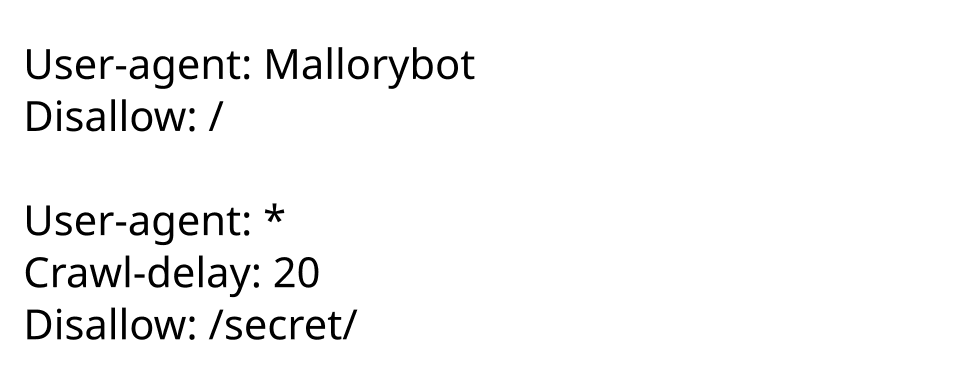
What is robots.txt, why respect it, and consequences of ignoring it?
It disallows crawler paths via the Robots Exclusion Protocol; honoring it prevents server strain, legal risk, and broken trust.

Design a rate-limited REST API data collection script
Tests client-side throttling discipline versus reactive 429 handling. Strong answers proactively pace calls using rate-limit headers, cap concurrency, and apply exponential backoff with jitter. Red flag: tight-loop retries or ignoring headers.
How would you scrape a page with dynamically loaded JavaScript content?
It tests if you know dynamic pages need a real renderer. A great answer names Playwright or Selenium, uses explicit waits for elements, and extracts via DOM or network interception. Red flag: suggesting only static parsers like BeautifulSoup or blind sleeps.

SQL or NoSQL for high-volume semi-structured event ingestion?
Choose NoSQL for schema-less landing; use SQL downstream for structured analytics.
Implement OAuth 2.0 flow to get an access token for API requests
Tests your grasp of OAuth 2.0 grant-type selection and token lifecycle. Strong answers match the script context to client credentials or authorization code flow, detail the token endpoint exchange, and address refresh and expiry.

Design an incremental load pipeline from a transactional DB to a warehouse
Contrast timestamp watermarking, CDC from transaction logs, and open-table incremental reads; cite merge logic and idempotency.
We are hiring for this. Every open role lists the topics its interview covers, so you can prepare for the real thing rather than guessing.
See open roles