Concepts in Design & UX, page 27
Research Governance Model
A research governance model is the operating system for scaling insights, trading autonomy for coordination so studies do not collide. It matters when teams share users and budgets.
Text Resizing in Figma Auto Layout
Text in Auto Layout does not wrap by default. A label set to Auto Width grows forever, while a parent set to Hug follows it. The footgun is leaving text on Auto Width inside a responsive card and expecting it to behave like a paragraph.
Semantic HTML: Structure as Accessibility Infrastructure
Semantic HTML assigns real roles to page elements so screen readers can navigate them. Use buttons for actions, headings for outline, and tables for data. The footgun is using divs with click handlers as buttons; they are invisible to keyboard and screen…
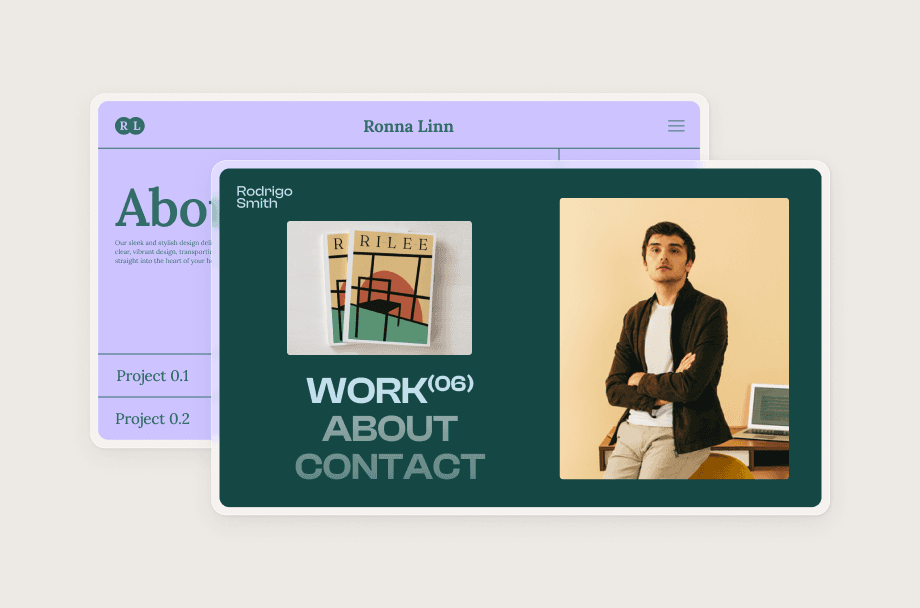
Writing Portfolio: Your Resume for Creative Work
A writing portfolio is your professional storefront, showing clients not just what you can write, but how you solve their problems. It's essential for landing freelance gigs or full-time jobs.
Research Spike: Fast Reconnaissance Before Commitment
A research spike is a time-boxed scout mission to answer one blocking question before the team commits. Use it when requirements are fuzzy. The footgun is letting the spike balloon into a full research project instead of a sharp go or no-go call.
Boolean Component Properties in Figma
Boolean properties in Figma are light switches for layers inside a component. They let you toggle an icon or badge on and off without spawning extra variants. The catch is that hiding a layer can break auto-layout if that layer was anchoring spacing.
Centralized Design System Team Model
A centralized design system team acts as a central kitchen: one dedicated group owns the components and standards that every product team consumes. It guarantees consistency but becomes a bottleneck if the team loses touch with shipping product teams.

Invoice: The Official 'Please Pay Me' Document
An invoice is your official request for payment after delivering work. Freelancers and businesses use it to bill clients for services, listing what was done and how much is owed. The footgun is confusing it with a receipt, which confirms payment has been made.
Experience-Based Roadmap: Triage for Product Teams
An experience-based roadmap prioritizes user pain over feature deadlines. It sequences work by the severity of friction users actually encounter, not internal priorities. Teams often confuse it with a feature wishlist and skip validation.
Prototype Overlays: Layer Without Duplication
Overlays layer modals and menus above your current screen like a transparency sheet, so you never duplicate frames. Use them for dropdowns, dialogs, and toasts. The footgun is fixing them to the screen edge instead of the trigger, which breaks on resize.
Design System Roadmap: A Prioritization Contract
A design system roadmap is a contract with product teams, not a release calendar. It balances platform health against consumer demand so the system stays relevant. The footgun is letting roadmaps dictate every sprint, reducing the team to a service desk.
The Byline: Attributing Work to its Author
A byline is the author's signature on an article, giving them credit and accountability. You see it between the headline and body text of news stories, magazine features, and blog posts.
Accessibility Heuristic Evaluation
Accessibility heuristics spot keyboard traps and missing labels like a code audit for access. Use them in early reviews if disabled users are weeks away. The footgun is treating a clean score as proof, since only real users validate true usability.
Conditional Logic in Figma Prototypes
Conditional logic turns static click-throughs into state-aware flows. Use it to unlock a button only after form fields are valid, or to branch checkout based on payment method. The footgun is building a brittle fake app instead of a focused testable flow.
Federated Design System Team Model
Federated ownership spreads design system control across teams, not a silo. A lean core owns standards while contributors ship components from the field. The footgun is treating federation as zero governance, splintering the system into forks.
Hiring Writers: Freelance vs. In-House
Choosing between freelance and in-house writers is a strategic trade-off. Freelancers offer cost-effective, specialized talent on demand, while in-house writers provide deep brand knowledge and consistent availability.
Screen Reader Testing: Navigate UI Without Sight
Screen reader testing reveals gaps visual checks miss by turning your UI into audio. Run real tasks with only a keyboard and screen reader, checking headings and focus order. The footgun is treating axe passes as equivalent to a human listening through a flow.
Handoff Plugins Bridge Figma to Code
Handoff plugins are automated translators between Figma and code, turning visual specs into tokens or components. They speed up design systems where manual inspection is a bottleneck. The footgun is treating generated output as production-ready without review.
Hybrid Model: Core Team Plus Federated Contributors
A hybrid design system team pairs a central group owning primitives with product squads shipping patterns. Large orgs use it when one team cannot cover every surface. It fails when contribution rules are vague and the core becomes a bottleneck not an enabler.
Beyond Per-Word: A Framework for Setting Freelance Rates
Price your work based on value, not just word count. Rates vary widely by service (editing vs. consulting), genre, and your expertise. This applies when quoting any project.
We are hiring for this. Every open role lists the topics its interview covers, so you can prepare for the real thing rather than guessing.
See open roles