Advanced interview questions in Design & UX, page 2
Architecting global and local theming with context
A top-level provider supplies global tokens, nested providers merge local overrides, components read the nearest theme, often backed by CSS variables.
Design a one-week lean research plan for a high-risk decision
This tests trading rigor for speed without losing decision signal. A strong answer matches the riskiest assumption to a fast method, sequences generative and validation across five days, and defends bias.
Headless components and a headless Combobox
A headless component owns state, logic, and accessibility but renders no UI, exposing state and prop-getters so consumers supply markup.
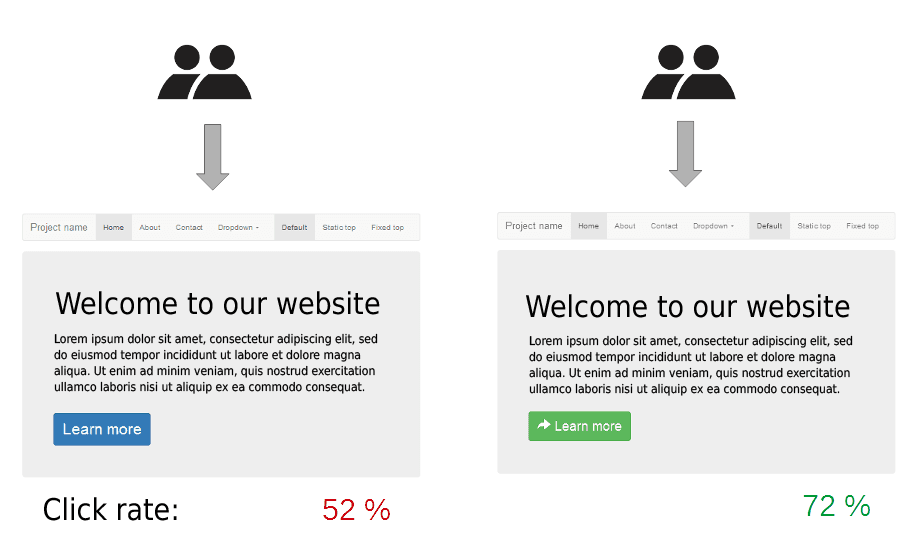
How would you structure a backend architecture A/B test and define metrics?
This tests causal inference rigor for infrastructure changes. A strong answer covers sticky user routing, controlling for geography and time, and paired primary metrics like P99 latency and error rate.
How would you structure Figma colors for light and dark themes?
Fluency with token layers and Figma's mode-aware raw values. Use aliased color variables for semantics, switch themes via variable modes, and apply variables to styles not relying on styles for modes. Suggesting styles handle theming instead of variables.

Design a highly scalable headless CMS architecture
Tests write-heavy authoring versus read-heavy delivery separation at scale. Strong answers outline dual-cluster isolation, event-driven invalidation, and CDN edge caching. Red flag: a monolithic service with only database query caching.
Architect a large-scale real-time recommendation system with data pipelines
Tests multi-stage ML serving under 200ms latency. Strong answers use a funnel: two-tower embeddings with ANN retrieval, ranking, and guardrails, plus separate batch and real-time pipelines. Red flag: scoring the full catalog per request without approximation.
Design a system to automate the content lifecycle
This tests time-based state modeling and scheduler choice at scale. A strong answer names a workflow engine or cron-plus-queue, separates analytics ingestion, and requires idempotency. Red flag: a single cron script with no backpressure or failure handling.

Outline a technical roadmap for an internal research participant panel
Tests systems design for research ops. Strong answers: CRM-synced opt-in, canonical data model with eligibility rules, communication orchestration, and incentive automation.
Architecting a composable DataTable API
Separate a headless data/state core from rendering, use a column-definition config with custom cell renderers, expose composition over dozens of flags.

Design a system integrating analytics data with participant recruiting
Tests system design for behavioral targeting in research ops. A strong answer covers: a warehouse-to-tool pipeline; consent and privacy gates; behavioral SQL segmentation; and frequency capping. Red flag: skipping GDPR and consent to focus only on data joins.
How would you configure a wrapping filter tag container and its properties?
This tests horizontal wrap vs grid and tuning container and child resizing. Set the container to horizontal auto layout with wrap, adjust spacing and padding, and set tags to hug contents. Red flag: confusing wrap with grid or suggesting manual breaks.
Designing a multi-step wizard form pattern
A wizard controller owns step index and shared data, each step validates itself and reports up, accumulated data persists across steps.

Design a centralized participant management system to prevent over-contacting
Tests ResearchOps governance at scale. Strong answers define unified data tracking contact history, consent, and segments; enforce hard frequency caps and cooling-off windows; and build automated guardrails. Red flag: siloed spreadsheets or soft guidelines.
Structure a responsive nav bar using variants and Auto Layout
One component set with desktop/mobile variants; horizontal Auto Layout with wrap for links, then hamburger and vertical overlay.
Build a responsive feature grid with nested Auto Layout and component properties
This tests nested Auto Layout fluency for responsive grids. Strong answer: vertical section frame with wrapping horizontal row, cards with 280 px min widths, and component properties to swap content. Red flag: duplicating static artboards per breakpoint.
Measuring design system documentation effectiveness
Search-with-no-results, time-to-first-component, support-ticket deflection, tied to analytics and registry data.

Super button versus composition: discuss trade-offs and scalability
Tests combinatorial explosion and API trade-offs in design systems. Contrast the super button's exponential growth with composition's explicit APIs and linear scalability, noting governance needs. Red flag: absolutism or ignoring type safety and tree-shaking.
Design a system to detect keyword cannibalization
Query-page-position data, intent clustering, and rank volatility.

Design an algorithmic E-E-A-T scoring system
Tests turning subjective quality into signals. Split E-E-A-T into distinct feature families, combine structured metadata with unstructured NLP and graph signals, and calibrate against human rater labels. Red flag: one opaque score or CTR as trust proxy.
We are hiring for this. Every open role lists the topics its interview covers, so you can prepare for the real thing rather than guessing.
See open roles