Intermediate interview questions in Design & UX, page 2
Outline an NLP pipeline to categorize reviews and identify pain points
Tests text mining pipeline design. Answers cover deduplication and normalization, then clustering or topic modeling for categories, plus sentiment analysis to rank pain points. Red flag: skipping validation or jumping to LLMs without cleaning.

Design a centralized consent platform: core components and database schema
Separate CMF from CMP; build an append-only ledger with versioned wording, per-activity granularity, and real-time revocation.

How would you optimize and implement a full-bleed responsive hero image?
Use srcset with AVIF/WebP, CSS object-fit cover, and width/height to prevent CLS.
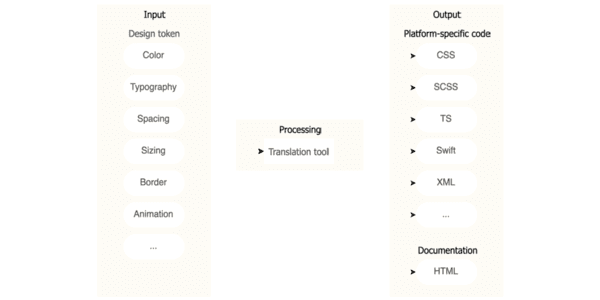
Design token pipeline serving Web, iOS, and Android
This tests cross-platform design system architecture and governance. A strong answer uses W3C JSON tokens in option, decision, component layers, with Style Dictionary generating Web, iOS, and Android outputs. Red flag: using Figma or CSS as source of truth.
Building a scalable icon system in Figma
Standardize a grid, size, and stroke; make each icon a component with consistent naming, use currentColor-friendly single-color paths, and export optimized SVGs.
Choosing a spacing scale for a design system
A numeric base-grid gives predictable math, semantic t-shirt names give readable intent, often combine them.
How do you build a responsive Figma component across breakpoints?
Tests Figma auto layout and constraint logic for responsive components. Strong answers mention nested frames, hug/fill modes, breakpoint variants or variables, and resizing previews. Red flag: copying static frames instead of using constraints.

How would you architect a white-label content system for multiple brand voices?
Tests content-presentation separation for multi-tenant apps. Strong answers use a headless CMS with tenant keys, a domain resolver for brand voice, and shared components with injected strings. Red flag: duplicate codebases or hard-coded copy per client.
How do you enforce proximity with Figma Auto Layout and spacing variables?
Tests translating Gestalt proximity into systematic spacing. Strong answers map t-shirt scales to Auto Layout gap and padding, then bind them to Figma spacing variables. Red flag: confusing proximity with alignment or manual nudging.
How would you automate forbidden-word checks in CI/CD?
This tests embedding brand governance into engineering workflows. A strong answer covers AST-aware string extraction, CI gating with severity levels, and allowlisting to cut false positives.
How do you validate UX within hard technical constraints?
Tests evaluative research design for constrained, buildable prototypes rather than ideal mocks. Strong answers scope to feasible layers, use Wizard of Oz or stubs, and benchmark against current state. Red flag: testing fantasy UI that ignores API limits.

Design a headless CMS model for brand voice metadata and API usage
Structured content beyond page blobs. Strong answers validate tone, context, and character limits in the CMS; expose them via API filters; and let clients render context-aware components.
What technical instrumentation supplements a two-week diary study?
Log anonymized feature frequency, session duration, and device switches; link via participant ID.

How would you structure a flexible Card component API?
Tests composition-over-configuration thinking in design systems. A strong answer uses compound components or slots so consumers reorder or omit title, image, and body freely without prop drilling. Red flag: rigid boolean props that freeze layout order.

Propose two research methods to investigate checkout abandonment
Tests pairing behavioral and attitudinal research. Great answers match funnel analytics to find drop-offs with usability tests to uncover why users cannot complete fields or leave in anger.
What WAI-ARIA attributes and keyboard interactions make Tabs accessible?
This tests mastery of the W3C Tabs pattern. A strong answer covers role tablist tab tabpanel, aria-selected, aria-controls, and arrow-key roving focus with optional auto-activation. A red flag is treating tabs as buttons and relying only on the Tab key.

What criteria and questions ensure right users for a specialized dev tool?
Designing a recruiting pipeline that qualifies niche experts and secures attendance. A strong answer covers role criteria, layered tech screens, and no-show backups. Red flag: relying on job titles without verifying real tool usage.
Data model for an editorial calendar
A content entity with publish_date and a status enum, a foreign key to authors, indexes on date and status.
How do you build a responsive card with Auto Layout?
Tests nested Auto Layout and resizing logic. Answer: vertical hug frame, nested vertical text stack with hug height, image set to fill width, plus padding. Red flag: fixed-height text or absolute positioning breaks responsiveness.
How do you pin a Close icon to a modal's top-right corner?
This tests Figma constraint knowledge for responsive resizing. A strong answer sets horizontal to Right and vertical to Top so the icon pins to the corner as the modal resizes.
We are hiring for this. Every open role lists the topics its interview covers, so you can prepare for the real thing rather than guessing.
See open roles