Intermediate interview questions in Design & UX, page 7

How do you process usability feedback into concrete Figma iterations?
Turning usability findings into traceable Figma iterations. A strong answer triages by severity and frequency, maps issues to annotated frames, and versions options in branches.
SVG icons versus icon fonts: technical trade-offs
SVG is vector markup, crisp, multicolor, accessible, and tree-shakeable; icon fonts ship as glyphs, risk anti-aliasing blur, accessibility hacks, and load-failure boxes. Advocate SVG for modern apps.

Figma Constraints vs Auto Layout: when are Constraints preferable?
This tests resizing logic in Figma. A strong answer states Auto Layout resizes frames to fit content, while Constraints make objects respond to parent frames. It then cites responsive containers, say fluid inputs.
Tracking design system component usage and versions
Static scan of code or lockfiles, a central reporting store, and a dashboard; data drives deprecation and roadmap.

How would you architect a centralized research repository for heterogeneous data types?
Tests designing systems that unify unstructured UX artifacts into a queryable graph. Cover: ingestion with transcription, a metadata schema linking insights to evidence, and faceted cross-type search. Red flag: a flat file dump without structured tagging.
Create a crescent moon in Figma using Boolean operations
Tests Figma vector workflow and layer hierarchy. A strong answer picks Subtract selection, places the cutter shape above the base, and notes the bottom layer sets fill and stroke. Confusing Subtract with Exclude or ignoring layer order is a red flag.
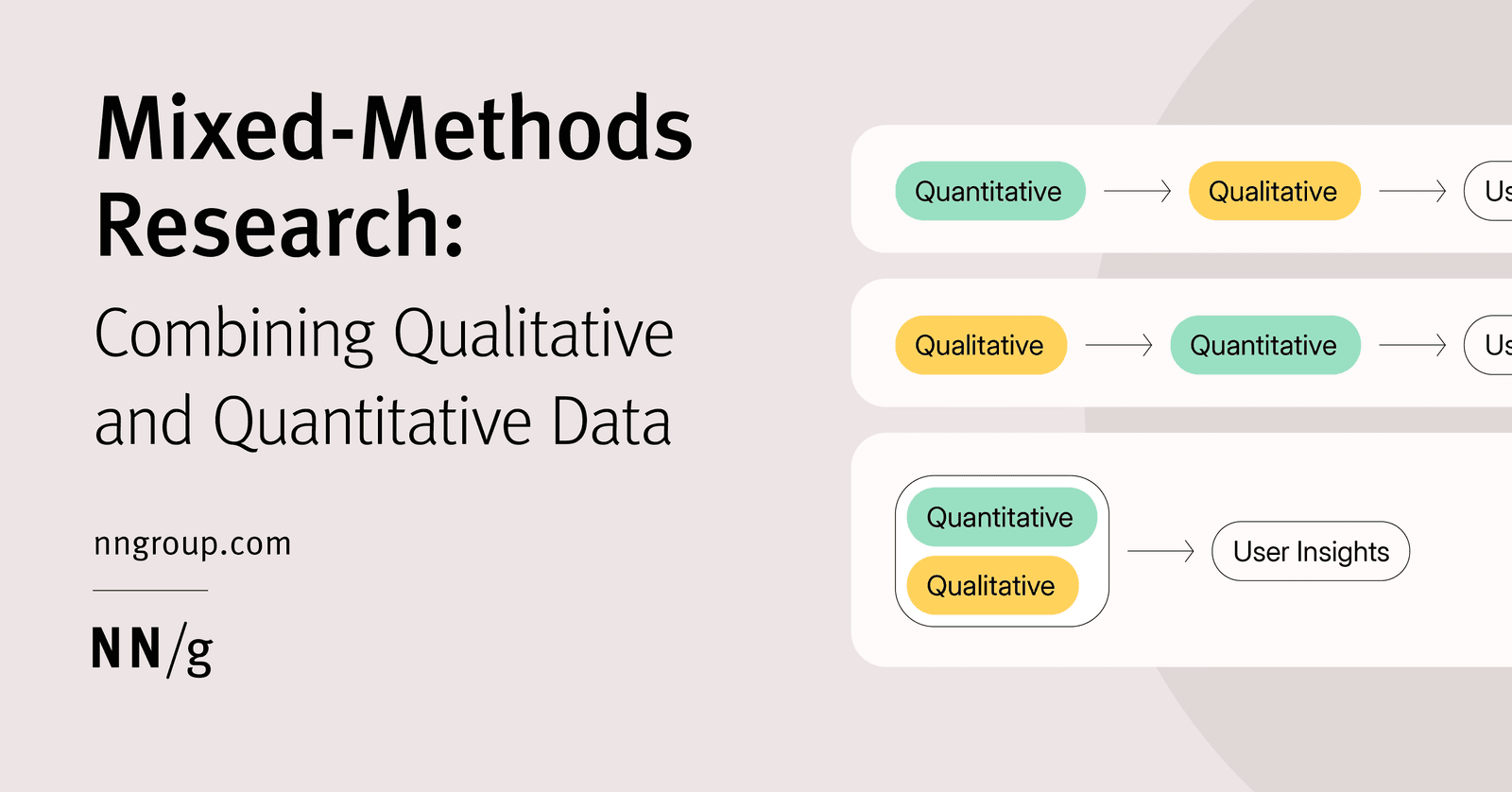
How would you architect a unified quantitative and qualitative user experience view?
This tests intentional mixed-methods integration. A strong answer covers: shared research questions and user IDs; using quant struggles to guide qual interviews; linking datasets by session.
Main components vs instances: how to use Component Properties for multi-state Buttons?
This tests Figma component architecture. A main component is the source; an instance is a linked copy. Use variant properties for state and style, plus booleans for optional layers. Red flags: separate components per state or ignoring property controls.

How do you implement a CTA A/B test and attribute conversions?
This tests experiment architecture from bucketing to attribution. A strong answer covers: stable user bucketing, server or client-side rendering, and conversion events tagged with experiment and variant IDs.

How would you structure a complex reusable Figma table with Auto Layout?
Tests nested Auto Layout and component properties for scalable Figma tables. Build atomic hug/fill cells in horizontal row Auto Layout, then stack rows vertically. Expose cell-type swaps via component properties. Red flag: manual resizing or variant bloat.

Describe architecture for live UI text updates without deployment
Structured API, webhook sync, client or edge rendering with cache versioning, and rollback.
How do you let designers swap a component's icon without detaching?
Tests Figma component properties. Answer: apply an instance swap property to the nested icon, set preferred instances from your icon library, and keep it as a component instance. Red flag: suggesting boolean properties or detaching.
Structuring tokens for brand and sub-brand inheritance
Tiered tokens (primitive, semantic, component), sub-brands override only semantic aliases, and references keep inheritance live.
What is component nesting? Build a profile header from nested components.
Tests atomic design and system scalability. Answer: define nesting as instances inside a parent; describe a profile header using Avatar, Text, and Button instances; note base edits propagate globally. Red flag: one-off layers instead of reusable instances.
Architecting a themeable React component library
A ThemeProvider supplying tokens through Context, components reading them, and CSS variables for performance.
How would you create a dismissible modal dialog over the current screen?
This tests modal architecture beyond visuals. A strong answer covers: dimming the inert background, trapping focus, returning focus on close, and supporting Escape plus a visible close button.
What techniques make complex technical topics understandable in audio-only podcasts?
Great answers cite relatable analogies, vocal signposting, and narrative framing without visual references.
Generative versus evaluative research in sprints
Generative explores problems before building and feeds requirements; evaluative tests solutions during and after build and feeds fixes.
Prototype a draggable carousel with On Drag
Lay frames side by side, use On Drag with Smart Animate, and clamp ends.
CSS custom properties versus Sass for theming
Custom properties are live and cascade for dynamic switching; Sass variables compile away.
We are hiring for this. Every open role lists the topics its interview covers, so you can prepare for the real thing rather than guessing.
See open roles