Interview questions in Design & UX, page 25
Re-evaluating personas when engagement is low
Bring behavioral evidence, separate persona-wrong from execution-wrong, propose joint research to validate or invalidate.
Managing cross-framework parity in a design system
Shared token and spec source of truth, optional Web Components core, per-framework wrappers, a parity matrix, coordinated releases.
First Figma steps to turn a brief into low-fi concepts
This tests whether you structure IA before pixels. Strong answers audit the brief, map flows with simple frames, block out grayscale wireframes at target breakpoints, and annotate for async review. Red flag: jumping straight to components or color.
Justify static site generator vs CMS for a portfolio site
Matching tool complexity to static publishing needs. Choose Hugo or Jekyll with Git and a CDN; removing runtime databases eliminates per-request latency and PHP exploit surfaces.
Automating research participant recruitment and scheduling
Screener intake, eligibility matching, calendar booking, notifications, incentive payout; handle no-shows and idempotency.
Automating design system standards enforcement
Custom ESLint and Stylelint rules for tokens and APIs, a11y testing with axe, editor and pre-commit hooks, blocking CI gates plus visual regression.
How do you handle a technically complex interaction and propose Figma alternatives?
Cross-functional negotiation and rapid prototyping under constraint. Defer judgment, quantify delay, co-define success, then use Figma variants and low-fi prototypes to test trade-offs. Never sacrifice UX before grasping engineering effort or business impact.
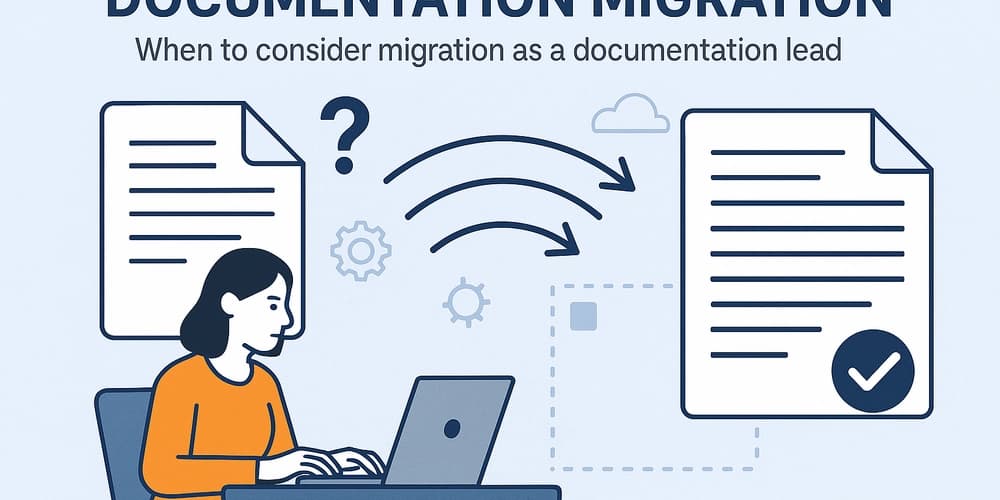
Propose a strategy to migrate fragmented docs into a unified docs-as-code system
Inventory sources; choose SSG by team fit; automate extraction; phased rollout with redirects.
Privacy compliance in a participant management system
Versioned consent records, data classification and minimization, anonymization or pseudonymization, deletion workflow across stores and backups.
Automated detection of deprecated component usage
Machine-readable deprecation metadata, AST scanning across repos, scheduled jobs, per-team dashboards and PR-level warnings with codemod links.
Describe your process for preparing a high-fidelity Figma file for developer handoff
Tests operationalizing the design-engineering boundary. Strong answers cover file structure, auto-layout tokens, responsive annotations, all UI states, and exported assets with naming conventions.
How to structure translation keys for dynamic localized strings
Tests ICU MessageFormat and safe interpolation. Outline: one key per sentence with named placeholders; sanitize variables pre-format; use pattern-level plural and select. Red flag: concatenating fragments or injecting raw user input into templates.
Architecting a multi-tenant ResearchOps platform
Tenant isolation model, RBAC plus governance and classification, searchable metadata and a taxonomy for cross-team synthesis.
Contribution model for a multi-framework system
Web Components core with thin React and Vue wrappers, shared tokens and spec, contribution rules requiring core-plus-wrapper changes, conformance tests.
How would you structure design and Figma for phased rollout?
This tests whether you can architect Figma for parallel flag rollouts. A strong answer covers branch pages, versioned components tied to code flags, and a cleanup timeline. A red flag is a single-file replacement or big-bang launch with no coexistence plan.

How does A/B testing native mobile apps differ from web?
Native mobile constraints versus web deployment. A strong answer covers: app store cycles forcing remote flags; device fragmentation skewing segments; and offline usage delaying events.
Tracing a research insight to shipped code
Give insights stable IDs, link them through tickets to commits and feature flags via tool integrations, measure outcome metrics.
Backporting a critical fix to an older major
Backport the fix to the supported older major as a patch, leveraging a documented support window and maintenance branches.
How would you architect Figma for multi-platform, multi-team products?
This tests design-ops systems thinking at scale. A strong answer outlines a tiered library model: platform-agnostic primitives, platform-specific components, and team files consuming shared libraries, plus governance for breaking changes.
What client-side and server-side validations belong on a campaign sign-up form?
This tests defense in depth and UX trade-offs. A strong answer maps validations to layers: regex and immediate feedback client-side, strict schema and rate limiting server-side, plus duplicate checks. Red flag: claiming client-side validation is sufficient.
We are hiring for this. Every open role lists the topics its interview covers, so you can prepare for the real thing rather than guessing.
See open roles