Advanced everything in Design & UX, page 6
Design a copyright detection system for video uploads
Tests scalable content-identification design. Strong answers cover event-driven ingestion, perceptual hashing and audio fingerprinting versus a reference index, plus tiered enforcement. Red flag: MD5 or pixel-perfect matching that fails after re-encoding.
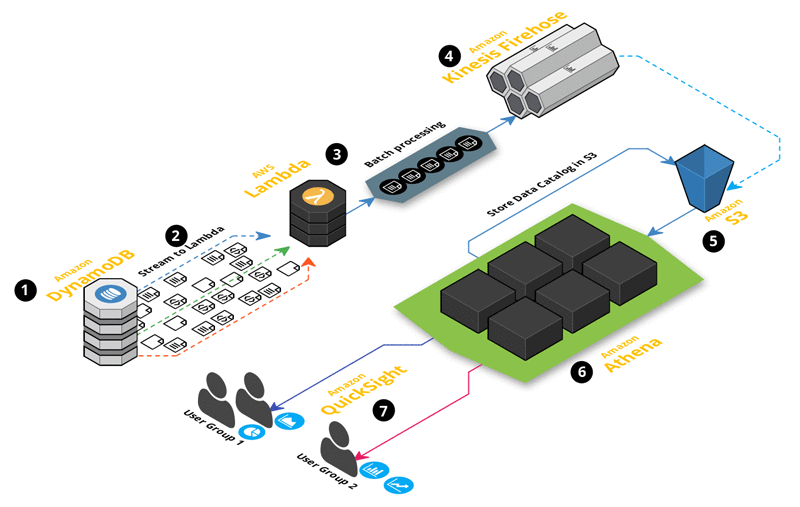
Design a real-time top-10 dashboard for a global news site
Stream ingestion, windowed aggregation, Redis top-N cache, and TTL eviction.

Design anonymous-to-authenticated user journey stitching for ROI
Tests identity resolution and privacy-compliant attribution. Strong answers cover first-party UUID stitching, consent-gated probabilistic matching, async CDP merge, and TTL deletion. Red flag: treating anonymous IDs as non-personal data or skipping consent.
How do you diagnose a confounded A/B test with slower page load?
This tests confounding beyond p-values. A strong answer isolates the bug, checks if slower load hurt or helped conversions, and judges whether copy or latency caused the lift. A red flag is defending a 5% win because p < 0.05 while ignoring randomization.

Compare A/B/n testing with multi-armed bandits for headline optimization
Contrast A/B/n with dynamic MAB allocation; A/B/n optimizes final inference, MABs optimize reward; flag real-time infra.
How would you structure an interactive non-linear tutorial script?
Tests separation of content from branching logic via node graph and user model. Outline: addressable state nodes, error edges, drama manager querying user history for contextual help. Red flag: nested conditionals or hardcoding branches in video files.

Propose a script template and review process for 20 tutorial videos
This tests scalable content ops with distributed engineers. A strong answer gives a modular script template with locked sections, a tiered review pipeline using a style guide and peer review. Red flag: a single flat review or no tone calibration.
Design a CI/CD step to auto-lint application content
Rule types (terminology, placeholders, i18n), tools (TextLint, Vale, AST), and failure mode (block vs warn).
How would you model cross-platform ad campaign data and adaptation logic?
Propose a canonical model, platform adapters mapping copy to each schema, and an async pipeline with validation.
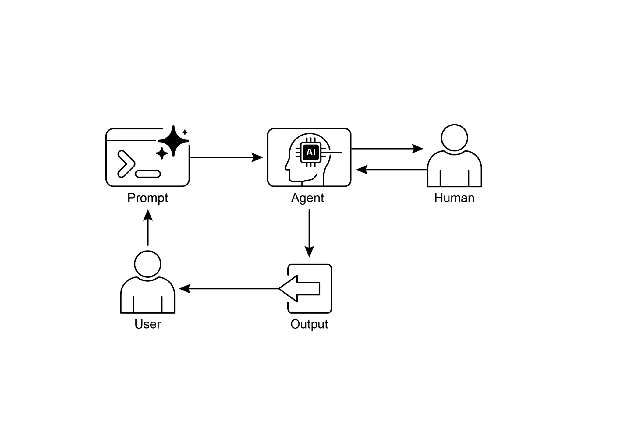
Design an LLM ad copy system with human-in-the-loop
LoRA on approved copy, inference guardrails, human review, feedback as preference pairs for RLHF.

How would you implement a multi-armed bandit for real-time ad optimization?
Use Thompson Sampling or UCB1; split low-latency inference from async updates; track regret.
Design a personalized newsletter recommendation pipeline
Tests batch versus stream tradeoffs and send-time personalization constraints for millions of recipients. A strong answer covers event capture, 24-hour aggregation, lightweight rec generation, and template injection before send.

Build a system to send 1M personalized emails in 2 hours
This tests async distributed throughput and deliverability. Cover partitioned queues, auto-scaling workers, per-ESP rate limits, IP rotation, and exponential backoff with dead-letter queues. Red flags: synchronous sends, skipping IP warmup, or no retry logic.
Explain SPF, DKIM, and DMARC roles and implementation tasks
SPF authorizes IPs, DKIM signs content, DMARC aligns both to the From domain and enforces policy plus reporting.
Architect a secure draft preview system for a headless CMS
It tests safe headless CMS draft previews on production frontends. A strong design uses authenticated preview APIs, SSR middleware with JWT sessions, CMS preview tokens, and cache-busting. Relying on obfuscated URLs or disabling preview auth is a red flag.

Design a centralized Copy Service with versioning, segmentation, and experiments
This tests separation of editorial workflow from runtime delivery. A strong answer covers immutable versioned records, a resolution API evaluating segmentation rules, and delegating experiment bucketing externally.

Caching and performance challenges in SSR with personalized copy
Segment-level cache keys, short TTLs with stale-while-revalidate, and edge personalization to protect origin.
Architect a real-time multi-armed bandit and compare trade-offs to A/B testing
Sketch a fast arm router, streaming feedback, and model updates; contrast MAB regret minimization with A/B's unbiased estimates.
How would you engineer pSEO templating and data integration to prevent duplication?
Architecting data-templating pipelines that enforce genuine uniqueness at scale. A strong answer hits modular variable-rich blocks, canonical and noindex guardrails, and similarity monitoring.

Design an algorithmic E-E-A-T scoring system
Tests turning subjective quality into signals. Split E-E-A-T into distinct feature families, combine structured metadata with unstructured NLP and graph signals, and calibrate against human rater labels. Red flag: one opaque score or CTR as trust proxy.
We are hiring for this. Every open role lists the topics its interview covers, so you can prepare for the real thing rather than guessing.
See open roles