Intermediate everything in Design & UX, page 10
Usability Benchmarking: Quantifying Product Friction
Usability benchmarking is a fitness tracker for your product: you measure task success against a baseline or competitor to prove changes reduce friction. Use it to justify redesigns, but the footgun is testing too few users and mistaking noise for trend.
JTBD Interview: Map the Job, Ignore the Persona
A JTBD interview reconstructs when a user fires one solution and hires another for progress. Use it to discover causal forces, not preferences. The footgun is profiling demographics instead of the struggle that triggered change.
Shadowing Reveals What Users Actually Do
Shadowing follows users in real tasks to catch where stated behavior diverges from reality. Deploy it when workflows cross tools, rooms, or teams and interviews miss the real friction. Your presence changes behavior; filter genuine habits from performance.
Niche UX Recruiting Is Targeted Diplomacy
Niche recruiting trades reach for precision. You need it when studying tacit knowledge like enterprise admin workflows. The footgun is screening for demographics instead of domain depth, which fills sessions with imposters who teach you nothing.
No-Show Management: Research Calendar Insurance
No-show management treats research calendars like airline seats: you expect flakes and overbook so one absence doesn't ground your sprint. It is vital for moderated sessions with hard-to-recruit users.
Participant Communication Strategy: The Pre-Session Bias Shield
Participant communication shapes data quality before sessions start. It is vital in remote or longitudinal studies where you cannot course-correct live. Oversharing study goals in recruitment emails primes rehearsed answers and destroys validity.
Stakeholder Alignment: The Pre-Research Contract
Alignment locks the decision a study informs before recruiting. It matters when teams fund research to validate a direction, then ignore findings that clash. The footgun is conflating alignment with a kickoff instead of a decision pact.
HIPAA in UX Research: Health Data as Hazardous Material
HIPAA in UX research treats health data as toxic: collect only what you need and de-identify fast. When interviewing patients or handling medical logs, treat every note as PHI. The footgun is dropping raw transcripts into consumer apps without a signed BAA.
Research Incentives: Pay for Time, Not Opinions
Research incentives repay time, not buy opinions. Pay enough to respect schedules without pressuring people to enroll or fake answers. The footgun is overpaying, which attracts participants who need the money and biases your data.
Threat Modeling UX Research for Vulnerable Populations
Research with vulnerable populations is threat modeling: standard methods can harm people with diminished autonomy or trauma. Use these guardrails for disabilities, low literacy, or desperation. Never treat a signed consent form as proof of understanding.
Anonymity vs. Confidentiality in UX Research
Anonymity severs the link between data and identity; confidentiality hides that link under lock and key. Use anonymity for sensitive surveys and confidentiality for follow-up studies. The footgun is claiming anonymity while keeping names or emails on file.
Recruiting Participants Who Mirror Real Users
Bad recruiting kills research before the first question. Recruit people currently doing the behavior you study, not just matching demographics. The footgun is using convenience samples like staff or friends, who know your product and give false signals.
UX Research Plan: Alignment Before Fieldwork
A UX research plan is a pre-fieldwork contract that locks in what you must learn and how success is judged. It stops stakeholders from moving goalposts after interviews begin. The footgun is filing it away unread; a plan nobody references is just bureaucracy.

Peer Review: Research's Blind Spot Check
Peer review is a blind spot check by qualified strangers who have no stake in your success. It keeps published research honest by catching flaws the author missed. The trap is treating publication as truth just because it survived review.

The UXR Career Ladder
A UXR career framework turns vague promotion conversations into clear skill targets. Use one when you are a team of one or a manager defining growth criteria. Without it, you stay reactive and unable to prove you are already operating above your level.
Centralized vs Decentralized UX Research Teams
Centralized UX works like an agency, loaning researchers to products and returning them to a resource pool; decentralized embeds UX in product teams. This matters when UX is added after engineering. The footgun is freezing structure rather than evolving it.
Lean UX: Outcomes Over Deliverables
Lean UX treats design as a hypothesis, not a specification. Cross-functional teams run minimum viable experiments, gather user feedback early, and iterate. The footgun: obsessing over polished deliverables instead of validated learning.
Informed Consent in UX Research
Informed consent is the ethical line between a casual chat and research abuse. Once you record, transcribe, or share participant data, you need explicit permission. The footgun is treating a friendly call as private when your notes permanently expose it.
Research Tool Stack Management
A UX research tool stack is your standardized toolkit, not a random app collection. It speeds up projects and helps onboard teammates through ResearchOps. Picking tools before you know your research question forces methods to fit software instead of problems.
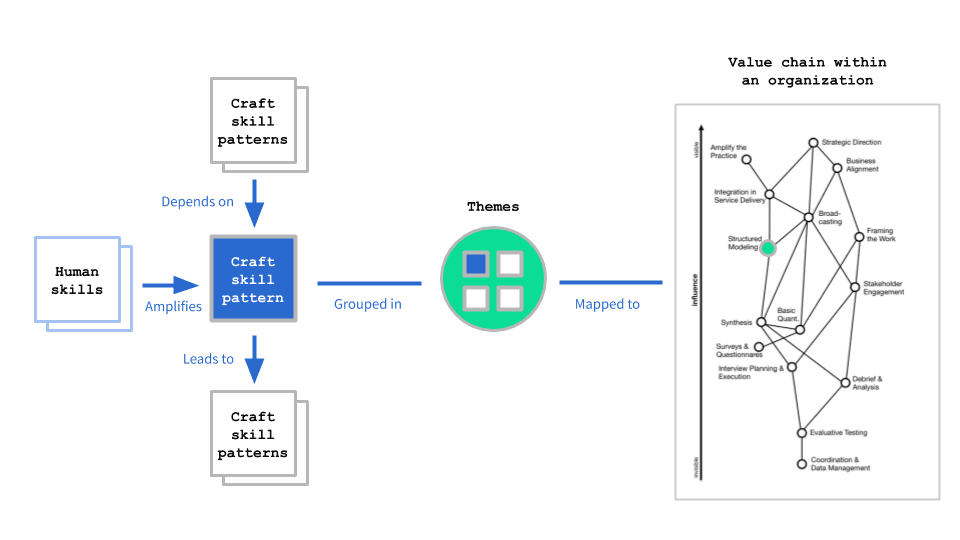
Research Competency Matrix: Mapping Team Growth
A competency matrix maps craft and human skills against career stages to reveal gaps. Use it to plan hiring and align capabilities with organizational needs. The footgun is treating it as a rigid checklist instead of a customizable reflection tool.
We are hiring for this. Every open role lists the topics its interview covers, so you can prepare for the real thing rather than guessing.
See open roles