Intermediate everything in Design & UX, page 22
Design a system to suggest internal links for new articles
This tests large-scale retrieval design. A strong answer uses an offline embedding index for candidate retrieval and a real-time ranker scoring topical overlap and anchor fit. Red flag: scanning the full corpus per request or omitting index architecture.
How would you technically approach building a related articles feature?
Tests decomposition of a content recommender into data, similarity, and serving layers. Strong answers use TF-IDF, embeddings, or tag overlap with caching and cold-start fallbacks.

Design architecture for multi-channel article distribution from a single source of truth
Tests separation of content and presentation via headless CMS. Strong answers cite a central structured CMS, content API, channel-specific rendering layers, and webhook push. Red flag: manual duplication or direct database sharing without API abstraction.
Design a content versioning system with history and revert
Versions table with article_id, version_num, content_snapshot, timestamp; APIs for createVersion, getHistory, restoreVersion.

Design a headless CMS model for brand voice metadata and API usage
Structured content beyond page blobs. Strong answers validate tone, context, and character limits in the CMS; expose them via API filters; and let clients render context-aware components.
How would you automate forbidden-word checks in CI/CD?
This tests embedding brand governance into engineering workflows. A strong answer covers AST-aware string extraction, CI gating with severity levels, and allowlisting to cut false positives.

How would you architect a white-label content system for multiple brand voices?
Tests content-presentation separation for multi-tenant apps. Strong answers use a headless CMS with tenant keys, a domain resolver for brand voice, and shared components with injected strings. Red flag: duplicate codebases or hard-coded copy per client.
Outline an NLP pipeline to categorize reviews and identify pain points
Tests text mining pipeline design. Answers cover deduplication and normalization, then clustering or topic modeling for categories, plus sentiment analysis to rank pain points. Red flag: skipping validation or jumping to LLMs without cleaning.
Build a competitor sitemap scraper for H1 and word count
Tests architecture of a polite, resilient scraper with clear legal guardrails. Strong answers cover throttled async fetches, robots.txt checks, HTML parsing, and copyright review. Red flag: ignoring rate limits, retry logic, or legal risk entirely.
Design backend logic for personalized hero by industry
Tests multi-signal segmentation and graceful degradation. Strong answers list explicit profile data, IP or domain enrichment, behavioral inference, and a default fallback. Red flag: proposing heavy ML for a binary rule or skipping fallback entirely.

How to merge analytics and CRM data to auto-segment users by persona
This tests multi-source data unification and identity resolution. A strong answer covers ID stitching, a unified profile, deterministic or ML segmentation, and data quality.
Write a conventional commit for a non-US date sorting bug
Pick fix(locale): imperative subject; body explains root cause, impact, and SemVer mapping.
How would you document a destructive API endpoint safely?
This tests balancing legal safety and usability for irreversible API operations. Strong answers use signal words like WARNING, direct imperatives, and distinct formatting. Red flag: vague phrases like 'be careful' or burying warnings in prose.
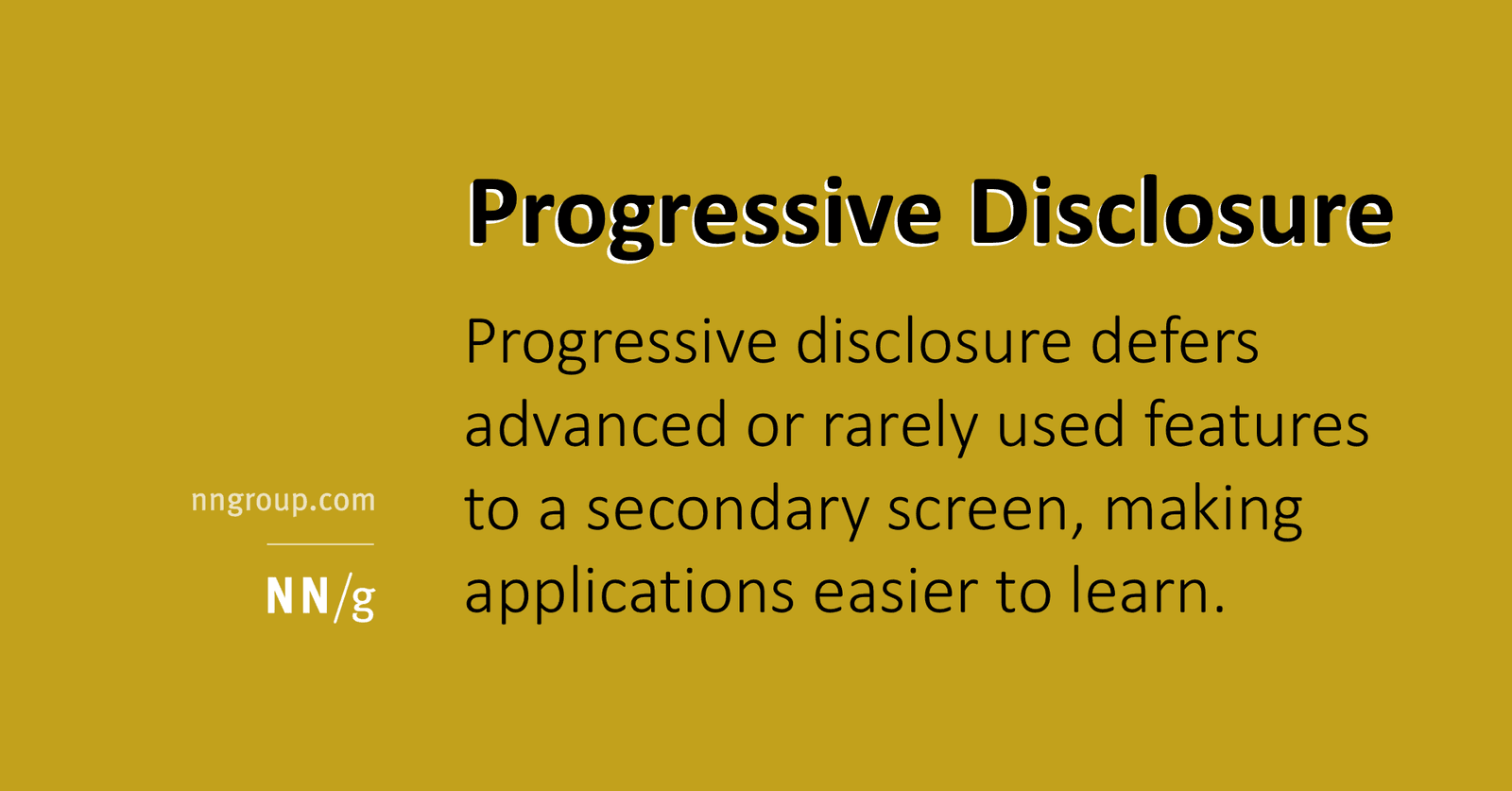
How would you apply progressive disclosure to UI copy and tooltips?
Tests tiering copy by expertise. Good answers: show plain labels and short tooltips for common tasks; hide advanced settings, risks, and edge-case definitions behind expanders or secondary sheets. Red flag: dumping all help text inline to eliminate clicks.

Outline README sections for a migration CLI and explain persuasion
Tests information architecture and developer persuasion. Strong answers sequence: hook, one-line install, runnable quickstart, comparison table, then config. Front-loads time-to-value and tackles migration pain.
Kill Fee: Payment When Clients Cancel
A kill fee compensates a writer when a client cancels a commissioned piece after acceptance. It protects against lost opportunity in magazine and agency contracts.
Empty State Copy: The Lobby, Not the Door
Empty state copy turns a blank screen into a guided next step instead of a dead end. You see this in new dashboards and zero-result searches. The footgun is treating it as a missing feature rather than a conversion surface.
COPE: Structured Content for Every Channel
COPE stores content as structured chunks so one asset feeds web, app, and social without rewriting. It pays off when publishing across three or more platforms. The footgun is identical copy everywhere: your tweet and white paper both sound generic.
Positioning Statement: Internal Strategy, Not Copy
A positioning statement is internal strategy, not copy: it defines your target, category, and the single benefit you own in their mind. Use it to align teams before launch. The footgun is confusing it for a tagline, which produces vague fluff everyone ignores.
Proof Points Turn Claims Into Credibility
A proof point is the 'show, don't tell' of marketing: a specific fact, stat, or testimonial that makes a claim believable. You see them on landing pages and sales decks. The footgun is vague social proof that does not match the specific promise.
We are hiring for this. Every open role lists the topics its interview covers, so you can prepare for the real thing rather than guessing.
See open roles