Concepts in DevOps & Cloud, page 19
Kubernetes LimitRange: Setting Guardrails for Pod Resources
LimitRange acts like a bouncer for Pod resources, setting min/max CPU and memory rules for each Pod in a namespace. It's used to prevent resource hogging and apply sensible defaults.
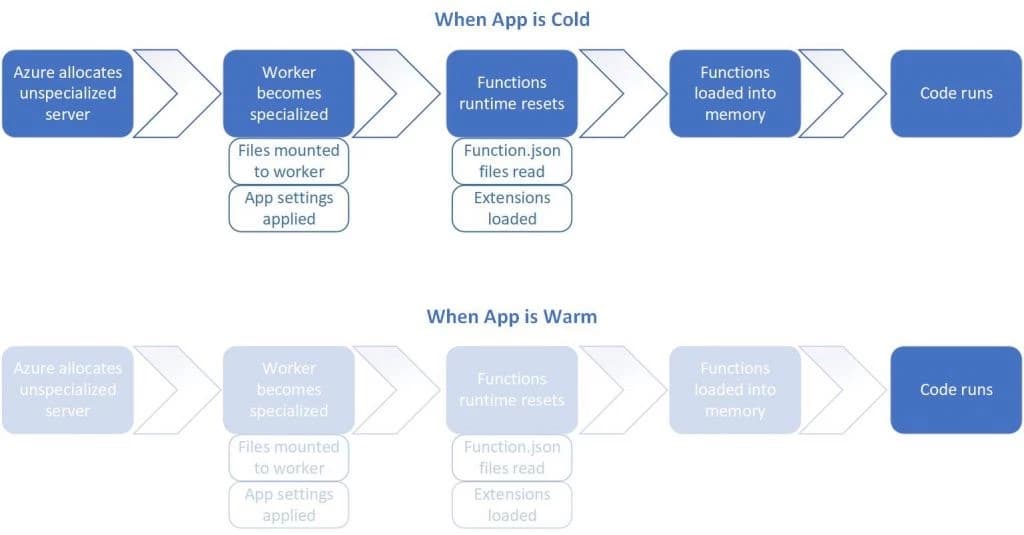
Serverless Cold Starts: The Price of 'Pay-per-Use'
A serverless cold start is the initial delay when a function boots from scratch, like waking a computer from being off versus asleep. It happens on the first request or after inactivity.
Kubernetes Service: A Stable Address for Ephemeral Pods
A Kubernetes Service provides a stable IP address and DNS name for a group of ephemeral Pods. It acts like a load balancer, distributing traffic so you don't have to track individual Pod IPs, which can change at any time.
ResourceQuota: Namespace Resource Budgets
ResourceQuota is a namespace budget: it rejects pods once total requests hit the cap. Use it to keep multi-tenant clusters fair. The footgun: it counts requested resources, not real usage, and pods missing requests may be rejected without LimitRange defaults.
Failover: Automatic Recovery When Things Go Wrong
Failover is your system's automatic plan B. When a primary component fails, a standby takes over instantly without human intervention. It's essential for high-availability systems. The footgun is assuming the standby is perfectly in sync; it might not be.
Dead-Letter Queues: A Message Queue's Lost-and-Found
A Dead-Letter Queue (DLQ) is a message queue's lost-and-found, catching messages that can't be delivered. It's used to isolate "poison pill" messages that crash consumers or messages that have expired.
Helm: The Package Manager for Kubernetes
Helm is the package manager for Kubernetes. It uses a packaging format called Charts to define, install, and upgrade applications, making it the standard way to manage software on a K8s cluster. It is a Cloud Native Computing Foundation (CNCF) project.
CloudEvents: The Event Data Standard
CloudEvents provides a common envelope for event data, enabling routing without custom parsers. Use it when events cross clouds, SaaS tools, or internal services. It standardizes wrappers, not payloads, so producers and consumers still need aligned schemas.
Service Discovery: How Services Find Each Other
Instead of hardcoding IP addresses, services ask a central registry for the live address of other services they need to call. This is crucial in dynamic microservice environments where IPs change constantly.
Kubernetes Ingress: The Cluster's Front Door
Kubernetes Ingress is the smart receptionist for your cluster. It routes external HTTP/S requests to internal services based on hostnames or paths, letting you expose multiple apps under one IP.
Publish/Subscribe Pattern
Publish/subscribe decouples senders from receivers: publishers emit messages to a topic without knowing who consumes them, and subscribers receive messages from topics they care about.
N+1 Redundancy: One Spare for the Whole System
N+1 redundancy is like having one spare tire for your whole car. You have N active components and one shared, passive backup. It's used in server racks or power supplies for high availability without doubling costs.
Pod Priority: Deciding Who Gets Evicted in Kubernetes
Pod Priority is a VIP pass for your critical workloads, telling the scheduler which pods can bump others off a node. This ensures system-critical services run even on a full cluster. The footgun: high-priority pods can cause cascading evictions if not planned.
Kubernetes StatefulSets: Stable Identity for Pods
A StatefulSet gives pods a stable, unique identity and persistent storage, unlike a Deployment's interchangeable replicas. Use it for clustered databases or queues where members need stable network names.

Bulkhead Pattern: Isolate Failures, Protect Your System
The Bulkhead pattern partitions a system like a ship's hull, containing failures to prevent a total outage. By isolating resource pools for each service or consumer, a fault in one component won't cascade and take down the entire application.
Kubernetes CPU Management: Static vs. None Policy
K8s CPU policies control if your pod gets a dedicated CPU core or just a time-slice of a shared one. The default none policy maximizes utilization, while static gives exclusive cores to latency-sensitive apps.

AWS SAM: A Shorthand for Serverless on AWS
Think of AWS SAM as a developer-friendly shorthand for defining serverless applications. It simplifies creating Lambda functions and APIs by abstracting away verbose CloudFormation syntax, letting you build and test locally before deploying.
Service Mesh: The Network Layer for Your Microservices
A service mesh acts as a dedicated network layer for microservices, handling complex communication logic outside your application. It enables features like mTLS and canary releases.
Data Sharding: Splitting a Database for Scale
Sharding splits a huge database into smaller, independent databases (shards), each on its own server. It's like giving different volumes of a phone book to different librarians. This is critical for massive datasets, but a bad shard key creates 'hot spots'.
Kubernetes Scheduler Framework: A Plugin System for Pod Placement
The Kubernetes Scheduler Framework is a plugin pipeline for pod placement. Use it to add custom logic—like co-scheduling ML jobs or avoiding specific nodes—without forking Kubernetes. The footgun: a slow plugin can bottleneck your entire cluster's scheduling.
We are hiring for this. Every open role lists the topics its interview covers, so you can prepare for the real thing rather than guessing.
See open roles