Interview questions in DevOps & Cloud
What defines toil, with an example?
Define toil as manual, repetitive, automatable, tactical, no-enduring-value, scaling-with-growth work; distinguish it from overhead; give a concrete example.
What is a container vs a VM?
Containers share the host kernel and isolate via namespaces and cgroups; VMs run a full guest OS on a hypervisor; containers are lighter and faster.
Explain the difference between IaaS, PaaS, and SaaS with examples
This tests your grasp of cloud abstraction layers and shared responsibility. A strong answer maps IaaS to raw infrastructure like EC2, PaaS to managed runtimes like Heroku, and SaaS to end-user apps like Gmail.
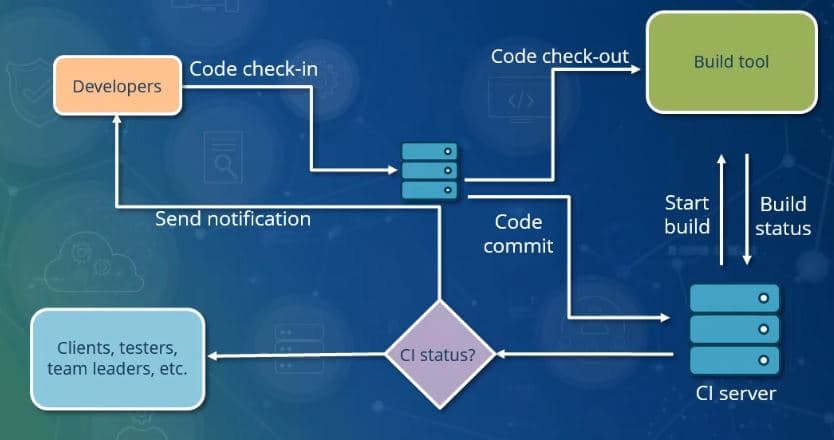
What is CI, and what is its single most important goal?
Frequent merges to a shared branch with automated build and test; top goal is a workable integrated codebase.
SLI vs SLO vs SLA: how do they relate?
SLI is a measured metric, SLO is the internal target for that metric, SLA is the external contract with consequences.
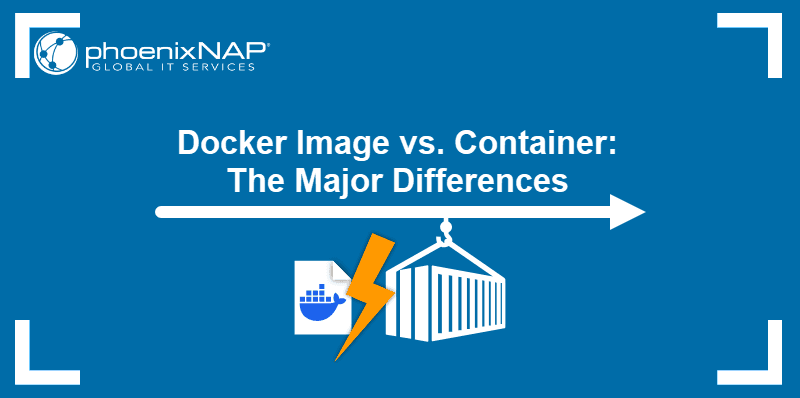
How do Docker images and containers differ and relate?
This tests your grasp of the immutable template versus mutable runtime boundary. A good answer: an image is a read-only layered template with code and dependencies; a container is a runnable instance with a writable layer on top.
How does shared responsibility shift between IaaS and SaaS?
Tests your understanding of security ownership across cloud stacks. Strong answer: in IaaS you own OS, apps, and network controls; in SaaS you only own data, identities, endpoints, and accounts while the provider manages the rest.
Describe the typical CI pipeline sequence from push to deploy
This tests stage ordering and failure handling. A strong answer lists build, test, and deploy stages; notes intra-stage parallelism and inter-stage sequencing; and mentions early termination on failure.
How do SRE and DevOps relate?
DevOps is a broad culture of breaking down silos; SRE is one prescriptive way to do it with specific practices.
CapEx vs OpEx in cloud migration
CapEx is large upfront asset spend, OpEx is ongoing pay-as-you-go cost; cloud shifts spending from CapEx to OpEx, trading ownership for flexibility.
Continuous Delivery vs Continuous Deployment: key differences and choosing between them
Tests the human-gate distinction: Delivery readies artifacts but requires manual approval; Deployment pushes automatically. Strong answers cite compliance, blast radius, and maturity. Red flag: conflating terms or claiming full automation fits every app.
Name three Linux namespaces and explain what each one isolates.
Name three of PID, Network, Mount, UTS, IPC, User, Cgroup, Time; say what each hides; cite CLONE_NEW* or /proc/pid/ns.
How do you set SLOs for a service from scratch?
Identify critical user journeys, pick SLIs that reflect user happiness, measure current performance, set achievable targets with buffer, iterate.
IaaS vs PaaS for first cloud migration
IaaS (lift-and-shift) gives control with high ops overhead; PaaS lowers ops but may need refactoring; for a monolith with limited expertise, IaaS lift-and-shift is the lower-risk first step.
How do containers enforce CPU and memory limits via cgroups?
Cover CPU CFS quota and shares, memory limits and OOM, and runtime cgroup config.
What is a build artifact and why build once deploy many crucial?
Tests whether you see artifacts as immutable deployable units. A strong answer says one binary is promoted through all stages, config is externalized, and rebuilding per environment creates drift. Red flag: accepting per-environment rebuilds.
Error budget exhausted early: what now?
Invoke the error budget policy, shift focus from features to reliability, prioritize stability work, analyze what burned the budget.
Scalability vs elasticity in the cloud
Scalability is the ability to handle more load by adding capacity; elasticity is automatically adding AND removing capacity in real time to match demand.

What does shift left mean in CI/CD, and give two concrete examples?
Your grasp of moving verification earlier to reduce cost and risk. Define shift left as earlier-stage testing; cite two concrete examples like pre-commit unit tests and PR-level SAST scans. Never call it "more testing" instead of earlier feedback.
Describe the relationship between containerd and runc in starting a container.
Tests the OCI runtime split and lifecycle ownership. A great answer states containerd handles image pull, storage, and API lifecycle, then invokes runC to spawn the isolated process.
We are hiring for this. Every open role lists the topics its interview covers, so you can prepare for the real thing rather than guessing.
See open roles