Easy interview questions in DevOps & Cloud, page 2
How do build tools differ from compilers or interpreters?
This tests whether you see compilation as only one step in a repeatable pipeline. A strong answer covers dependency resolution, transitive libraries, task automation, and artifact packaging.
Serving user images securely from object storage
Store images in a private bucket, serve via a CDN with origin access control, use signed URLs for private content.
Start Compose services detached and view one service's logs
Docker compose up -d starts everything detached; docker compose logs -f web follows only the web service's logs.
Relationship between SLI, SLO, and SLA
SLI is the measured metric, SLO is the internal target for that metric, SLA is the external contract with consequences.
Persist PostgreSQL data across compose down
Define a named volume and mount it at the database's data directory (/var/lib/postgresql/data); named volumes survive compose down.
What is an error budget?
Error budget is one minus the SLO, the allowed unreliability; it gates feature velocity versus reliability work.
How Compose services reach each other by name
Services share a default network and the web app uses the database's service name as the hostname; Docker's embedded DNS resolves it to the container IP.
Proposing availability and latency SLIs for an auth API
Availability as the ratio of successful valid requests; latency as the fraction served under a threshold; measure at the edge from the user's view.
What is a CI/CD quality gate? Give a simple example.
Thresholds blocking merges; a minimal new-code gate with 0 critical issues & 70% new-code coverage.
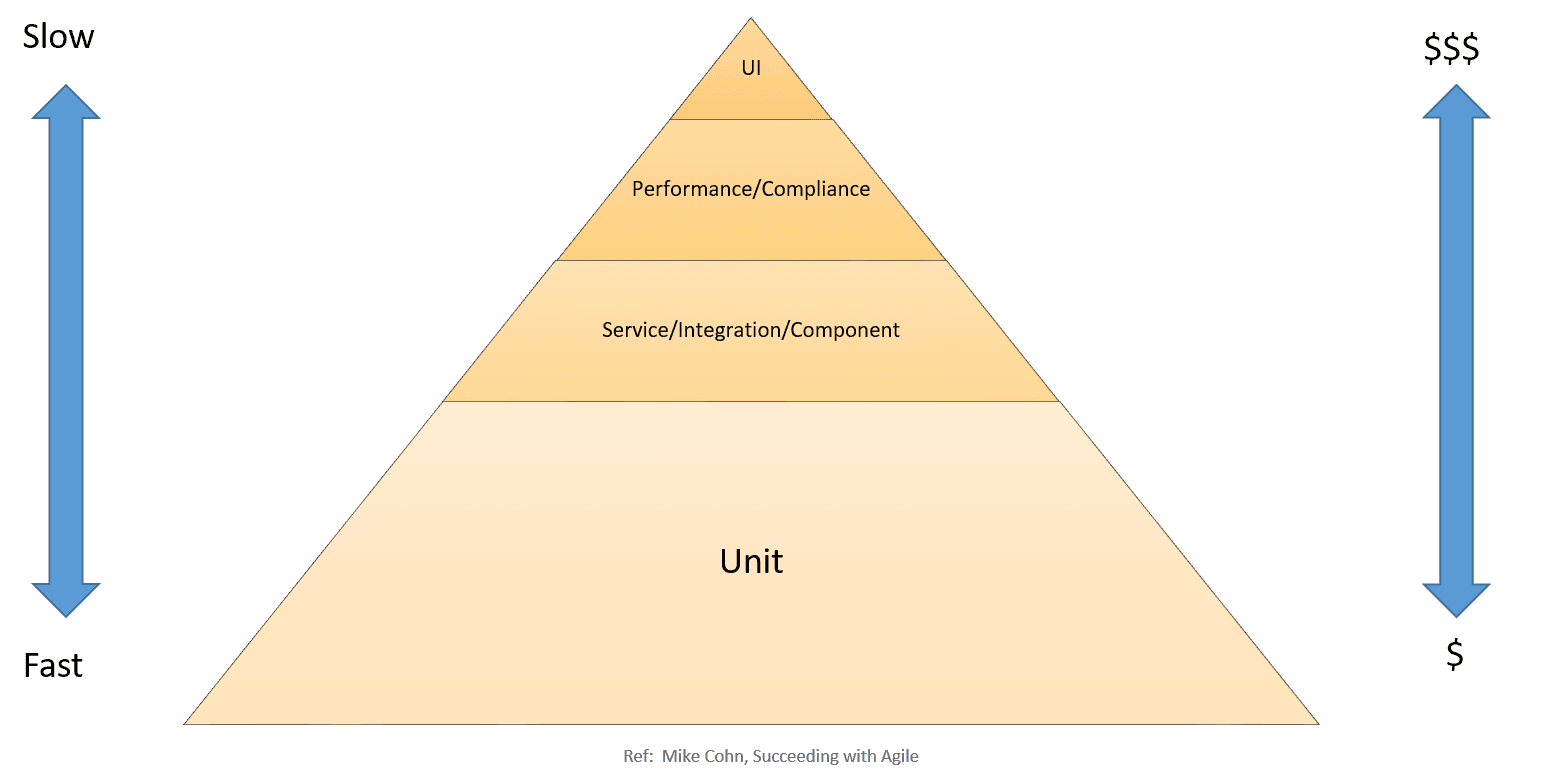
Difference between unit and integration tests and CI pipeline placement
Unit tests isolate code and run fast in the build stage; integration tests verify real wiring later. Target 70 percent unit tests.
Public and private subnet VPC design
Web server in a public subnet routed to an internet gateway, database in a private subnet with no inbound from the internet, NAT for outbound.
Layer 4 vs Layer 7 load balancers
L4 routes on IP and TCP/UDP ports fast and protocol-blind; L7 inspects HTTP for host, path, and headers.
How cloud DNS resolves a URL to an IP
Recursive resolver queries root, then TLD, then your authoritative cloud DNS zone; the matching record returns an IP, cached per TTL.
The three pillars of observability
Metrics show what and when via cheap aggregates, logs give detailed per-event context, traces show where across services.
Tag and push an image to a private registry
Authenticate with docker login, retag the image to include the registry host and repo path, then docker push that full reference.
SNAPSHOT and RELEASE versions: differences and appropriate use
SNAPSHOTs are mutable; RELEASEs are immutable and tagged. Use SNAPSHOTs on feature branches and RELEASEs for main.
Structured vs unstructured logging
Unstructured logs are free-text lines; structured logs are machine-readable key-value or JSON, enabling reliable parsing, filtering, and aggregation.
Why :latest is a production anti-pattern
Latest is mutable so pods run different code, rollbacks and pull policy break, and you should use immutable version tags or digests.
Essential tags for a request latency metric
Add method, route template, status code, and maybe service or region; they enable slicing while staying low-cardinality.
IAM Role vs IAM User
A user is a fixed identity with long-lived credentials for a person; a role is assumable with temporary credentials for workloads or cross-account access.
We are hiring for this. Every open role lists the topics its interview covers, so you can prepare for the real thing rather than guessing.
See open roles