Easy interview questions in DevOps & Cloud, page 6
Load vs stress vs soak testing
Load tests expected traffic, stress pushes past limits to find the breaking point, soak runs sustained load for hours to expose leaks.
Role versus ClusterRole in RBAC
Role is namespaced, ClusterRole is cluster-wide and covers cluster-scoped resources, and you grant either via a RoleBinding (namespaced) or ClusterRoleBinding (cluster-wide) to a subject.
First NetworkPolicy flips a pod to default-deny
Once any policy selects a pod for a direction, that direction becomes default-deny and only explicitly allowed traffic passes; unselected pods stay open.
Data lake versus data warehouse
Lakes store raw, schema-on-read data of any type cheaply; warehouses store curated, schema-on-write structured data for fast SQL; choose a lake for varied raw data and ML.
What telemetry must a new microservice ship with?
Metrics for trends like p99 latency and error rate, structured logs for per-request detail, traces for cross-service causality.
ETL versus ELT in cloud data platforms
ETL transforms before loading into the target; ELT loads raw first then transforms in the warehouse, leveraging cheap storage and elastic compute.
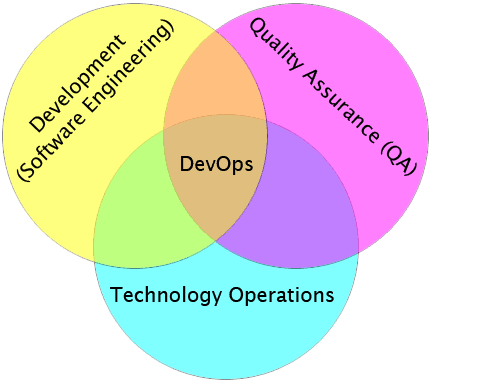
Explain GitOps and how an agent knows when to apply changes
Tests declarative infrastructure and pull-based reconciliation. A strong answer says Git is the source of truth and the agent polls or watches for drift, then applies diffs. Red flag: calling a push-based CI pipeline GitOps.
What is an SLO and how do you define API availability?
SLO is a target on an SLI, availability SLI is good requests over valid requests, you need labeled request counts over a window.
CSV vs JSON vs Parquet for analytics
CSV and JSON are row-based, human-readable, and bulky; columnar Parquet/ORC compress well and read only needed columns; choose columnar for analytics.
Blue/green vs canary release: differences and when to choose each.
This tests release-automation risk mitigation. A strong answer contrasts instant full-environment swaps with gradual traffic shifts, pairing blue/green with hotfixes and canary with risky changes. A red flag is calling them identical or ignoring blast radius.
Walk me through deploying a new version using a GitOps workflow
Merge updates manifests; the GitOps controller compares desired state in Git to live state and reconciles.
Viewing pod logs and durable log collection
Kubectl logs (with -c, --previous, -f) reads container stdout/stderr; because that storage is ephemeral, run a node-level logging agent as a DaemonSet shipping logs to a central store.
kube-state-metrics versus node-exporter
Kube-state-metrics exposes API object state (deployment replicas, pod phase, restarts) from the control plane, while node-exporter exposes OS-level hardware metrics (CPU, memory, disk) per…
How does chaos engineering differ from other testing?
It experiments on real systems by injecting faults to test a steady-state hypothesis, versus verifying known behaviors like integration or load tests.
Pre-built AI service vs custom model
Choose a managed service for speed, no ML expertise, and common tasks; build custom for domain-specific needs, control, or cost at scale.
What is blast radius and how do you limit it?
Blast radius is the scope of users or systems an experiment can harm; limit it by targeting a small traffic percentage and by having an automated abort.
Feeding large object-store data into training
Stream data instead of copying it all to disk, use streaming/pipe modes, shard and prefetch in parallel, and pack many small images into larger files.
Design a simple chaos experiment for a cache dependency?
Hypothesis that the service degrades gracefully when Redis is unavailable, monitor error rate, latency, DB load, and cache hit rate.

Describe high-level steps to onboard a microservice via self-service CI/CD
Tests platform thinking and developer experience design. A strong answer outlines a golden path: templated repo setup, standardized build/test stages, environment promotion, and observability hooks, plus guardrails not blockers.
How do you version shared CI steps and handle breaking changes?
This tests CI hygiene and consumer safety. Pin shared steps to immutable tags or SHAs, use semantic versioning, and force consumers to opt into breaking changes. Red flag: referencing a mutable branch like main for reusable workflows.
We are hiring for this. Every open role lists the topics its interview covers, so you can prepare for the real thing rather than guessing.
See open roles