Interview questions in DevOps & Cloud, page 22
What is distributed tracing in microservices?
A trace is a tree of spans tied by trace and span IDs, propagated via headers like W3C traceparent.
How do you version shared CI steps and handle breaking changes?
This tests CI hygiene and consumer safety. Pin shared steps to immutable tags or SHAs, use semantic versioning, and force consumers to opt into breaking changes. Red flag: referencing a mutable branch like main for reusable workflows.
Why does 200ms latency drop requests? Diagnose it.
Little's Law shows added latency raises in-flight requests, exhausting the thread or connection pool; check pool saturation, timeouts, and retries.
How would you build CI/CD for an ML model?
Data and model versioning, automated training plus evaluation gates, model registry, deployment with monitoring and retraining triggers.
Diagnose a Prometheus cardinality explosion
Find offenders via TSDB stats and topk count by __name__, identify unbounded labels, then drop or aggregate them with relabeling.

How do you manage secrets for hundreds of services in centralized CI/CD?
It tests secret sprawl prevention and least privilege in CI/CD. Answer: use a secrets manager with RBAC, short-lived credentials, runtime injection, and audit logs. Red flag: secrets in Git, plain env vars, or one shared master key.
Resource faults versus network faults: when each matters?
Resource faults probe local saturation and autoscaling; network faults probe distributed-call resilience like timeouts and retries.
How would you speed up slow single-GPU training?
Vertical scaling to bigger or multi-GPU instances, then data-parallel or model-parallel distributed training across nodes.
Head-based vs tail-based trace sampling
Head decides up front (cheap, may miss rare errors); tail decides after the trace completes (catches errors and slow traces but needs buffering).
Diagnose CI/CD queue bottlenecks and propose three throughput improvements
This tests CI/CD scheduling and queuing theory. A strong answer profiles queue versus execution time, then proposes right-sizing parallelism, aggressive caching, and workload sharding. A red flag is jumping straight to adding agents without measuring first.
Automating chaos in CI/CD for continuous verification?
Run codified experiments against staging or canary with pass/fail on steady-state SLIs; prerequisites are observability, automated abort, and isolation.
Design auto drift detection and retraining
Capture inputs and predictions, compute data and concept drift metrics on a schedule, alert on threshold breach, and trigger a retraining and redeploy pipeline.
What is a Helm chart?
A chart is a templated, versioned bundle of manifests with a values file; it solves config duplication and reuse across environments.
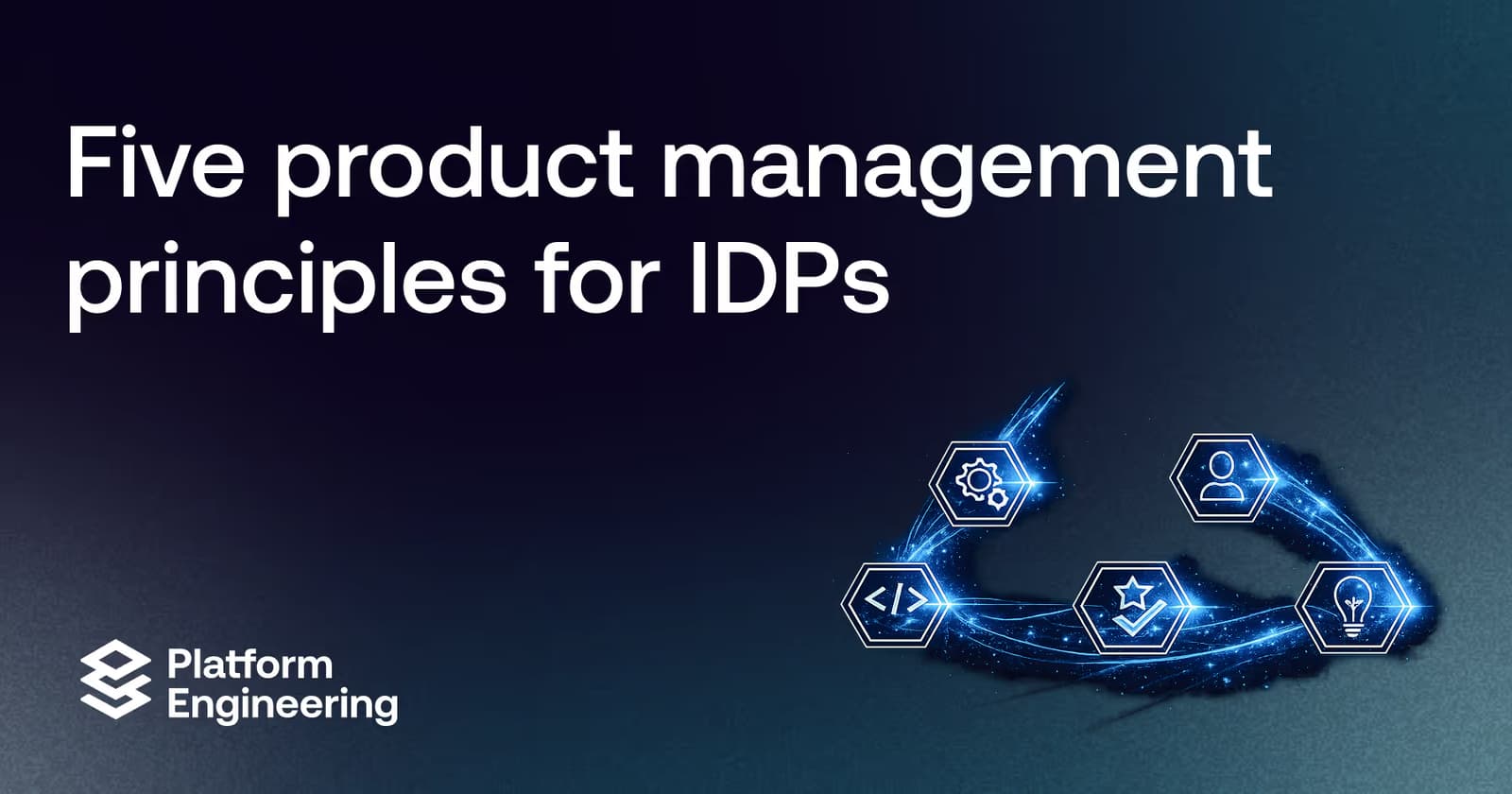
How would you collect metrics and KPIs for your Internal Developer Platform?
This tests product-thinking: treating developers as customers, not captive users. Strong answers cover adoption (golden-path usage), developer experience (deploy speed, NPS), and business value. Red flag: tracking CPU or uptime without linking to adoption.
Chaos test for gray-failure cascades in shared services?
Inject partial latency into a shared service, hypothesize tenants stay isolated within steady state, and monitor cross-system queue depth, pool saturation, retries, and per-tenant SLIs.
Design petabyte-scale distributed training
Object storage with columnar formats, distributed preprocessing, a data-parallel framework with efficient sharded loading, and managed orchestration.
What is the basic principle of GitOps?
Git holds desired state; a controller continuously reconciles the cluster to match it; benefits are auditability, rollback, and drift correction.
Design a Docker artifact system for cost, traceability, and speed
Tests cost-speed-auditability tradeoffs for artifacts at scale. Strong answers cover tiered storage with lifecycle policies,immutable build provenance,regional caching, and automated garbage collection. Red flag: infinite mutable storage with no cleanup rules.
Client-side chaos for an uncontrollable third party?
Inject faults at your client boundary via a proxy or fault-injecting wrapper, simulate timeouts, errors, and latency, then verify timeouts, retries, breakers, and fallbacks.
Explain the Well-Architected Framework pillars
Name the pillars, operational excellence, security, reliability, performance efficiency, cost optimization, and sustainability, and explain each briefly.
We are hiring for this. Every open role lists the topics its interview covers, so you can prepare for the real thing rather than guessing.
See open roles