Advanced everything in DevOps & Cloud, page 14
Storage Gateway: Your On-Prem to Cloud Translator
A storage gateway is a translator, letting your on-prem applications talk to cloud storage without learning its native API language. It presents cloud storage as a local file share or block device, enabling hybrid cloud backups and data tiering.
Presigned URLs: Temporary Access to Private Files
A presigned URL is a temporary, authenticated link to a private cloud storage object, bundling credentials into the URL. Use it to let users upload or download private files directly, bypassing your server. The URL is a bearer token, so set short expirations.
Object Versioning: A Safety Net for Cloud Files
Object Versioning treats every file change as a new version, not a replacement. It's used in cloud storage to recover from accidental overwrites or deletions. The footgun: you pay for all versions, so costs can multiply without cleanup policies.
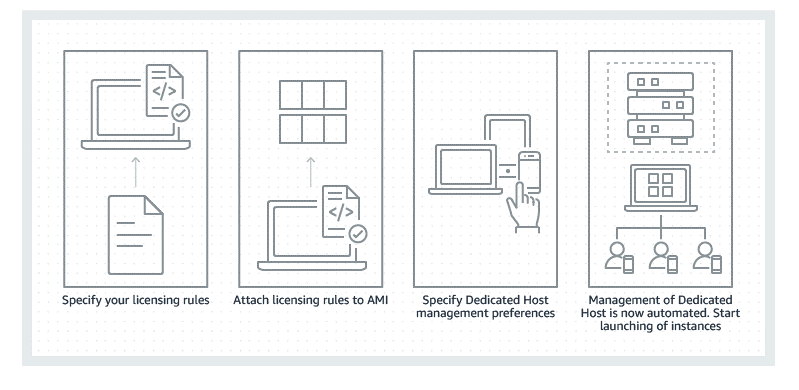
AWS Dedicated Hosts: Your Own Physical Server in the Cloud
An AWS Dedicated Host is your own physical server in the cloud, providing single-tenant hardware. Use it for "bring your own license" (BYOL) software tied to physical cores, or for compliance rules that forbid multi-tenancy.

AWS Placement Groups: Control Where Your Instances Run
AWS Placement Groups let you control where EC2 instances run relative to each other. Use a Cluster group for low-latency HPC, or Spread/Partition groups to reduce correlated hardware failures. The main footgun is picking the wrong strategy for your workload.
Bare Metal Instances: Your Own Dedicated Cloud Server
A bare metal instance is your own dedicated physical server in the cloud—no sharing, no virtualization layer. Use it for workloads needing direct hardware access or for licensing that forbids VMs. The footgun: you trade cloud elasticity for this control.
Spot Instances: Trade Reliability for Huge Cost Savings
Spot Instances let you use spare AWS compute for up to 90% off. They're great for fault-tolerant jobs like batch processing or CI/CD. The footgun: AWS can reclaim your instance with a two-minute warning, so don't use them for critical workloads.
FaaS: Run Code, Not Servers
FaaS lets you run code without managing servers, like renting a contractor for one task. It's ideal for event-driven actions like processing uploads or handling webhooks. The footgun is cost: for high, steady traffic, a dedicated server is often cheaper.
Multi-cloud: Spreading Bets Across Cloud Providers
Multi-cloud is a strategy for using services from two or more cloud providers to avoid vendor lock-in. It's used to cherry-pick best-in-class services or improve resilience. The footgun is underestimating the complexity of managing disparate APIs and security.
Score: Define Your Workload Once, Run Anywhere
Score is a universal remote for your workload configs, letting you define what your app needs once in a score.yaml file. It translates this spec into files for Docker Compose or Kubernetes, preventing config drift.
Crossplane: The Kubernetes Control Plane for Infrastructure
Crossplane turns your Kubernetes cluster into a universal control plane for all your cloud infrastructure, not just containers. Use it to let developers provision cloud resources like databases using familiar kubectl commands.
Platform API: The Contract for Your Developer Platform
The Platform API is the central contract for your internal developer platform, abstracting complex tooling into simple, self-service actions. It's what a developer portal or CLI calls to provision a database or scaffold a new service without knowing the…
Argo AnalysisTemplates: Reusable Health Checks for Deployments
An AnalysisTemplate is a reusable recipe for judging a deployment's health. During a canary rollout, Argo uses it to query metrics like error rates to decide whether to promote or roll back the new version.
Argo CD ApplicationSet: Manage Many Applications as One
Think of an ApplicationSet as a factory for Argo CD Applications. It uses a template and generators to automatically create apps for many clusters or services in a monorepo.
Argo CD Image Updater: Automate Image Updates
An Image Updater automates deployments by watching for new container image versions and telling Argo CD to update your app. It's used to automatically roll out new builds, but misconfiguring update strategies can accidentally deploy unstable tags to…
Flagger: Progressive Delivery for Kubernetes
Flagger is an automated traffic cop for Kubernetes releases. It gradually shifts traffic to new versions while monitoring metrics, enabling safe canary or blue/green deployments with service meshes or ingress controllers.
eBPF: Run Sandboxed Programs in the Linux Kernel
eBPF lets you run sandboxed programs directly in the Linux kernel, like adding programmable event handlers to your OS. This enables high-performance networking, security, and observability without changing kernel code.
Chaos Engineering: Break Systems to Build Confidence
Chaos Engineering is like a fire drill for your software: you intentionally break things in a controlled way to find weaknesses. It's used in distributed systems to test resilience against server failures or network latency.
Analyzing Flaky Tests
A flaky test passes and fails randomly without code changes, eroding trust in your CI pipeline. It often points to race conditions or external dependencies. The biggest footgun is ignoring them, as this teaches developers to dismiss real failures.
CI/CD and the Principle of Least Privilege
Treat your CI/CD pipeline like a temporary worker, not a superuser. Grant it only the minimum permissions needed for its specific task, like building code or deploying to staging.
We are hiring for this. Every open role lists the topics its interview covers, so you can prepare for the real thing rather than guessing.
See open roles