Advanced everything in DevOps & Cloud, page 16

Software Bill of Materials (SBOM): An Ingredient List for Your Code
An SBOM is a nutrition label for your code, listing every library and dependency. It's crucial for security audits and managing supply chain risk, letting you instantly find systems affected by a new vulnerability.
Test Data Management (TDM): Stop Flaky Tests
Test Data Management (TDM) treats test data like code: versioned, managed, and reliably provisioned to ensure consistent, meaningful tests. This is crucial in CI/CD pipelines where automated tests require repeatable data states.
DAST: Probing a Running App for Security Flaws
DAST acts like an automated pen-tester, attacking your running application from the outside to find flaws without seeing the code. It's used in CI/CD to catch common web vulnerabilities. The footgun: DAST can't see the code, so it misses business logic errors.
Mutation Testing: A Fire Drill for Your Test Suite
Mutation testing is a fire drill for your test suite. It deliberately injects small bugs ('mutants') into your code to see if your tests fail as expected. This ensures tests validate behavior, not just execute lines.
Build Matrix: Test All The Combinations
A build matrix automatically creates multiple jobs by combining different configurations. Use it to test your code across various operating systems, language versions, or dependencies without duplicating your workflow file.
Cross-Compilation: Build Anywhere, Run Elsewhere
A cross-compiler builds code for a different machine than the one it runs on. This lets you use a powerful PC to compile for a tiny IoT device or a mobile phone. The footgun is forgetting that the target's OS and libraries matter, not just.
Reproducible Builds: Trust What You Run
A reproducible build guarantees that the same source code always compiles into the exact same binary. This is crucial for verifying that a distributed application wasn't tampered with.
Incremental Build: Develop and Ship Software in Pieces
Incremental builds deliver software in usable chunks, not one big release. This lets you ship value and gather feedback early on large projects. The footgun is poor planning, leading to disconnected features and architectural debt instead of a cohesive…
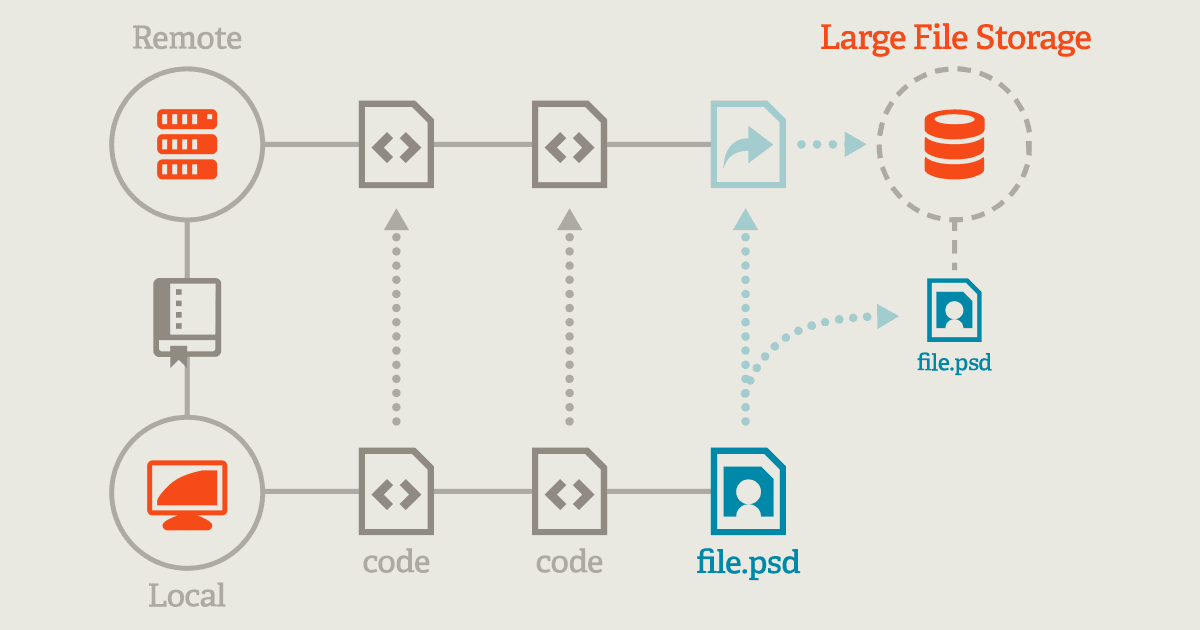
Git LFS: Versioning Large Files Without Bloating Your Repo
Git LFS replaces large files with text pointers in your repo, storing the actual data on a remote server. This keeps clones fast when versioning videos, datasets, or graphics. Footgun: git lfs track only affects new files, not existing ones.
Monorepo vs. Polyrepo: One Repository or Many?
A monorepo is one repository for all projects, like a city; a polyrepo is one per project, like separate towns. Monorepos simplify code sharing and atomic refactors but require complex tooling. Polyrepos offer autonomy but can create dependency hell.
Git Cherry-Pick: Copy a Commit to Another Branch
Think of git cherry-pick as copying a single commit's changes from one branch and reapplying them as a new commit on another. It's for backporting a bug fix without merging an entire feature branch.
GitFlow: A Branching Model for Versioned Releases
GitFlow organizes your repo around two main branches: master for production and develop for integration. It's designed for projects with distinct, numbered releases, like desktop apps, not for continuously delivered web apps where simpler models are…

Idempotency: Safe to Retry Automation
Idempotent automation ensures an operation has the same effect whether run once or many times. This is vital for safely retrying failed CI/CD jobs or configuration scripts. The footgun: thinking it means 'no side effects'.
GitOps: Your Git Repo is the Single Source of Truth
GitOps makes a Git repo the single source of truth for your infrastructure's desired state. An automated process makes production match what's declared in Git, enabling continuous deployment.
Immutable Infrastructure: Treat Servers Like Cattle, Not Pets
Immutable infrastructure means you never modify running servers. To deploy, you replace them with new ones built from a golden image. This is key for CI/CD and autoscaling, ensuring consistency. The footgun is configuration drift from manual, one-off fixes.
Pipeline as Code: Versioning Your Build Process
Treat your CI/CD pipeline not as clicks in a UI, but as a version-controlled file (Jenkinsfile) living with your code. This enables automated, reviewable build processes for every branch. The footgun is defining pipelines in the UI, creating a black box.
We are hiring for this. Every open role lists the topics its interview covers, so you can prepare for the real thing rather than guessing.
See open roles