Easy everything in DevOps & Cloud, page 7

What problem can a breaking API change cause during a rolling update?
Tests if you know rolling updates run mixed versions, so breaking API changes crash cross-traffic. Good answer: note old and new pods serve together, watch probes fail, and monitor 5xx spikes. Red flag: claiming Kubernetes isolates versions during rollout.
Explain canary releases and why choose them over rolling updates
This tests risk mitigation via user routing versus in-place replacement. A strong answer defines canary as exposing a subset to the new version first, contrasts rolling updates lacking user segmentation, and cites fast rollback.

Rolling vs blue/green deployments: differences and trade-offs
Tests risk-cost-downtime judgment. Contrast rolling's gradual swap with blue/green's parallel swap; rolling is cheaper but mixes versions, while blue/green doubles capacity for instant rollback. Red flag: saying blue/green cheaper or rolling double-capacity
Walk me through a production-ready Dockerfile for a web app
Tests multi-stage builds, layer caching, and security hardening. A strong answer covers a pinned slim FROM, multi-stage separation of build and runtime, ordered COPY for cache, and a non-root USER.
What is Twelve-Factor's config recommendation for CI/CD and scalability?
Tests Factor III and CI/CD scaling implications. Strong answer: config lives in env vars, never in code, so one build promotes across stages and new instances start with correct context immediately. Red flag: config files checked into version control.
Why avoid committing secrets to Git, and secure local alternatives?
This tests basic secret hygiene and environment isolation. A strong answer notes Git history is immutable and distributed, so secrets persist in forks forever, and proposes environment variables or gitignored dotenv files.
How do you manage environment-specific connection strings and why is hardcoding bad?
Tests config separation and secrets hygiene. Outline: inject via environment variables or a secret store, keep per-environment configs credential-free, and prefer managed identities.
Describe the Terraform workflow from code to live
This tests Terraform workflows beyond local commands. A strong answer covers: version-controlled code, terraform plan for speculative validation, then terraform apply via remote runs with policies. Red flag: only local apply without reviews or remote state.
Explain the difference between declarative and imperative IaC.
Contrast Terraform with Bash or Ansible; note drift detection, idempotency, and state trade-offs.
How should you manage sensitive data in a committed pipeline file?
Tests that committed pipeline YAML must never store secrets. Answer: fetch at runtime via native secrets manager integrations; if needed, use masked, hidden, protected CI/CD variables; use typed CI/CD inputs for parameters.
Declarative vs scripted pipeline syntax: when to choose each?
This tests Jenkins Pipeline trade-off judgment. Contrast Declarative's opinionated blocks and guardrails with Scripted's raw Groovy flexibility; prefer Declarative for new projects unless complex flow control is needed.
What is Pipeline as Code and its benefits over GUI configuration?
Tests whether you treat delivery pipelines as versioned code. Strong answers define PaC as pipeline definitions in source control, citing branch automation, peer review, audit trails, and single source of truth.
SNAPSHOT and RELEASE versions: differences and appropriate use
SNAPSHOTs are mutable; RELEASEs are immutable and tagged. Use SNAPSHOTs on feature branches and RELEASEs for main.
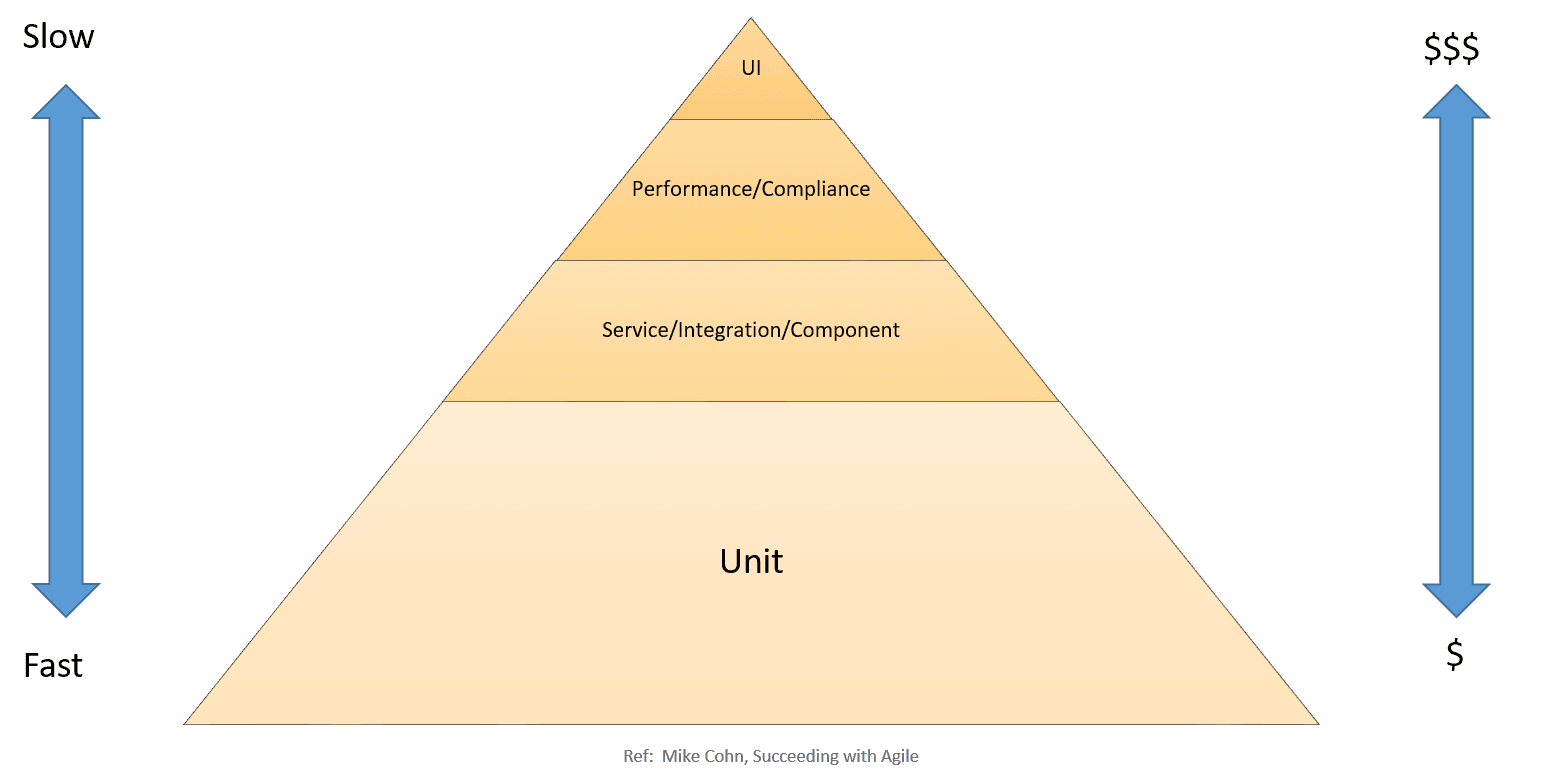
Difference between unit and integration tests and CI pipeline placement
Unit tests isolate code and run fast in the build stage; integration tests verify real wiring later. Target 70 percent unit tests.
What is a CI/CD quality gate? Give a simple example.
Thresholds blocking merges; a minimal new-code gate with 0 critical issues & 70% new-code coverage.
How do build tools differ from compilers or interpreters?
This tests whether you see compilation as only one step in a repeatable pipeline. A strong answer covers dependency resolution, transitive libraries, task automation, and artifact packaging.
Describe using a pre-push Git hook for checks and its CI limitations.
It tests client-side automation versus server-side policy. An executable .git/hooks/pre-push script runs tests and exits non-zero to block, noting hooks are not cloned, skipped via --no-verify, and local-only. A red flag is treating them as policy gate.
Difference between git merge and git rebase before a pull request
Rebase rewrites SHAs, duplicating CI builds; merge keeps identity and triggers one build.
Describe the typical CI pipeline sequence from push to deploy
This tests stage ordering and failure handling. A strong answer lists build, test, and deploy stages; notes intra-stage parallelism and inter-stage sequencing; and mentions early termination on failure.
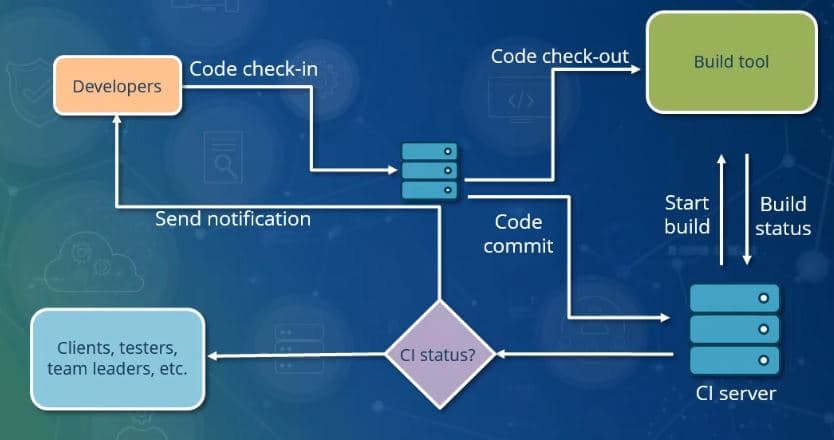
What is CI, and what is its single most important goal?
Frequent merges to a shared branch with automated build and test; top goal is a workable integrated codebase.
We are hiring for this. Every open role lists the topics its interview covers, so you can prepare for the real thing rather than guessing.
See open roles