Interview questions in Flutter & Dart
What is the difference between final and const in Dart?
Tests compile-time versus runtime immutability in Dart. A strong answer: final allows single assignment at runtime, but const requires a compile-time constant and deep immutability.
Explain Dart positional vs named parameters and write one signature
Tests Dart parameter syntax. A strong answer covers required positional args, optional positional args in square brackets, and named args in curly braces with defaults. Red flag: claiming named parameters are always optional or confusing bracket types.
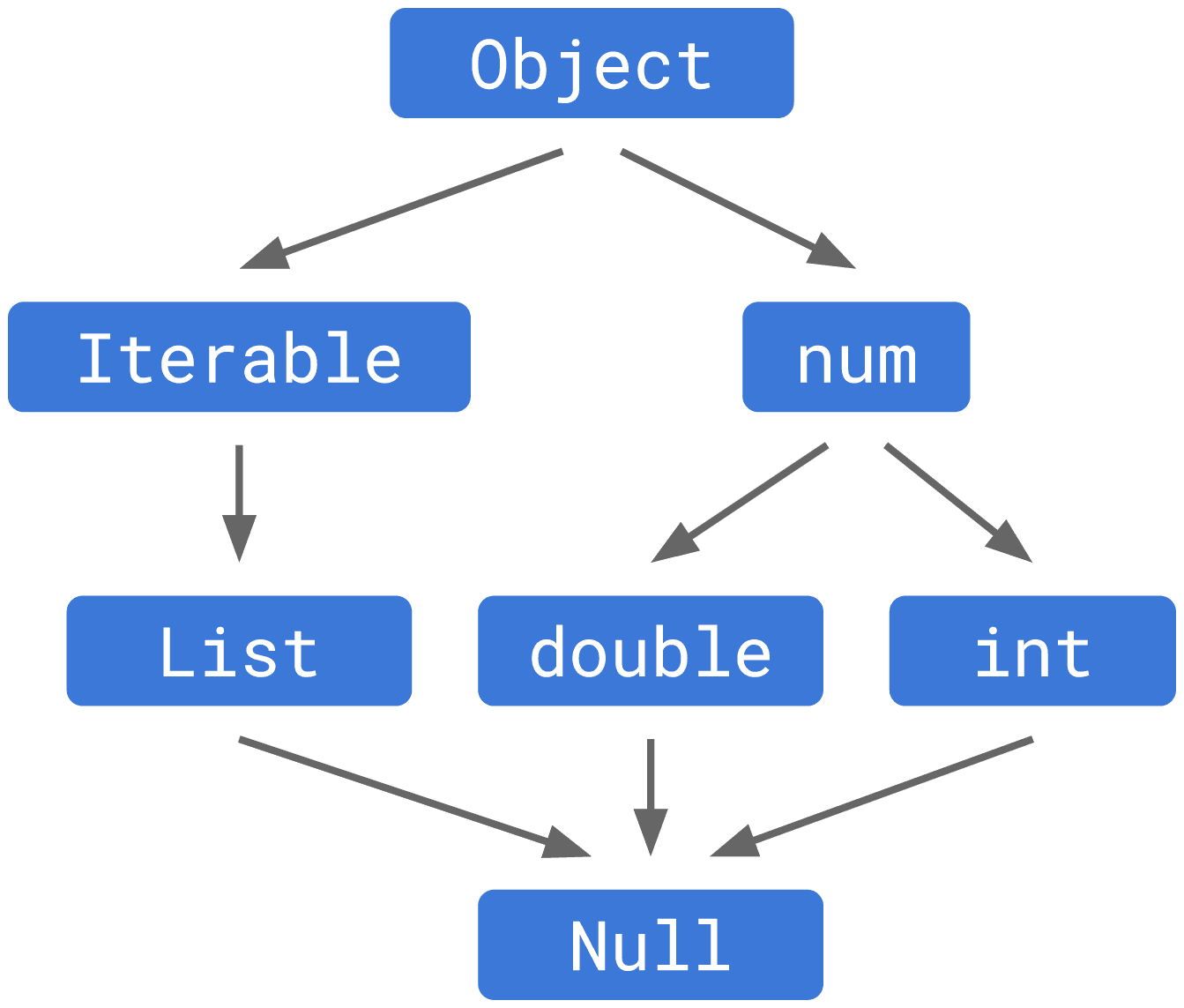
Describe Dart's null-aware ?. and null assertion ! operators
Tests Dart null safety mechanics: ?. short-circuits member access on null, while ! casts away nullability. A strong answer notes ?. avoids NPEs and ! is a risky opt-out. Red flag: claiming ! is safe or that ?. provides a default value.
What problem does late solve in Dart?
Tests definite assignment and lazy init in null-safe Dart. Strong answers cover: deferred non-nullable field init, lazy final evaluation, and LateInitializationError on early access. Red flag: treating late as nullable or saying it bypasses null safety.
How do you use collection-if and collection-for to declaratively build a list?
Tests Dart's declarative collection control-flow features. Answer: show collection-for to filter inside a literal, collection-if for conditional items, and combine both in one expression. Red flag: imperative loops and add() instead of literal syntax.
What is a Dart closure? Write a function that returns a function.
Tests lexical scoping: define a closure as a function plus its captured environment, show a makeAdder where the inner function uses a parent variable after the parent returns.
What are Dart extension methods? Implement toIntOrDefault on String.
Tests Dart extension syntax and static resolution. A strong answer defines an extension on String, uses int.tryParse with a fallback, and notes extensions do not mutate the original type. Red flag: using try-catch over tryParse or claiming dynamic dispatch.
Explain Dart switch exhaustiveness for enums versus sealed classes
This tests Dart 3 exhaustiveness. A strong answer notes that enums and sealed classes both require exhaustive switches, but sealed classes allow distinct payloads because subclasses stay in the same library. A red flag is calling them just enums with methods.

Explain Dart's event loop, microtask queue, event queue, and await behavior
Tests Dart single-threaded event loop model. Strong answer: microtasks drain before event queue tasks; await suspends the function and schedules its resumption via the event loop when the Future completes. Red flag: claiming await blocks the thread.
Convert List<User> to Map<String, User> keyed by user id
Tests Dart collection-to-map idioms. A strong answer picks the for-element literal {for (var u in users) u.id: u}, mentions Map.fromIterable as a verbose alternative, and flags duplicate-key overwrites. Red flag: manually looping to populate an empty map.
Difference between final and const Dart class properties?
This tests your grasp of Dart's compile-time versus runtime constant model. A strong answer contrasts final variables set once with static const compile-time values, notes const is implicitly final, gives examples. Red flag: const as non-static instance field.
Deduplicate a List of emails in Dart
Tests knowledge of Dart's Set semantics and LinkedHashSet insertion order. The idiomatic solution is emails.toSet().toList(), which deduplicates in O(n) time while preserving order. Avoid manual loops with contains, which are O(n^2) and unidiomatic.
What are the key differences between Dart extends, implements, and with?
This tests your grasp of Dart's inheritance, interface, and mixin models. extends gives single inheritance; implements forces full reimplementation; with injects shared behavior.
What is a Dart factory constructor and common use cases?
Explain a factory need not create new instances and can return cached objects or subtypes; contrast with generative ones; give JSON or singleton examples.
How do you model Product and safely parse JSON into List<Product>?
Tests bridging dynamic JSON to Dart's type system. A strong answer uses an immutable Product with a factory constructor that validates fields and converts types, mapping over the list. Red flag: leaving everything dynamic or assuming perfect API data.
How does Dart resolve mixin method conflicts and application order?
Tests understanding of Dart's mixin linearization. Answer: Dart applies mixins left-to-right, building a superclass chain where the last mixin wins conflicts. Red flag: claiming first mixin wins or confusing with multiple inheritance.
Define a Dart Future, return Future<String>, and handle errors with both patterns.
Tests Dart async primitives and error handling. A strong answer defines Future as a pending async result, writes a delayed Future<String>, consumes it with then/catchError, and mirrors with async/await try/catch.
Difference between Future<void> and void from an async function
Future<void> lets callers await and catch errors; void hides the Future, preventing await and leaving exceptions uncaught.
Describe the Dart event loop and queue execution order
Tests your grasp of Dart's single-threaded event loop priority. Great answers state: microtasks drain fully before the next event processes, cycling forever. Red flag: saying Future and scheduleMicrotask interleave in call order.
Explain single-subscription vs broadcast Streams in Dart
Tests dart:async stream lifecycle. Outline: single-subscription allows one listener and emits on listen; broadcast supports many but drops events for late arrivals. Red flag: saying single-subscription allows multiple listeners or buffers events.
We are hiring for this. Every open role lists the topics its interview covers, so you can prepare for the real thing rather than guessing.
See open roles